

Withdrawable Switchgear Cabinet OEM Solutions for Modern Power Infrastructure
2026-10-24
Modern power infrastructure can't afford long outages, and withdrawable switchgear cabinets have become the quiet workhorses that make fast maintenance possible. Yet not all OEM solutions are equal—many still treat customization as an afterthought. MOLDVOLT built its entire process around that gap, and the difference shows up in places you might not expect.
Drawout Compartments That Cut Downtime During Component Swaps
Most switchgear still forces maintenance teams to work around bolted bus connections and fixed wiring when a breaker or starter fails. Drawout compartments eliminate that bottleneck by mounting each device on a rolling carriage with self-aligning primary and secondary disconnects. A technician can rack the unit out, slide in a pre-tested replacement, and rack it back into service in a fraction of the time a hardwired swap would take.
Beyond speed, the drawout design adds a layer of operational safety. The carriage moves through clearly defined positions, typically connected, test, and disconnected. In the test position, control circuits stay live while the main power path is isolated, so protective relays and metering can be checked before the unit ever touches energized bus. Shutters close automatically over the stationary stabs as the device is withdrawn, reducing exposure to live parts during the entire exchange.
That combination of fast physical swap and controlled isolation changes how facilities handle spares. Instead of scheduling a full shutdown and coordinating multiple crews, a plant can keep a compatible spare carriage on hand and return the failed unit to the vendor for repair on a normal timeline. Downtime shrinks from hours or days to minutes, and the work happens without pulling the whole lineup out of service.
Custom Busbar Layouts for Retrofit and New-Build Substations
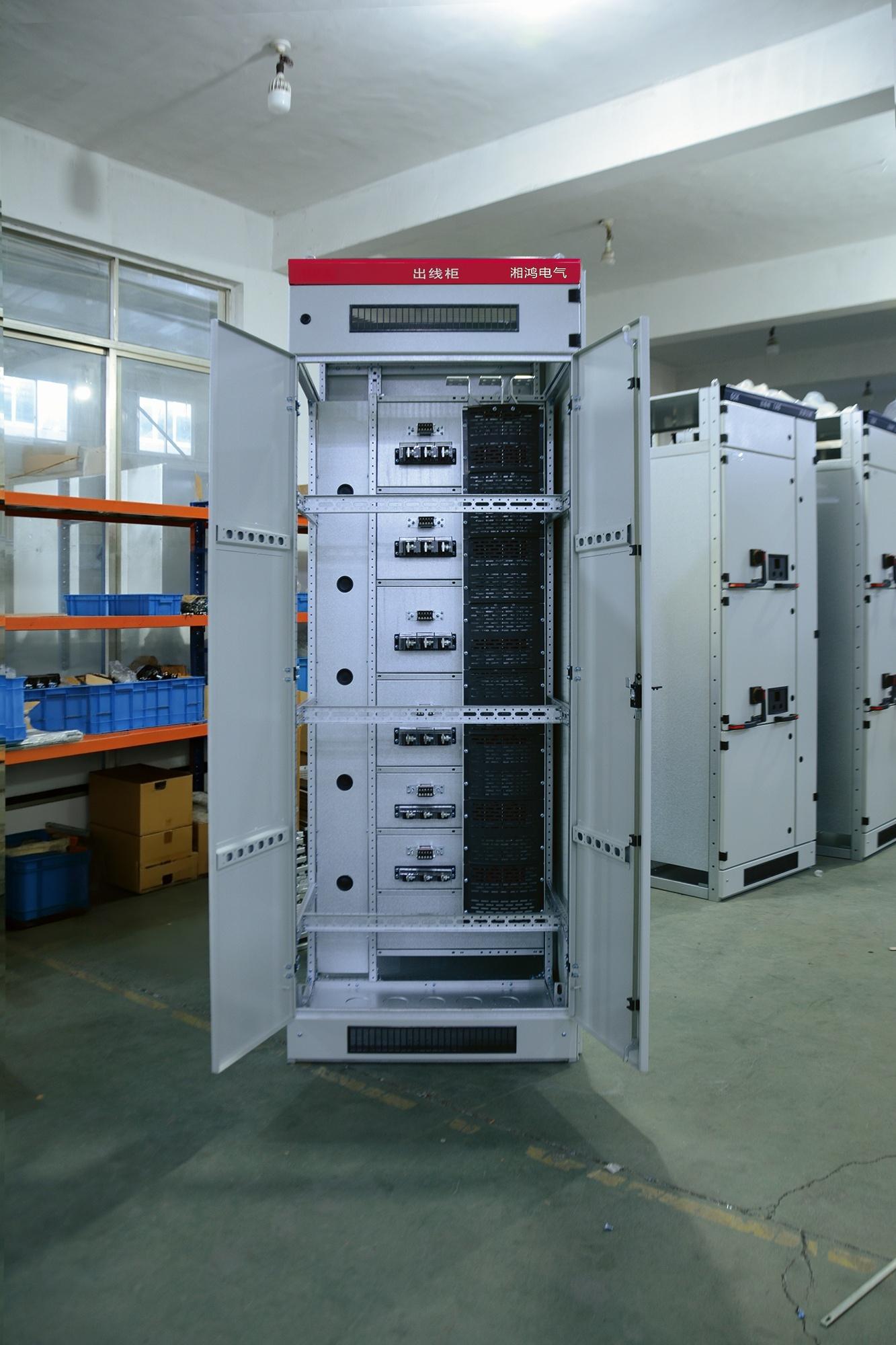
Retrofit projects rarely offer the luxury of a blank slate. Existing foundations, legacy cable trenches, and clearance constraints often dictate where a busbar can run. Instead of forcing a generic straight-run design into an awkward space, custom layouts treat these obstacles as design inputs. A well-executed retrofit layout might use stepped elevation changes to clear an old cable duct, or employ offset tap points to align with existing breaker positions—avoiding costly civil works and shortening outage windows.
For new-build substations, custom busbar layouts unlock value beyond simple connectivity. By tailoring the busbar geometry to the specific protection zones, maintenance aisle widths, and future expansion bays, designers can reduce the overall footprint while improving accessibility. For instance, a split-level arrangement with a raised busbar section above a walkway can keep operators clear of live parts without sacrificing bay spacing. The result is a layout that feels purposeful rather than copied from a template.
The real advantage appears when you stop treating the busbar as a fixed component and start treating it as a flexible element of the overall scheme. Custom layouts can incorporate mixed conductor types—rigid tube for main runs, flexible braid for expansion joints—and can route around structural steel in ways that off-the-shelf designs cannot. This approach not only simplifies installation but also reduces the number of field modifications, which is where many retrofit budgets quietly disappear.
Arc-Resistant Enclosures Without Sacrificing Withdrawable Access
Traditional arc-resistant switchgear often forces a trade-off between safety and serviceability. Withdrawable breakers or contactor trucks may become cumbersome to remove when the enclosure adds heavy flanges, fixed barriers, or complex vent paths. Modern designs address this by integrating the venting and interlocking systems directly into the draw-out mechanism. For example, the front door can be hinged to open only after internal pressure has been safely released, while the breaker truck rides on guide rails that maintain the arc-rated gasket compression throughout the full travel from connected to isolated position.
The real advantage appears during routine maintenance. Instead of de-energizing the entire lineup or unbolting large panels, technicians can rack out a unit, inspect contacts, and replace fuses without compromising the enclosure's ability to contain an arc flash. Key interlocks ensure that the vent flaps stay closed during normal operation but open only under fault pressure, and that the door cannot be opened while the main contacts are still engaged. This approach keeps the withdrawable access path clear and intuitive, so crews do not have to fight the enclosure to reach the equipment.
Field experience shows that this balance reduces downtime and improves confidence in the gear. A spare breaker truck can be rolled into place quickly, and the enclosure continues to meet arc-resistant ratings even with the unit partially withdrawn. Testing under conditions like IEEE C37.20.7 confirms that the pressure relief and door latching behave as intended during an internal arcing fault. Rather than compromising one feature for the other, the design treats withdrawable access as part of the arc-resistant strategy, not an afterthought.
Live Thermal Mapping Inside Each Cassette Drawer
Instead of relying on a single probe that only confirms one spot is within range, live thermal mapping turns each cassette drawer into a visible heat landscape. You can watch temperatures shift in real time as the compressor cycles, as drawers are opened for restocking, or as new inventory is loaded. This exposes warm pockets forming near the door seal or cold channels along the back wall before they become stability failures.
The system overlays continuous readings onto a schematic of each drawer, so a quick glance shows whether any cassette is drifting from its intended range. Because the mapping is live, staff can respond to a developing excursion while there is still time to move sensitive material, rather than discovering the problem hours later in a downloaded log.
For multi-drawer units, differences between upper and lower drawers become obvious, helping you rotate stock or adjust airflow instead of assuming every level behaves the same. That level of granularity is especially useful in busy pharmacies and biorepositories where door traffic is frequent.
Plug-and-Play Auxiliary Control Wiring for Faster Commissioning
Time lost during startup often traces back to auxiliary control wiring—dozens of small connections for status feedback, interlocks, and remote commands that technicians terminate by hand. Each one invites mislabeling, loose ferrules, or inconsistent routing, all of which surface during commissioning as faults that take hours to isolate.
The plug-and-play approach replaces that open-ended wiring task with pre-assembled, keyed cable sets and terminal blocks designed for the specific control devices. Color-coded and mechanically polarized, these harnesses can only be installed one way, which removes the guesswork from cross-panel links and keeps every auxiliary circuit consistent from cabinet to cabinet.
Commissioning then shifts from continuity testing and rework to functional verification. Because the connections are repeatable, changes in the field—adding a relay, swapping a drive, extending an interlock—become drop-in operations rather than rewiring projects. Many teams find the upfront cost of the pre-terminated kits is recovered on the first job through fewer callbacks and shorter power-up windows.
Ruggedized Frames for Coastal and High-Humidity Grid Nodes
Coastal and high-humidity environments attack enclosure materials at every exposed edge, fastener, and weld line. For grid nodes operating in these zones, the frame must be specified around marine-grade alloys—316L stainless steel, 5052-H32 aluminum with chromate-free conversion coating, or hot-dip galvanized structural steel with a zinc-rich epoxy base layer and UV-stable polyurethane topcoat. The goal is not simply to delay rust but to interrupt the electrochemical pathway that salt spray and condensation constantly try to establish.
Beyond alloy choice, the frame geometry plays a quiet but critical role. Continuous welded seams and gasketed panel interfaces prevent crevice corrosion from taking hold, while sloped top surfaces and open drainage channels keep standing water from lingering after storms or fog cycles. Internal breather vents fitted with hydrophobic PTFE membranes allow pressure equalization without drawing in salt-laden moisture. Where dissimilar metals meet, isolation washers and nylon shoulder bushings break the galvanic couple that would otherwise accelerate pitting near mounting points.
Validation under accelerated corrosion testing separates ruggedized frames from cosmetic upgrades. Realistic qualification includes cyclic salt fog exposure per ASTM B117, wet-dry transition tests, and long-duration humidity holds at elevated temperatures, with post-test inspection focused on thread integrity, gasket compression set, and coating adhesion. Frames that endure this sequence without blistering, white rust, or fastener seizure are the ones that hold up over decades of service in coastal substations and tropical microgrids.
FAQ
The breaker truck rolls out to create a visible isolation gap, so technicians can test or replace the unit without de-energizing the entire bus section. Interlocking prevents racking the breaker between connected and disconnected positions while the door is open.
We adapt panel width, depth, and cable entry points to match your existing lineup or site constraints. Busbars can be specified up to 4000A with 50kA short-time withstand, with silver or tin plating and top or bottom access.
Yes. Pressure relief ducts, hinged vent flaps, and compartmentalized barriers vent arc energy away from the operator. The withdrawable carriage keeps full racking travel and can trigger an arc detection relay through a dedicated auxiliary contact.
Every cabinet undergoes routine tests including main circuit resistance, power-frequency withstand, mechanical operation, and IP degree verification. Type test reports for internal arc, temperature rise, and short-circuit are available for client review, and witnessed testing can be arranged.
You get a dedicated project engineer, 3D assembly models for enclosure fit checks, and a review of single-line and protection drawings before fabrication. Prototype iterations are fast-tracked so design changes are locked before volume production.
The low-voltage compartment accepts common relays from SEL, ABB, Siemens, Schneider Electric, and GE, as well as custom low-burden CTs and PTs. Terminal blocks arrive pre-wired to your numbering scheme, which shortens panel integration time.
Standard configurations ship in 8–10 weeks. Custom busbar layouts or special protection schemes typically run 12–14 weeks. Expedited slots are available when a project schedule shifts.
Yes. We supply configurations for solar, battery storage, and data center redundant distribution at voltages like 10kV and 35kV. Coatings and gasketing are available for coastal humidity, dust, and wide temperature swings.
Conclusion
Modern power infrastructure rarely waits for maintenance windows. Withdrawable switchgear cabinets built around OEM-specific requirements change that equation. Instead of hardwired, fixed assemblies, these designs use drawout compartments that let technicians slide out a breaker or metering cassette, swap it, and slide a tested unit back in—often without de-energizing the entire board. Custom busbar layouts come into play for retrofit jobs where existing substation footprints leave no room for standard geometry. Fabricators can shift, stagger, or layer copper runs to match legacy tie-ins, while still keeping arc-resistant enclosures intact. That means no trade-off between safe withdrawable access and fault containment.
Beyond mechanical fit, operational visibility matters. Live thermal mapping inside each cassette drawer catches loose connections or contact wear before they trip protection, turning routine inspections into targeted fixes. Plug-and-play auxiliary control wiring removes the usual commissioning tangle—pre-tested looms and coded connectors mean a new bay integrates in hours rather than days. For coastal and high-humidity grid nodes, ruggedized frames with sealed joints and corrosion-resistant plating keep withdrawable mechanisms moving freely even in salt air. The result is an OEM solution that adapts to harsh sites, tight retrofit schedules, and modern grid demands without becoming a one-off experiment.
Contact Us
Contact Person: Hellen
Email: [email protected]
Tel/WhatsApp: 86-13634205622
Website: https://www.voltcabinet.com