

Wholesale MVNE Platform Strategies for Rapid Mobile Network Growth
2026-05-22
The telecom landscape is shifting fast—MVNOs are hungry for speed, scale, and flexibility without the heavy lifting of building their own core. That’s where a wholesale MVNE platform becomes a game-changer. Powered by IPLOOK, operators can now ignite rapid mobile network growth with a suite of cloud-native, scalable solutions that slash time-to-market and operational complexity. Forget one-size-fits-all; this is about tailored enablement that turns MVNO ambitions into commercial reality. In this blog, we unpack the strategic moves that make wholesale MVNE a launchpad for explosive growth.
Leveraging Cloud-Native Infrastructure for Scalable MVNE Operations
At the heart of modern MVNE operations lies the shift toward cloud-native design. Rather than running monolithic stacks on fixed infrastructure, teams now build platforms composed of loosely coupled microservices, each packaged as containers. This architecture allows different components of the enablement stack—such as provisioning, billing mediation, and policy control—to scale out independently. During sudden spikes in subscriber activity, only the services under pressure need additional instances, avoiding the cost of over-provisioning entire systems. The result is a platform that bends with demand, keeping overhead in check while maintaining responsive service.
Beyond elasticity, cloud-native tooling brings a level of operational agility that traditional setups struggle to match. Continuous delivery pipelines, powered by infrastructure-as-code, let operators deploy feature updates across the stack in minutes, not weeks. Immutable infrastructure patching is replaced with rolling updates and canary releases, reducing the blast radius when something goes wrong. For MVNEs, this means launching branded core network configurations for new MVNO clients becomes a repeatable, scriptable process, not a drawn-out integration project. Teams spend less time firefighting and more time refining the digital experience they deliver to partners.
Observability also transforms when built into the fabric of the platform. Distributed tracing, structured logging, and real-time metrics provide a coherent view of how every subscriber transaction travels across services. When latency creeps up in the SMSC or a diameter peer fails, operators pinpoint the source in seconds instead of sifting through scattered logs. Combined with automated remediations—such as draining a problematic node or triggering a failover—the infrastructure becomes self-healing to a remarkable degree. This reliability directly strengthens the value proposition for MVNO partners, who depend on consistent, carrier-grade performance without needing their own deep infrastructure expertise.
Strategic Partner Onboarding: Curating MVNOs for Niche Market Domination
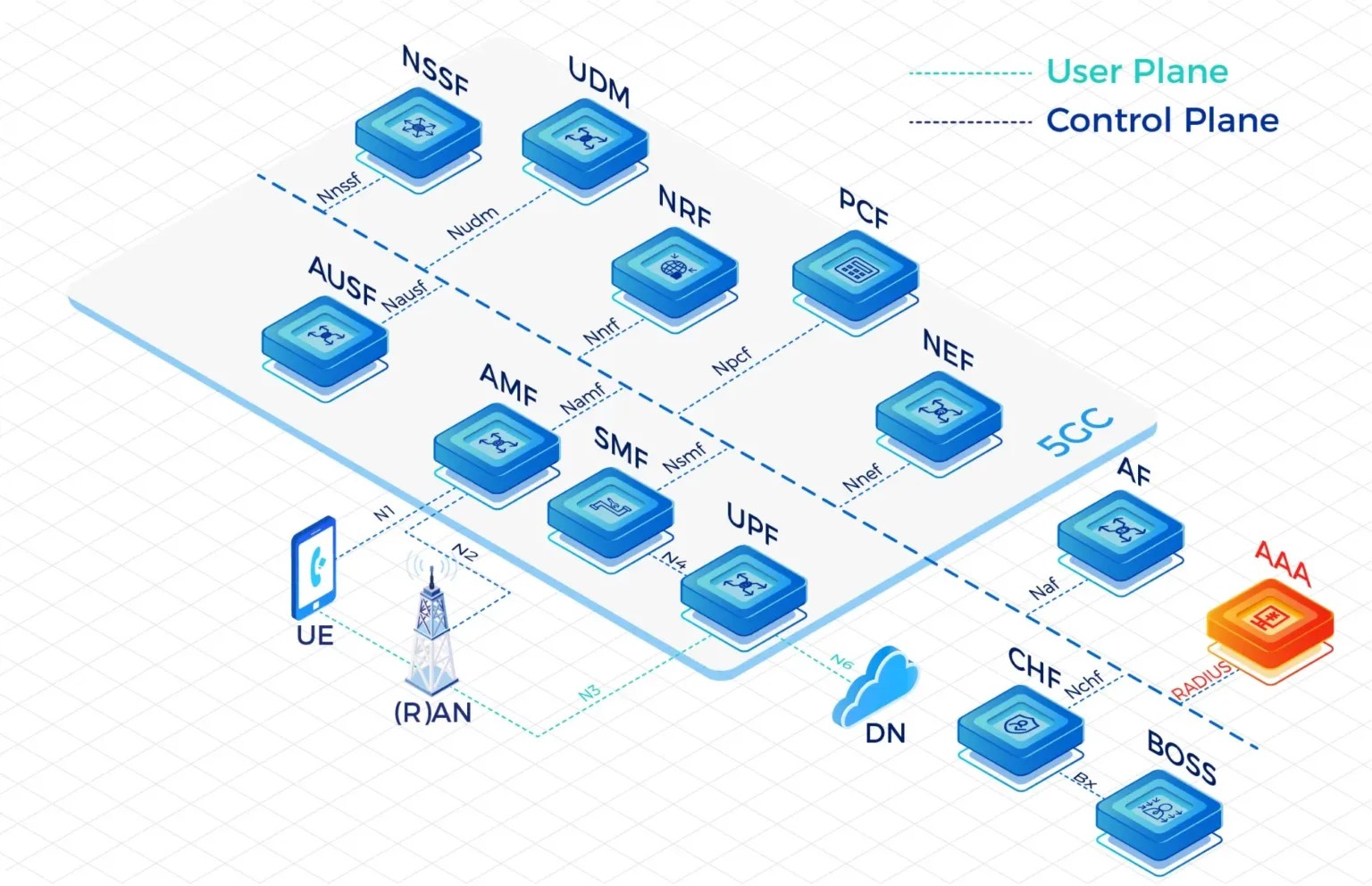
The selection of mobile virtual network operators goes far beyond checking a few boxes on a standard checklist. We look for partners who already have a deep-rooted presence in underserved verticals—whether that’s ultra-secure connectivity for defense contractors, streamlined plans for digital nomad communities, or localized services for diaspora populations. The goal is not to saturate the general market but to carve out spaces where legacy carriers have left gaps too small for them to notice but too valuable to ignore.
Onboarding isn’t a one-way street of compliance paperwork. It’s a co-creation process where we align our infrastructure strengths with the MVNO’s street-level market intelligence. Instead of forcing a pre-made template, we help each partner shape their brand voice, pricing models, and even the wording of their service-level agreements so everything resonates authentically with their target audience. This deliberate friction against homogeneity is what turns a simple reseller into a true niche champion.
Our curation process quietly filters out those chasing short-term arbitrage or merely slapping a new logo on a generic offering. We’re building a coalition of specialists, each dominating a sliver of the market so thoroughly that competitors struggle to replicate their local trust and ecosystem integration. When done right, the collective result is a patchwork of mini-monopolies, unified by a backend that requires zero public fanfare.
API-First Design: Enabling Rapid Service Innovation and Integration
When development teams adopt an API-first mindset, they fundamentally shift how they think about building software. Instead of treating APIs as an afterthought—a thin layer tacked onto an existing application—they become the primary interface around which everything else is structured. This inversion means that before a single line of UI code is written, the contract between systems is defined, mocked, and refined. The result is a parallelization of effort: frontend and backend teams can work simultaneously, each relying on the agreed-upon API specification as a source of truth. No more waiting for a backend endpoint to be ready before the client can be built. This approach cuts down dramatically on integration delays and rework, making the entire delivery pipeline more resilient to change.
A well-designed API surface doesn't just streamline internal development—it becomes a catalyst for external innovation. Public or partner-facing APIs turn a service into a platform, allowing third-party developers to compose new experiences that the original creators never imagined. Consider how payment gateways, mapping services, or communication tools have spawned entire ecosystems. Their APIs lowered the barrier to entry, making it trivial for startups and established businesses alike to plug in powerful capabilities without deep domain expertise. Internally, this same principle applies: a catalog of granular, reusable APIs empowers teams to rapidly prototype new features by chaining together existing functionality. Innovation accelerates because teams aren't stuck rebuilding authentication, logging, or data access layers from scratch.
But speed alone isn't enough; the real payoff comes when API-first principles are paired with thoughtful governance. Versioning strategies, clear deprecation policies, and automated contract testing ensure that integrations don't break as services evolve. By treating APIs as products—with their own lifecycles, documentation, and feedback loops—organizations can scale their integration capabilities without drowning in spaghetti dependencies. The most effective implementations we've seen combine API design standards with lightweight review processes that catch inconsistencies early, before they become entrenched. This balance between autonomy and alignment is what lets a service mesh support hundreds of consumers while still allowing individual teams to ship quickly. Over time, the API catalog morphs into a living, self-documenting fabric that reflects the true capabilities of the business, ready to be rewired for whatever the market demands next.
Dynamic Pricing Models That Attract High-Volume Mobile Brands
Brands moving millions of units monthly need pricing that flexes with demand without alienating their base. Time-based surge controls—like happy hour discounts during off-peak hours or automatic markdowns when inventory exceeds a threshold—let mobile-native companies capture impulse buyers while protecting margins during rush periods. These adjustments can run in the background, syncing with in-app browsing patterns so users see a price that feels both personal and fair.
Loyalty-driven tiering is another quiet powerhouse. Repeat customers logging in from the same device for the third time that week might unlock a bundle price that casual browsers never see. It’s not about deep discounts for everyone; it’s about crafting micro-incentives tied to behavior—think free shipping on a second cart addition or a slight upgrade at the same cost if they’ve bounced between product pages twice. Such moves keep high-frequency users engaged without devaluing the catalog.
The most effective setups also fold in real-world signals. A sudden weather shift or a trending hashtag can trigger a temporary price slide on related accessories, making the brand feel responsive rather than robotic. For volume players, the real trick is letting the model learn from checkout abandonment clusters and re-price just enough to lower that friction—without ever looking like a fire sale. When done right, the algorithm becomes an invisible sales floor manager that boosts conversion while the customer feels they’ve simply caught the right moment to buy.
Automated Provisioning and Real-Time Analytics for Operational Agility
Gone are the days when infrastructure setup dragged on for days. By weaving together automated provisioning with real-time analytics, teams can spin up resources in minutes and immediately tap into live data streams. This fusion removes the friction between planning and execution, letting operations respond to shifts in demand without missing a beat.
What makes this approach stand out is how it turns raw metrics into actionable steps on the fly. Instead of poring over batch reports after the fact, teams watch dashboards that evolve second by second, flagging anomalies before they spiral. Provisioning rules can be tuned automatically based on what the data reveals—scaling up when latency creeps, scaling down when traffic ebbs.
The result is an environment where decision-making keeps pace with the systems themselves. Maintenance windows shrink, over-provisioning waste gets cut, and the whole stack bends around actual usage patterns. It’s a leaner, smarter way to run operations, built for a world that won’t slow down.
Future-Proofing with 5G and IoT-Ready Core Networks
Building a core network that can gracefully absorb tomorrow’s disruptions starts with decoupling software from proprietary hardware. By embracing cloud‑native principles and virtualized functions, operators gain the freedom to scale capacity on demand, roll out new protocols through simple updates, and weave in edge computing nodes that keep latency‑sensitive IoT services responsive. This shift turns the core from a static anchor into a living fabric that evolves alongside device ecosystems and traffic patterns, without requiring expensive forklift upgrades every few years.
Preparing for dense IoT environments means baking intelligence into every layer of the network. Advanced network slicing isolates critical sensor grids from consumer broadband streams, ensuring that a spike in smartphone video traffic never threatens a fleet of autonomous guided vehicles. Embedded analytics—powered by lightweight artificial intelligence models—spot anomalies in device behavior and reroute traffic before congestion builds. Such proactive orchestration not only safeguards service‑level agreements but also uncovers efficiency gains that lower the total cost of ownership, turning the network into a strategic asset rather than a cost center.
True future‑proofing hinges on designing for interoperability from day one. A core built around open APIs and standardized interfaces invites an ecosystem of third‑party developers, IoT platform providers, and industrial automation vendors to plug in their innovations without friction. This openness accelerates time‑to‑revenue for new use cases—from smart agriculture to predictive maintenance—while reducing lock‑in risk. Coupled with a modular architecture that lets operators swap out components as technology matures, the result is a resilient, adaptable foundation that makes the network ready for whatever the next decade brings, be it 6G convergence or unforeseen industrial transformations.
FAQ
An MVNE, or Mobile Virtual Network Enabler, provides the essential infrastructure and support that allows new mobile operators to launch services quickly without building their own network. By offering ready-to-use platforms for billing, provisioning, and customer management, MVNEs eliminate the heavy lifting, letting brands focus on sales and marketing to grow fast.
Wholesale MVNE platforms give new operators instant access to a complete mobile ecosystem, including network connectivity, operational systems, and regulatory compliance. This turnkey approach slashes setup time from months to weeks, enabling a rapid go-to-market strategy and immediate customer acquisition.
Providers should prioritize flexible, cloud-native architectures that can scale on demand, offer modular services so clients pay only for what they need, and build strong partnerships with multiple carriers to ensure resilient connectivity. Continuous automation of backend processes also helps handle growth spurts without performance dips.
They typically pre-integrate with major mobile networks and maintain standardized interfaces, so onboarding a new client involves simple configuration rather than custom development. The platform virtualizes core network functions, allowing resources to be spun up instantly as subscriber numbers climb.
Wholesale agreements secure bulk access to network capacity at favorable rates, which MVNEs pass on to their clients. These deals are the bedrock of cost-effective service delivery, enabling smaller operators to compete on price while still enjoying high-quality connectivity and rapid expansion capabilities.
By pooling resources across multiple tenants, MVNE platforms achieve economies of scale in infrastructure and support. They offer pay-as-you-grow models, automated customer management, and shared technical expertise, which lowers operational costs dramatically and frees up capital for marketing and customer acquisition.
Cloud-based virtualization, API-driven integrations, real-time analytics, and AI-powered automation are key. These technologies enable dynamic resource allocation, rapid feature rollouts, and proactive network management, ensuring the platform remains agile as client demands surge.
Conclusion
To accelerate mobile network growth, a wholesale MVNE platform must be built on cloud-native infrastructure that scales effortlessly with fluctuating demand. This foundation supports an API-first architecture, allowing MVNOs to rapidly stitch together billing, provisioning, and customer management systems without heavy custom integration. When combined with automated provisioning workflows and real-time analytics dashboards, the platform eliminates manual bottlenecks and gives operators instant visibility into service performance. These technical pillars create an environment where new mobile brands can launch in days rather than months, turning operational agility into a competitive weapon.
Growth also depends on commercial strategy. A well-designed MVNE curates its partner portfolio by targeting niche MVNOs that serve underserved segments—whether IoT fleets, expat communities, or vertical industries—delivering tailored connectivity rather than generic plans. Dynamic pricing models, which adjust based on usage volume and market conditions, attract high-consumption brands seeking cost predictability and margin control. Looking forward, embedding 5G and IoT-ready core network functions future-proofs the platform, enabling partners to offer advanced services like network slicing and massive device connectivity without rebuilding their own infrastructure. Together, these strategies transform the MVNE from a passive enabler into an active catalyst for rapid, sustainable growth.
Contact Us
Contact Person: Shimmy
Email: [email protected]
Tel/WhatsApp: 85253392231
Website: https://www.iplook.com