

Top Sewer Drain Cleaning Equipment Manufacturer for Quality and Reliability
2026-10-27
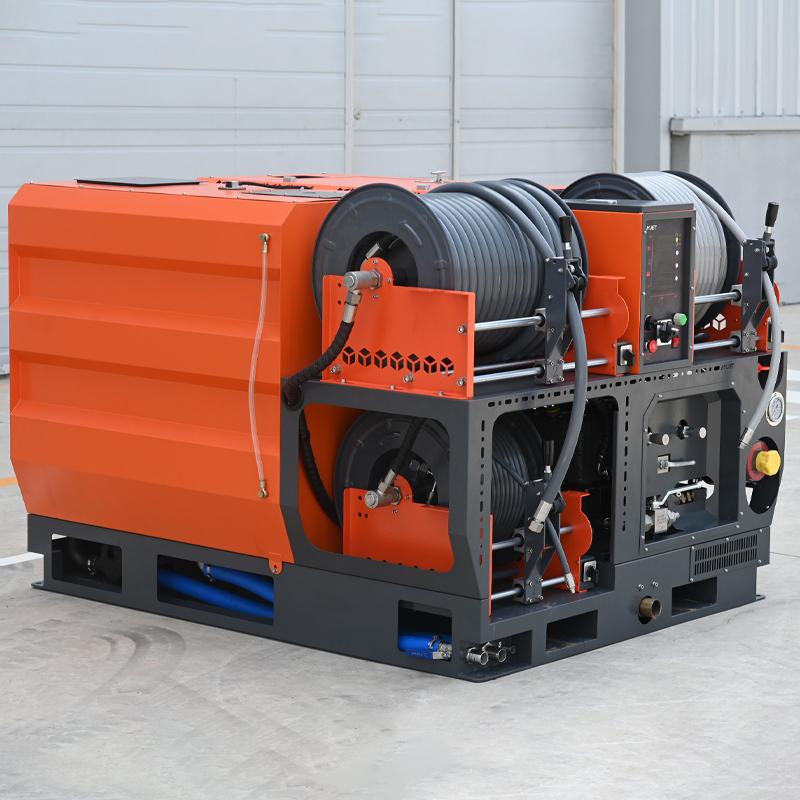
When a sewer line backs up at 2 a.m., the last thing you want is equipment that fails under pressure. That’s why professionals don’t gamble on generic tools — they turn to AMJET, a manufacturer whose drain cleaning machines have built a reputation for surviving the toughest clogs and the longest shifts. From high-torque augers to jetting systems that cut through grease like butter, AMJET’s lineup is engineered with one goal: keep your crew moving when others are stuck. In this post, we’ll break down what sets a top-tier sewer drain cleaning equipment maker apart — and why reliability isn’t just a spec sheet promise, but a field-tested reality.
Built to Clear the Worst Blockages Without Flinching
When a drain line is packed with matted roots, years of grease, or a wad of so-called flushable wipes, most machines stall out or snap back. This one doesn’t. The motor keeps its torque steady while the cable chews through the mass in short, deliberate bursts, so you’re not fighting the drum or nursing a jammed feed.
That no flinch behavior comes down to a drive system built around a hardened steel cable and a clutch that disengages before kickback turns into a wrist injury. You can lean into the toughest clogs—the ones that have already beaten two other augers—and still feel the line give way instead of the tool folding under pressure.
It clears the kind of blockages that usually mean pulling a toilet or cutting into drywall. No hesitation, no backing off, just a steady grind until the water finally moves.
Component Choices That Extend Machine Life by Years
Every bearing, seal, and bushing you install carries a quiet verdict about how long the machine will keep running. The difference often comes down to small material calls: a nitrile seal swapped for fluorocarbon when temperatures creep past 250°F, or a sintered bronze bushing replaced with a polymer composite that shrugs off washdown chemicals. These aren't exotic upgrades—they're deliberate substitutions that stop the chronic wear patterns most rebuilds simply repeat.
Look closely at the parts that fail first, not the ones that fail loudly. A hardened shaft sleeve under a mechanical seal can triple the interval between pump teardowns. A double-row angular contact bearing at the fan end of a motor handles belt tension that would chew through a standard deep-groove design in months. Run the math on one extra year of uptime and the premium part pays for itself before the first scheduled shutdown.
The real leverage sits in standardization. Pick one grade of stainless for all wetted fasteners, one class of synthetic grease for every grease point, one seal material across the whole line. Then track failures by component, not by machine. Within two maintenance cycles you'll see the pattern shift: fewer emergency calls, longer intervals between rebuilds, and a spares shelf that actually matches what fails in the field.
Our Testing Floor Replicates the Nastiest Sewer Conditions
Walk onto our testing floor and you’ll immediately smell the difference. We don’t simulate sewer conditions with sterile water and a few plastic balls. Instead, we pump in actual untreated effluent, add decades-old grease sludge scraped from municipal lines, and toss in the kind of debris that makes city workers curse—wet wipes, condoms, hair mats, and odd chunks of construction rubble. The temperature is kept at a swampy 29°C, and the humidity sits just below the point where paper starts to curl. Pumps run 24/7, mimicking the surge flows of a Friday-night flush wave, then drop to the lazy trickle of a 3 a.m. neighborhood. No two days are identical, because neither are real sewers.
Our test rigs don't get the luxury of clean water flushes. Every pipe, valve, and macerator is subjected to a randomized cocktail of fibrous solids, grit, and chemical spikes—bleach from a laundry disaster, hot oil from a restaurant grease trap, even the occasional dead rat (ethically sourced from a pest control partner). We measure not just whether equipment survives six months, but how it behaves when a “fatberg” the size of a yoga ball suddenly slams into an impeller at 2 a.m. Sensors record vibration, amp draw, and acoustic signatures, while our engineers wade through the results in rubber boots. If a product can handle this floor, it can handle your city’s worst nightmare.
What sets us apart is that we don't clean up between tests. The same crust that builds up on the walls of a real interceptor builds up on ours. After a 90-day endurance run, you’ll find stalactites of grease hanging from the lid seals and a biofilm that laughs at standard disinfectants. This isn’t a showroom—it’s a torture chamber for plumbing. We’ve had visitors gag on their first step inside, but those are the same visitors who later order a dozen units without asking for a discount.
Why Municipal Crews and Plumbers Keep Coming Back
A worn coupling on a main line can stall a whole district's water service, and the city crew that gets the 4 a.m. call doesn't have time to gamble on parts that might seize under torque. They come back because the first repair actually held. No callbacks for a dripping joint, no second trip to re-cut a gasket that shifted out of true. When a brass fitting seats clean on the first turn and keeps its seal through a freeze-thaw cycle, word travels fast in the maintenance yard.
Plumbers don't return to a supplier just because the price was right once. They come back because the thread pattern matches what's already buried in the wall, and because the counter guy remembered that a 3/4-inch sweat adapter on a Tuesday morning means a slab leak under a kitchen island. That kind of predictability saves an hour that can't be billed back to the customer. A van stocked with parts that actually fit the existing piping means the difference between finishing before lunch and crawling back under the house after dark.
Over time, loyalty gets built from the small stuff: the cap that doesn't cross-thread when fingers are numb, the rubber washer that doesn't dry-rot in a year, the packing nut that still turns after a decade of scale and chloramine. Municipal buyers and independent plumbers both keep a running tally of what failed early and what never needed a revisit. That tally becomes the reason they keep reaching for the same bin on the shelf, even when a cheaper look-alike shows up a few aisles over.
Custom Drain Cleaners That Don't Sacrifice Dependability
A custom drain cleaner doesn't have to be a gamble. The real difference comes from tailoring the active ingredients to the type of blockage and pipe material, while keeping the formulation strong enough to clear the line quickly without damaging fittings. That balance is what separates a dependable product from a generic one that works only on one kind of clog.
Dependability comes from how the cleaner is made, not just what's on the label. Manufacturers who offer custom solutions test each batch against real-world clog samples before shipping. This means a cleaner designed for a restaurant's grease trap will still break down fats reliably, while one meant for a home's slow-draining shower will handle hair and soap scum without eating away at older PVC.
Service and Parts Support That Minimize Downtime
Critical spares aren't kept in a single central warehouse. They're staged at regional hubs close to the machines that need them most. If a drive motor fails at 3 a.m., the nearest hub can have a replacement on a truck within the hour, not the next day. That geographic spread is what turns a twelve-hour production stop into a short, manageable interruption.
Before a technician leaves the yard, remote diagnostics pull fault codes and service history from the machine. That means the van is loaded with the parts most likely to fix the issue on the first visit. The old routine of diagnose, order, and return three days later doesn't apply. A single trip is the norm because the failure is understood before anyone turns a wrench.
Parts obsolescence is tracked like a maintenance schedule. When a component is nearing end-of-life from the manufacturer, the support team flags it months ahead and validates a substitute before the original becomes unavailable. That avoids the scramble for discontinued parts on the secondary market and keeps planned upgrades from turning into emergency retrofits.
FAQ
The lineup includes sectional machines, drum augers, water jetters, and inspection cameras. Each category is built around specific pipe diameters and job site conditions, so you're not forced to adapt one tool to every clog.
They source high-grade steel for cables and drums, run each unit through a multi-point inspection before shipping, and use sealed bearings to keep debris out. Field returns are tracked closely, and design changes are made when a part shows repeat wear.
Yes. The frames are welded rather than bolted, motors are matched to the drum capacity, and the clutch assemblies are tested for thousands of cycles. Many plumbing contractors run them five or six days a week without unexpected downtime.
You get direct access to a parts team that knows the machines, not a call center script. Most wear items ship within a day, and technical staff can walk you through troubleshooting by phone or video call.
Safety is built into the controls, not added as an afterthought. Foot switches, enclosed cable guides, and torque-limiting clutches are standard on most models. The manuals also include clear setup checklists for different pipe conditions.
Yes, there are compact units for 1.5 to 4 inch residential lines and larger trailer-mounted jetters for municipal mains up to 24 inches. The key is selecting the right cable size, nozzle, and flow rate for the pipe.
Long-term cost is the main difference. The drums don't warp under load, replacement parts stay available for years, and the cables resist kinking. With lower-priced imports, you often replace the whole machine after a season or two.
With routine maintenance like greasing bearings and flushing the jetter pump, a well-cared-for unit can last ten years or more in regular service. The company still supports models that are over a decade old, which tells you something about build quality.
Conclusion
When a mainline is packed with grease, roots, or hardened scale, the machine has to push through without stalling. That's why the build starts with a drive system and drum assembly that handle worst-case torque loads, not just catalog specs. The frame and guide hose are reinforced at stress points that typically crack after a few years of hard use. Component decisions are made by asking one question: will this part still be working five years from now under daily abuse? Bearings, seals, and switches are selected from suppliers with proven failure rates, not just the cheapest bid. Before any unit ships, it gets run on a test floor that simulates the kinds of jobs that destroy weaker equipment—standing water, offset pipes, heavy root intrusion, and long runs with back-to-back bends. If it can survive that, it can survive a real sewer.
The reason municipal crews and independent plumbers keep coming back isn't a sales pitch—it's that the machine shows up ready to work and keeps working when the schedule is already full. Custom requests are common because no two sewer systems are identical, but changes are made without weakening the core reliability. You can get a different drum capacity, a trailer mount, or a specific engine, and the same rugged components remain underneath. When something does wear out, support matters more than the initial purchase. Replacement parts are stocked and shipped fast, and the service team knows each model well enough to diagnose over the phone. That combination of proven engineering and responsive support means less time waiting and more time clearing lines.
Contact Us
Contact Person: Mike
Email: [email protected]
Tel/WhatsApp: +86 19545555505
Website: https://www.amjeting.com/