

Top PET Honeycomb Dry Truck Bodies from China: A Game-Changer in Cargo Transport
2026-07-08
The logistics industry never stops chasing stronger, lighter, and more cost-effective solutions. While traditional dry truck bodies get the job done, they often fall short when it comes to durability and fuel efficiency. That's where PET honeycomb panels step in—and Chinese manufacturers are leading the charge. Among them, Whole Chain Tech has emerged as a key innovator, redefining what a dry truck body can do. Get ready to discover why these PET honeycomb bodies are turning heads and how they could be the smartest upgrade for your fleet.
The Rise of PET Honeycomb in Commercial Vehicle Design
Lightweighting has become a non-negotiable priority in commercial vehicle engineering, driven by tightening emissions regulations and the push for longer range in electric models. Traditional materials like plywood, aluminum, and solid plastics once dominated interior panels, flooring, and partition walls. But PET honeycomb is changing that equation fast. Made from recycled polyethylene terephthalate, this sandwich-structured material blends surprising rigidity with a fraction of the weight of the solid alternatives it replaces. Fleet operators appreciate the direct payload gains, while designers find it easier to shape and integrate without adding structural bulk.
Beyond just trimming pounds, PET honeycomb brings practical resilience to high-wear environments. Its closed-cell core resists moisture, mildew, and common chemicals, which is a distinct step up from wood-based panels that can warp or delaminate over time. In refrigerated trucks, for instance, it helps maintain consistent thermal insulation without the extra thickness sponge foams require. Installers also report cleaner fabrication—tools stay sharper longer, and there’s less dust compared to cutting fiberglass or ply. That translates into shorter build cycles on the factory floor, a detail that matters when order books are full.
The shift toward thermoformable honeycomb composites has also let designers rethink interior architecture more freely. Curved overhead shelves, contoured door liners, and sleek bulkhead panels that double as structural supports are now possible without complex multi-material assemblies. PET honeycomb’s inherent sound-damping properties even allow cabins to feel quieter without adding heavy acoustic mats. As supply chains mature and more recycled feedstock enters production, the material’s cost profile keeps improving, making it a pragmatic choice—not just an eco-minded checkbox—for next-generation delivery vans, buses, and heavy-duty tractors.
Why Lightweight Panels Are Reshaping Logistics
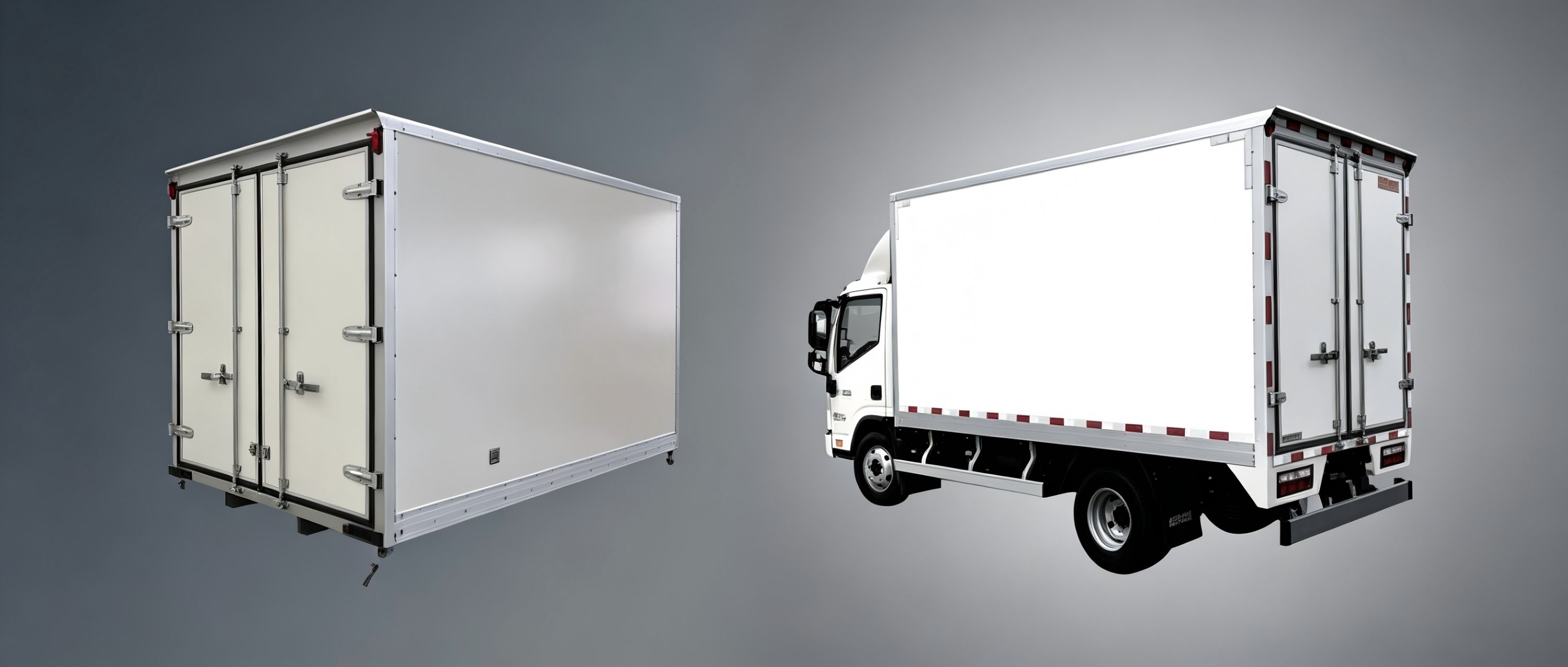
The logistics industry has always been about moving more with less—less fuel, less time, less strain on infrastructure. Lightweight panels are flipping that equation by drastically cutting the weight of cargo containers, truck bodies, and cold chain packaging without compromising strength. When a trailer sheds hundreds of kilos simply by swapping traditional materials for advanced composites or honeycomb cores, the savings cascade through every mile. Fleets are seeing fuel consumption drop by double-digit percentages, while electric vehicles stretch their range further on a single charge. It’s a quiet revolution, one that turns every shipment into a smaller carbon footprint.
Beyond the obvious fuel gains, these panels are rewriting the rules of warehouse and last-mile delivery. Their slim profiles and modular designs mean more cargo space inside the same external dimensions. A refrigerated van, for instance, can carry extra pallets without altering its footprint, thanks to thinner insulated panels that still outperform bulky conventional insulation. In urban logistics, where every cubic inch counts, this density boost means fewer trips, less congestion, and faster turnaround. Workers also benefit: handling lightweight components reduces injury risks and speeds up assembly, making the entire supply chain feel more agile.
Durability is the unsung hero here. Modern lightweight panels shrug off moisture, dents, and corrosion, giving them a lifespan that often outlasts the vehicles they’re built into. That resilience directly lowers maintenance costs and extends asset life, reshaping the total cost of ownership in ways that traditional materials can’t match. Companies are finding that the upfront investment in lightweight technology pays for itself not just through operational savings but through increased reliability. In a sector where downtime can unravel tight delivery schedules, having equipment that stays on the road longer is a quiet competitive edge that’s hard to ignore.
Manufacturing Edge: How China Sets the Benchmark
China’s manufacturing dominance isn’t built on a single advantage but on a deeply integrated ecosystem where speed, scale, and specialization converge. Walk through any industrial cluster—from Shenzhen’s electronics hub to the textile heartlands of Zhejiang—and you’ll find a density of suppliers, skilled labor, and logistical networks that drastically compresses lead times. This isn’t just about low-cost labor; it’s about an infrastructure that can pivot overnight, retool factories in days, and scale from prototype to mass production faster than anywhere else on the planet.
What truly sets the benchmark, however, is the relentless iteration baked into the culture. While other economies debate automation roadmaps, Chinese manufacturers have already embedded flexible robotics and AI-driven quality control into thousands of small and mid-sized plants. The result isn’t a sterile, lights-out factory vision, but a hybrid model where human craftsmanship and machine precision amplify each other. This blend allows for both high-volume standardization and the bespoke tweaks that global clients demand, often within the same production run.
Beyond the factory floor, the edge extends into a supportive state apparatus that invests heavily in next-gen infrastructure—5G networks, dedicated industrial parks, and vocational training pipelines that replenish a deep talent pool. It’s a deliberate meshing of policy and practice, where long-term planning meets entrepreneurial hustle. The real lesson from China’s manufacturing sector isn’t simply that it can make things cheaper, but that it has crafted a responsive, innovation-ready environment where making things better happens almost by default.
PET vs. Steel and Aluminum: A Practical Comparison
When holding a PET bottle, its lightweight feel is immediate, but the material's resilience tells a deeper story. Unlike steel and aluminum, PET doesn't corrode or impart a metallic taste to its contents, which is why it's become a go-to for everything from soda to cleaning solutions. The flexibility of PET also means it can be molded into ergonomic shapes, creating grip-friendly designs that metal packaging struggles to achieve without complex forming processes.
Steel and aluminum bring undeniable structural strength, but PET counters with a shatterproof advantage that's hard to overlook. Drop a glass-lined steel container on concrete and the result is often catastrophic; PET bounces back, its ductility absorbing impact without cracking. This toughness doesn't just survive drops—it withholds repeated flexing and pressure changes during transport, reducing product loss far better than rigid metal alternatives.
From an everyday usability standpoint, PET's transparency becomes a quiet superpower. You can glance at a PET jar and instantly gauge how much peanut butter remains, while steel and aluminum cans keep their contents hidden until opened, often leaving consumers guessing. This visibility, paired with PET's effortless resealability, shifts how products fit into daily routines—no need for separate storage containers or can openers, just a simple twist of a cap.
On-Road Performance: Haulers Share Their Experience
Hauling heavy loads down the highway is a true test of any truck's on-road performance, and the drivers who do it day after day know exactly what separates a solid workhorse from a frustrating experience. From the smoothness of gear shifts to the responsiveness of the brakes under full loads, every detail matters when you're behind the wheel for ten hours straight. Many haulers point to engine torque and transmission calibration as the make-or-break factors—without enough low-end grunt, merging onto a busy interstate becomes a white-knuckle event. A well-sorted powertrain not only makes the job safer but also less mentally draining over long distances.
Comfort and cabin ergonomics get surprisingly high marks from experienced operators. A seat that cushions against constant road vibration, controls that fall naturally to hand, and minimal wind noise can turn a grueling shift into a manageable one. Drivers often mention that after a month in a truck with poor seat cushioning or a bouncy ride, fatigue sets in much faster, affecting both alertness and job satisfaction. The best setups combine supportive seats with well-damped suspension that soaks up expansion joints without wallowing, keeping the driver fresh and focused.
Time behind the wheel reveals how trucks handle different road surfaces and weather conditions. Haulers talk about how their rigs behave on rain-slicked grades or when a sudden crosswind hits on an open stretch of prairie. Steering feedback and stability control systems that intervene subtly, without being overly intrusive, earn their appreciation. In the end, what they value most is predictability—a truck that does what you expect, when you expect it, regardless of what the road throws at you. That confidence, built over thousands of miles, is what makes the difference between dreading the next haul and looking forward to it.
Next Steps in Sustainable Cargo Solutions
The push toward greener logistics is accelerating, but the real challenge lies in scaling pilot projects into everyday operations. Rather than waiting for a single breakthrough, forward-thinking companies are weaving together incremental improvements—like route optimization algorithms that slash fuel use, and retrofitting existing fleets with hybrid engines—creating a compounding effect that rivals more dramatic overhauls.
Collaboration across the supply chain is moving from nice-to-have to non-negotiable. Shippers, carriers, and port authorities are co-investing in shore-to-ship power systems and shared electric vehicle charging hubs, spreading costs while speeding up adoption. Meanwhile, procurement teams are rewriting contracts to reward carriers that verifiably lower emissions, turning sustainability from a marketing pledge into a competitive metric.
Perhaps the most underrated lever is data transparency. Real-time emissions tracking, once a niche demand, is becoming a baseline expectation. By embedding carbon accounting into logistics platforms, companies aren't just measuring footprints—they're uncovering hidden inefficiencies that, once fixed, often pay for themselves in reduced waste and lower operating costs.
FAQ
They're cargo enclosures built using panels that have a PET (polyethylene terephthalate) honeycomb core sandwiched between layers of composite material, all designed for dry freight transport.
The combination of extreme lightness and rugged strength slashes fuel consumption while boosting payload capacity, completely rethinking what a truck body can do.
The hexagonal cell design provides an unmatched strength-to-weight ratio, acting like a web of tiny support beams that resist impacts and distribute stress evenly across the panel.
The non-porous PET core won't rot or absorb moisture, and the outer skins are typically treated to withstand UV rays, rain, and temperature swings without warping or fading.
Absolutely—they can be around 40–60% lighter than steel or even aluminium equivalents, which directly translates into more legal payload and lower fuel bills per trip.
Specialized manufacturers in industrial hubs like Shandong or Guangdong offer these through direct sales and international distributors, often with in-house customisation services.
They're ideal for dry, palletized goods, electronics, furniture, or any freight that needs a clean, stable environment free from condensation and corrosion risks.
Conclusion
The shift toward PET honeycomb panels in dry truck body manufacturing marks a significant departure from decades-old reliance on steel and aluminum. Originating from China's advanced composites sector, these panels combine thermoplastic PET cores with durable skins to create a structure that is exceptionally light yet remarkably rigid. This weight reduction—often up to 60% compared to steel—translates into immediate fuel savings and higher payload capacity, directly addressing the logistics industry's relentless push for efficiency. Fleets that have adopted these bodies report not only lower operational costs but also reduced wear on suspension and tires, extending vehicle lifespan. The material's inherent resistance to moisture, chemicals, and impact further ensures cargo integrity, making it ideal for sensitive or high-value goods.
China's dominance in this niche stems from a vertically integrated supply chain and aggressive innovation in panel production. Manufacturers have perfected a continuous lamination process that ensures consistent quality at scale, while also offering custom thicknesses and finishes to match regional transport demands. Compared to conventional metals, PET bodies eliminate rust and repainting cycles, driving down maintenance overhead. Early adopters across diverse climates—from humid coastal routes to freezing northern highways—praise the thermal insulation properties that help maintain stable internal temperatures without additional cooling. Looking ahead, the focus is on circularity: most PET panels are 100% recyclable, and several Chinese producers are already piloting closed-loop programs to reclaim end-of-life units. This convergence of performance, durability, and sustainability positions these truck bodies as a practical benchmark for the next wave of cargo transport solutions.
Contact Us
Contact Person: Ethan
Email: [email protected]
Tel/WhatsApp: +86 13963964935
Website: https://www.wholechaintech.com/