

Top Connection Fasteners for Reliable Joints and Assemblies
2026-10-31
Every reliable joint starts long before the wrench touches the bolt. It starts with choosing a connection fastener that can handle the real-world mix of vibration, load shifts, and thermal cycling. Skimp here and even the best-engineered assembly will work itself loose. That’s why we’re zeroing in on the top connection fasteners that keep joints tight and assemblies intact—and why BOYIKUN has become a go-to source for teams that can’t afford fastener failure.
Why a Washer Can Make or Break a Bolted Joint
A washer's main role looks simple: spread the clamp load over a wider area. But that spreading changes how the joint settles under tightening and service loads. On soft, painted, or plated surfaces, a bare bolt head tends to dig in, creating local stress peaks that lead to embedment. Once the mating surface yields, preload drops and the joint can loosen over time. The right washer prevents this by offering a larger, harder bearing face that keeps stress below the material's yield point.
However, a washer can also introduce its own failure modes. A split lock washer, for instance, may flatten at high clamp loads or chew into the surrounding material, generating debris and unpredictable friction. If the washer is softer than the clamped parts or undersized for the bolt, it yields before the fastener reaches target tension. Torque readings then become misleading because you are twisting against a deforming washer, not building the intended preload.
Material and finish choices matter just as much as geometry. A stainless washer against a galvanized bolt can set up bimetallic corrosion; a hardened washer on a soft aluminum flange may cause fretting or cracking at the edge. The washer is not a generic spacer. It is part of the joint's stiffness, friction budget, and corrosion behavior. Ignoring its hardness, thickness, and surface condition turns a simple fastener assembly into a joint that either never tightens correctly or loosens long before the service load arrives.
Rivets, Screws, or Bolts: Matching the Fastener to the Job
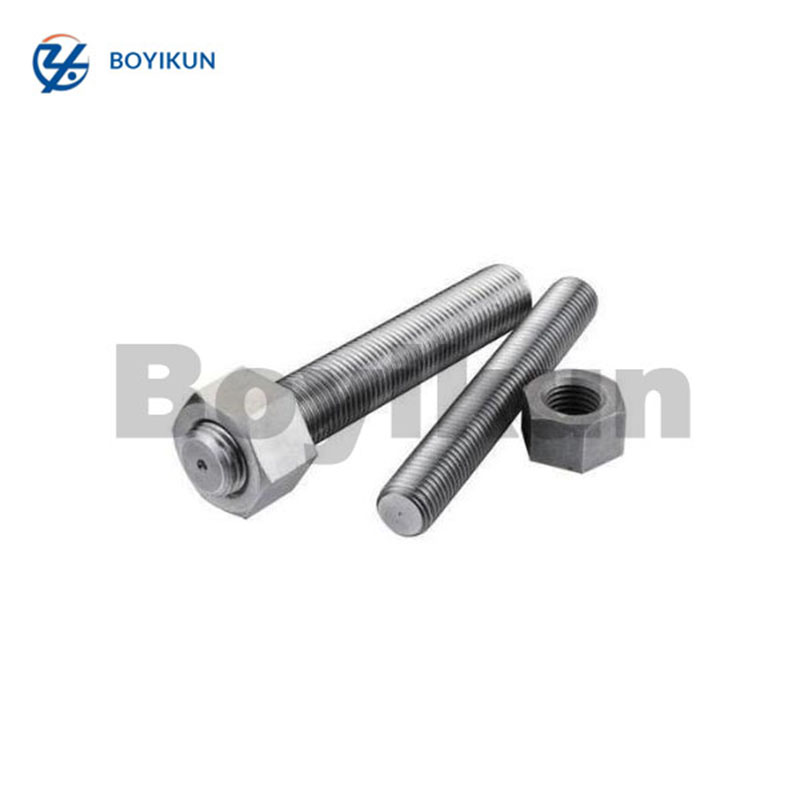
Picking the right fastener usually comes down to how permanent the connection needs to be and what kind of stress it will face. Rivets make sense when you are joining thin sheets or panels that will not be taken apart later. They spread out on the blind side, creating a tight hold that handles vibration without loosening. Once set, though, removing a rivet means drilling it out, so treat them as one-way decisions.
Screws and bolts tend to get used interchangeably, but their threads and heads serve different demands. A screw cuts or forms its own path in softer materials and works well for light to medium loads where you may want to adjust or remove parts. Bolts pair with nuts and washers to deliver clamping force across thicker assemblies, and they tolerate heavy shear and tension better than most screws. If the joint needs periodic inspection or torque checks, bolts are far easier to service.
A quick way to narrow the options is to check the base material and the maintenance plan. Thin aluminum or plastic often distorts under bolt torque, so a rivet or a thread-forming screw is the safer call. Hardened steel frames with high load transfer almost always justify a grade-marked bolt. Think about whether the next person to touch that area will thank you for making it removable, or whether a permanent, vibration-proof bond is what actually fits the job.
Threaded Inserts That Keep Soft Materials from Stripping Out
Soft materials like aluminum, plywood, or plastic can't hold machine screws for long—threads tear out under repeated assembly, turning a simple repair into a stripped mess. Threaded inserts solve this by embedding a durable metal or high-strength polymer thread into the host material. Once installed, the insert spreads the clamping load across a larger area, so the fastener bites into steel or brass instead of soft fibers or thin sheet stock. The result is a connection you can torque down, remove, and reinstall dozens of times without losing grip.
Installation styles vary, and that's where most people get tripped up. Heat-set inserts melt into thermoplastics with a soldering iron, creating a strong, flush fit. Press-in knurled inserts work for drilled holes in wood or composites, while key-locking and self-tapping versions handle blind holes or thin panels. Match the insert's outside profile to your material: coarse external threads for soft plastics, fine knurls for plywood, or flanged heads to prevent pull-through on sheet metal. Ignore this and even the best insert will spin or pull out under load.
A few practical notes make the difference between a permanent repair and a repeat failure. Drill the hole slightly undersized for press-fit inserts, and use a drill press or guide block to keep it perpendicular. For heat-set types, set the iron just below the plastic's melting point and let the insert sink under its own weight—forcing it creates voids. In wood, a drop of thin CA glue on the outside of a brass insert locks it against vibration without contaminating the internal threads. Test your first installation in scrap material; once you feel that solid bite, you'll never trust bare threads in soft stock again.
Torque Wrenches Aren't Optional: The Real Cost of Guesswork
Torque wrenches often get treated like a luxury tool, something you borrow only when the repair manual demands it. But skipping the proper torque spec is like baking without measuring flour — you might get lucky, but the odds are stacked against you. A nut tightened by feel can be off by 50% or more, and that error doesn't stay hidden. It shows up as stripped threads, warped brake rotors, or a wheel that works loose on the highway. The fix isn't cheap, and the danger isn't theoretical. One loose lug nut at speed can turn a routine drive into a catastrophic failure.
Think about the hidden costs beyond the immediate repair. Overtightened bolts stretch and weaken, failing long before their rated life. Undertightened fasteners vibrate free, causing cascading damage to surrounding components. In a professional shop, guesswork leads to comebacks, warranty claims, and unhappy customers who won't return. For a home mechanic, it means doing the same job twice because a gasket didn't seal or a pulley flew off. Even worse, in critical applications like suspension or engine internals, a torque error can destroy an entire assembly. A quality torque wrench costs less than a single tow truck call.
The real cost of guesswork isn't measured in dollars alone. It's measured in lost time, damaged parts, and the nagging worry that something you touched might fail later. Once you use a torque wrench and feel the click at the specified value, you realize how unreliable your arm's memory really was. The tool removes the guesswork, and with it, the risk. For anyone serious about doing the job right — whether you're rotating tires or rebuilding a cylinder head — a torque wrench isn't a nice-to-have. It's the difference between a repair that lasts and a repair that haunts you.
Coatings and Plating That Fight Rust in Outdoor Assemblies
Outdoor assemblies live in a brutal world—temperature swings, road salt, coastal humidity, and constant moisture all gang up on bare steel. The first line of defense is usually a sacrificial coating like hot-dip galvanizing or zinc plating, which corrodes before the base metal does. For fasteners and small brackets, zinc flake coatings (like those used in automotive underbody parts) offer a thinner, cleaner finish than traditional galvanizing while still holding up for decades in salt spray tests. The trick is matching the coating thickness to the exposure: a garden gate hinge in Arizona needs far less protection than a dock cleat in Miami.
When you need both rust resistance and a good-looking finish, powder coating over a proper pretreated surface beats wet paint almost every time. The electrostatic application wraps edges and recesses where rust likes to start, and the cured film is thick enough to shrug off UV and abrasion. But powder coating alone is not enough on raw steel in outdoor service—if moisture creeps through a scratch, the steel underneath will still rust. That's why high-end outdoor enclosures and structural brackets get a zinc-rich primer under the powder topcoat, giving you both barrier protection and cathodic protection at any damage points.
For stainless steel and aluminum parts, "rust prevention" is more about passivation and anodizing than traditional plating. Stainless fasteners benefit from citric or nitric passivation to remove free iron and rebuild a uniform chromium oxide layer, especially after machining or welding. Aluminum outdoor hardware often gets a hard anodize or a chromate conversion coating, which not only blocks corrosion but also provides a good base for adhesive bonding or paint. And don't overlook the newer nanoceramic and thin-film polymer coatings—they can extend the life of existing galvanized or plated parts without adding bulk or changing thread tolerances.
Locking Fasteners: What Actually Stops Vibration Loosening
Vibration loosening in bolted joints rarely happens because the nut spins backward on its own. The real culprit is transverse slip between the contact surfaces—threads, bearing face, and clamped parts. When cyclic side loads cause micro-sliding, the friction that holds the joint briefly drops, letting the bolt lose a fraction of preload. Traditional split washers and nylon patches only raise the breakaway torque; they do little once sliding starts. What actually stops loosening is designing the joint so that relative motion between threads and bearing surfaces is either blocked or made irrelevant. That means either increasing the clamp force well above the separation threshold, or introducing a mechanical feature that creates a hard stop against rotation, not just extra friction.
Wedge-locking washers take a different approach: instead of relying on constant friction, they use interlocking cam faces with a ramp angle steeper than the thread pitch. Under vibration, any attempt by the nut to rotate forces the washer halves to expand axially, which actually increases clamp load and pushes the joint back into tightness. Similarly, prevailing-torque nuts with deformed threads or elliptical collars work because they introduce a consistent metal-to-metal interference across the thread flanks, not just a soft insert that can creep. For high-temperature or high-cycle applications, all-metal locknuts with a distorted top thread section often outperform nylon because the locking action comes from elastic deformation of the nut body, which recovers after each vibration cycle.
Chemical locking with anaerobic adhesives works on a different principle: the liquid fills micro-gaps in the thread and cures into a rigid thermoset polymer that bonds the mating threads together. While it prevents rotation, its real value in vibration environments is that it fills the clearance space, eliminating the tiny relative movements that cause fretting and fatigue. On the other hand, flanged fasteners with serrated bearing faces bite into the clamped material, creating a mechanical interlock that resists sliding at the interface where loosening usually originates. The most reliable designs combine these effects—high initial preload, a mechanical anti-rotation feature, and controlled bearing surface grip—because vibration loosening is not a single failure mode but a chain of micro-events that must be broken at more than one link.
FAQ
In vibration-heavy assemblies, the real problem is usually preload loss rather than the fastener snapping. A fastener with a proper locking feature—like a nylon patch, distorted threads, or a wedge-style lock washer—paired with correct torque control tends to hold far better than simply using a stronger bolt. Surface finish and thread fit matter just as much as the material grade.
The distinction often comes down to whether the joint needs a nut or can tap directly into the base material. Bolts give more flexibility for high-clamp loads and are easier to replace if threads strip, while screws suit thinner sections and compact designs. Match the grip length to the joint thickness so the unthreaded shank carries shear loads where possible.
Not necessarily. Stainless excels in many wet or marine environments, but it can gall badly with repeated assembly or seize in high-temperature cycling. Coated carbon steel—like zinc-nickel or hot-dip galvanized—often provides better durability for outdoor structures exposed to salt spray, especially if cost or magnetic properties matter.
Relying on torque alone without accounting for friction variation. The same torque can produce wildly different preloads depending on whether the threads are dry, oiled, or have anti-seize. A controlled tightening process, calibrated tools, and occasionally checking the angle of rotation can give much more consistent joint integrity than chasing a single torque number.
Generally, once the nylon ring has been deformed by the mating threads, its locking ability drops on each cycle. A few reuses might be acceptable for non-critical panels, but for safety-related or high-vibration joints, plan on replacing self-locking nuts every time they are removed.
The flat washer spreads load and protects the surface, while common split lock washers add very little vibration resistance once the joint relaxes. Many engineers now favor flanged fasteners or conical washers that maintain tension through spring action. Using both together is often a habit rather than a proven reliability upgrade.
Fine threads offer a slight edge in static strength and give more precision during adjustment, but they are more prone to stripping in softer materials and can be slower to assemble. Coarse threads are more forgiving with dirt or damaged holes, which is why they dominate heavy equipment and field repairs.
Avoid acid pickling or electroplating without proper baking, especially for grades 10.9 and 12.9. Mechanical plating, zinc flake coatings, or organic finishes reduce hydrogen uptake. Keep service temperatures below the coating's limit and ensure the material has been properly heat-treated before any coating process.
Conclusion
Reliable joints rarely come down to a single heroic fastener choice—they hinge on how well every small component works together. A washer, for instance, might seem like an afterthought, but it spreads clamping force across a wider area and keeps the bolt head from digging into softer surfaces. Without that simple disc, even a properly torqued bolt can lose preload once the material underneath deforms or settles. Choosing between rivets, screws, and bolts also sets the tone for assembly life. Rivets make sense where you need a permanent, vibration-resistant connection and can’t access the back side for a nut. Screws offer easy disassembly and work well in thinner materials, while bolts paired with nuts deliver high clamp loads for structural joints. When those joints involve plastics, wood, or thin sheet metal, a threaded insert stops internal threads from stripping out on the first or second reassembly—preserving the connection long after the original tapped hole would have failed.
Assembly quality depends just as much on how the fastener is installed and protected. Torque wrenches turn guessing into measurable preload, and skipping them invites both under-tightened joints that loosen and over-tightened ones that crack or shear. The cost of that guesswork shows up later as field failures, not just wasted parts. Outdoor equipment adds another layer: bare steel fasteners corrode and seize, so zinc flake, galvanizing, or specialized polymer coatings keep rust from breaking the connection before the structure itself ages. Finally, vibration remains the great saboteur of threaded joints. Nylon-insert lock nuts, deformed-thread nuts, and wedge-locking washers all address loosening differently, but the right choice depends on temperature, reusability, and load direction. The most dependable assemblies don’t rely on one trick—they combine the correct fastener type, proper torque, corrosion protection, and locking method into a system that holds together long after ordinary joints would have worked loose.
Contact Us
Contact Person: Xianchen Hu
Email: [email protected]
Tel/WhatsApp: 86-13248645200
Website: https://www.hexnb.com/