

Top Caster Wheels Factory: Delivering Unmatched Durability and Smooth Performance
2026-07-18
When it comes to keeping your operations moving without a hitch, the quality of your caster wheels can make all the difference. That's why industry leaders turn to CMCL, a factory that has mastered the art of blending rugged durability with effortless glide. In a market flooded with underwhelming options, CMCL stands apart by engineering wheels that laugh off heavy loads and rough floors while delivering the whisper-quiet, smooth performance your workflow demands. In this post, we’ll dive into what makes this factory a cut above the rest—and why your equipment deserves nothing less.
Engineering Excellence: The Core of Our Caster Durability
We don't just assemble casters; we engineer them from the ground up. Every component, from the swivel raceway to the wheel tread, is the result of meticulous design choices aimed at withstanding punishing loads and constant motion. Our engineers obsess over details like heat treatment protocols for kingpins and precision-fit tolerances that eliminate play, ensuring that each caster rolls smoothly and predictably, even after years of hard use in unforgiving environments.
This commitment to engineering shows in the way our casters maintain their swivel and load-bearing capacity over time. Instead of relying on off-the-shelf bearings, we custom-match raceway curvatures and ball sizes to distribute stress evenly, preventing the premature wear that plagues ordinary casters. The result is a fleet of casters that resists wobble, eases ergonomic strain on operators, and keeps your equipment moving with minimal downtime—a direct payoff of decisions made on the drawing board.
Durability isn't a happy accident; it's designed in. From finite element analysis that predicts failure points to rigorous cycle testing that validates our designs, every caster carries the imprint of a team that treats reliability as a non-negotiable engineering metric. When you mount one of our casters, you're bolting years of iterative refinement to your cart or rack—built not just to roll, but to endure.
Precision Manufacturing for Flawless Movement
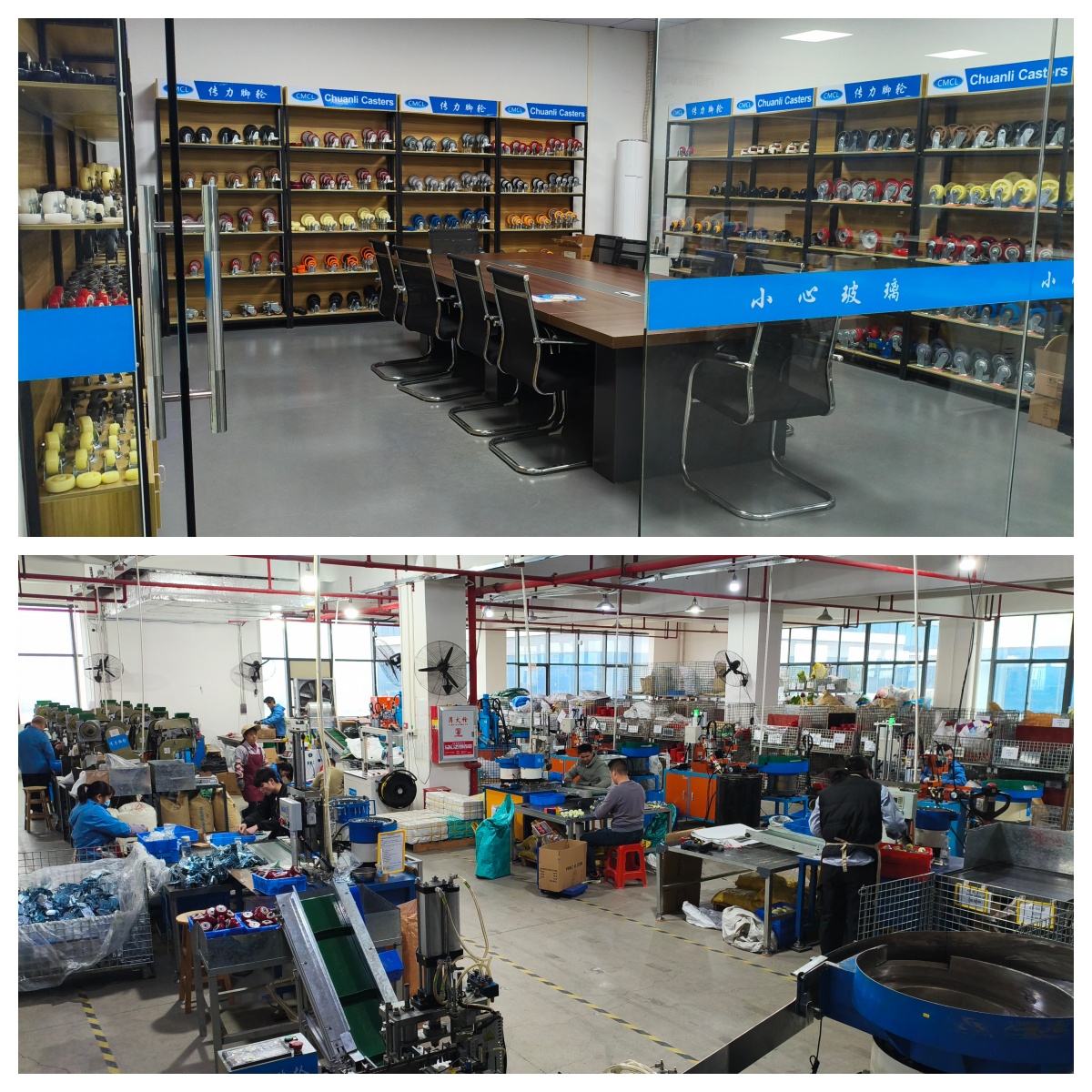
Every component begins its journey in a controlled environment where micron-level tolerances are the norm, not the goalpost. From the initial alloy selection to the final surface finish, each step is guided by decades of accumulated expertise and a refusal to compromise. It's not about hitting a number—it's about understanding how thermal expansion, load distribution, and material memory interact in the real world. That kind of insight can’t be automated; it has to be cultivated.
The machining processes themselves are choreographed to eliminate vibration and tool chatter long before they become measurable. Spindle runout is checked with instruments that few shops even own, and cooling strategies are tailored to the specific crystal structure of the metal being cut. The result is a geometry so stable that post-production stress relief becomes almost redundant. It’s a quiet, obsessive pursuit of mechanical equilibrium.
When the parts finally come together, the motion feels frictionless not because it’s loose, but because everything aligns within a microscopic window. Bearings preload themselves exactly as calculated, and gear meshes settle into a pattern that only improves with use. This isn’t simply high-end manufacturing; it’s a restoration of the trust that a mechanism should never call attention to itself.
Materials That Outlast Industry Standards
Quality should never have an expiration date. The materials we use are engineered to withstand decades of use, not just years. Whether exposed to harsh UV rays, saltwater corrosion, or extreme temperature swings, these components refuse to degrade prematurely. We’ve seen installations from the early ’90s that still look and perform like they were put in yesterday—proof that real durability isn’t a claim, it’s a byproduct of obsessive material selection and rigorous testing.
While others chase trends, we chase longevity. Each alloy, composite, and coating is chosen because it has a proven track record in the toughest environments on Earth—from offshore rigs to alpine installations. We don’t settle for supplier specs; we validate everything in-house, pushing samples until they crack, corrode, or simply give up. The results are components that outlast the buildings they’re part of, quietly outperforming industry benchmarks without a whisper of maintenance.
Our material science team treats every project like a long-term bet. We study failure points from the past to eliminate them from the future, blending modern polymer technology with time-tested metals. The goal isn’t just to meet a standard—it’s to render it obsolete. When your infrastructure is still standing strong while nearby structures are being replaced, that’s when you understand the difference between compliant and truly enduring.
Custom Solutions for Every Rolling Challenge
Every rolling process comes with its own set of demands—from delicate surface finishes to heavy stock removal under punishing loads. Off-the-shelf products rarely fit the exact profile, which is why we build each solution from the ground up. By studying your specific material, speed, and tolerance requirements, we tailor roll geometry, bond formulations, and even the mounting hardware to match. The result is a tool that doesn’t just work, but works seamlessly with your production line.
Where standard abrasives fall short, our engineered approach steps in. Multi-step finishing sequences, odd-shaped workpieces, or tight environmental constraints don’t phase our design team. We combine decades of tribology knowledge with real-world trial data to create rolls that handle heat differently, shed debris more cleanly, or maintain pressure consistency over extended runs. It’s about solving the root cause, not just patching the symptom.
Your challenge might be boosting throughput without sacrificing surface quality, or maybe you need a single roll that covers both roughing and polishing. We look at the entire system—machine dynamics, coolant interaction, operator ergonomics—and fine-tune every detail. The final product is delivered with a clear implementation plan, so you can drop it in and see immediate improvement, without endless trial and error on your end.
Rigorous Testing: Beyond Ordinary Performance
When we say rigorous, we don't just mean ticking boxes on a checklist. Every component undergoes simulation cycles that mirror years of real-world abuse in a matter of days. From thermal shock chambers that swing between freezing cold and blistering heat, to vibration tables that rattle hardware until metal fatigue sets in—our validation process is designed to break things on purpose, long before they ever reach you.
But it's not just about stress tests. We measure performance in the margins: how a device behaves at 95% load for weeks on end, whether its signal integrity holds when adjacent channels flood with noise, or if a mechanical actuator still responds within tolerance after a million cycles coated in fine dust. These edge cases separate things that merely function from things that never let you down.
What emerges isn't just a product that meets specs—it's one that quietly outlasts expectations. By the time it earns our stamp, it has already survived a harder life than most experiences in a decade. That's the quiet confidence we build into everything we make.
Global Trust: Industries Rely on Our Smooth Performance
Every minute of downtime can ripple through operations, eroding confidence and revenue. That's why so many sectors—from logistics to finance—turn to us when reliability isn't just a preference, but a mandate. Our platforms deliver the kind of steady, uninterrupted performance that keeps critical workflows in motion, even under unpredictable load conditions.
The real test of trust comes during peak demand. When transaction volumes spike or supply chains tighten, our infrastructure absorbs the pressure without flinching. Teams across continents count on this consistency to meet their own commitments. It's not just about technology; it's about the quiet confidence that comes from knowing the engine behind your operations won't stall.
This dependability has shaped lasting partnerships. Over time, clients stop checking the status dashboard because smooth operation becomes the norm. And that's the kind of reputation you build when you treat performance as a promise rather than a metric.
FAQ
It's the blend of rigorous material selection and precision engineering that gives their casters an edge—they simply last longer and roll more effortlessly under real-world stress.
They use premium ball bearings and carefully balanced wheel cores, which minimize friction and prevent wobbling, even under heavy loads or around tight corners.
Every batch undergoes dynamic load testing, swivel endurance trials, and tread wear simulation—only units that pass without a hitch get the green light.
Absolutely. Their engineering team regularly tailors mounting configurations, tread materials, and load ratings for sectors like medical equipment, automation, and heavy industry.
You'll find them in material handling, automotive assembly lines, hospital beds, and even cleanroom carts—anywhere a reliable, quiet roll is non-negotiable.
They double down on corrosion-resistant coatings and reinforced wheel fastenings, often incorporating heat-treated swivel races to shrug off impact and chemical exposure.
It's pivotal. From high-tensile steel frames to polyurethane treads designed for floor protection, each material is matched to a specific performance demand, avoiding a one-size-fits-all trap.
Yes, they typically offer trial units so you can put their claims of smoothness and durability to the test in your own setting—no guesswork involved.
Conclusion
Our factory's approach to caster wheels begins with a deep-rooted commitment to engineering excellence, where every design is refined to endure the harshest conditions without compromising on fluid motion. By employing precision manufacturing techniques, we eliminate even microscopic inconsistencies that could lead to wobbling or drag, ensuring each wheel glides with effortless precision. The materials we select go well beyond industry norms—reinforced polymers, heat-treated steels, and advanced composites—are chosen not just for their strength but for their ability to resist wear, corrosion, and deformation over thousands of cycles. This combination of robust engineering and superior materials forms the foundation of a product that truly outlasts expectations.
Beyond the build, we recognize that no two rolling challenges are alike, which is why we offer fully customizable solutions tailored to unique load capacities, floor surfaces, and environmental factors. Every batch undergoes rigorous, real-world simulation testing that pushes the wheels beyond typical operational limits, verifying their smooth performance under stress. This relentless pursuit of reliability has earned us the trust of industries worldwide, from logistics giants to medical equipment manufacturers, who rely on our casters to keep their operations moving flawlessly. It's not just about making wheels—it's about delivering a promise of durability and seamless motion that our clients can count on every day.
Contact Us
Contact Person: Ruby
Email: [email protected]
Tel/WhatsApp: +86 13360379367
Website: https://www.cmcl-casters.com