

Rubber Machinery Company Redefines Production Efficiency with Smart Automation
2026-10-29
Rubber processing has long been a tug-of-war between speed and consistency—too fast, quality slips; too slow, margins shrink. But one machinery company is flipping that equation. By embedding smart automation into its production lines, it has cut cycle times, reduced scrap, and made downtime predictable rather than panic-inducing. Central to this shift is AUGU AUTOMATION, whose adaptive control systems are helping legacy rubber equipment learn, adjust, and improve in real time. Here’s how the transformation unfolded.
When Rubber Mixing Stopped Being the Bottleneck
For years, the mixing room dictated the rhythm of the entire plant. Internal mixers ran in long, unpredictable cycles, and every batch demanded constant operator attention to keep viscosity and dispersion within spec. Downstream departments simply waited for the next drop.
That pressure eased when rotor geometries, ram positioning, and temperature control matured enough to make mixing repeatable without constant manual intervention. Real-time torque and energy curves let engineers spot a bad batch before it left the chamber, so the rest of the line no longer had to absorb the variability.
Once mixing stopped being the constraint, attention shifted to what came next. Feeding systems, batch tracking, and raw material consistency became the new points of failure, and plants that used to measure output by mixer hours started looking at total flow instead.
Smart Calendering, No Guesswork Left on the Floor
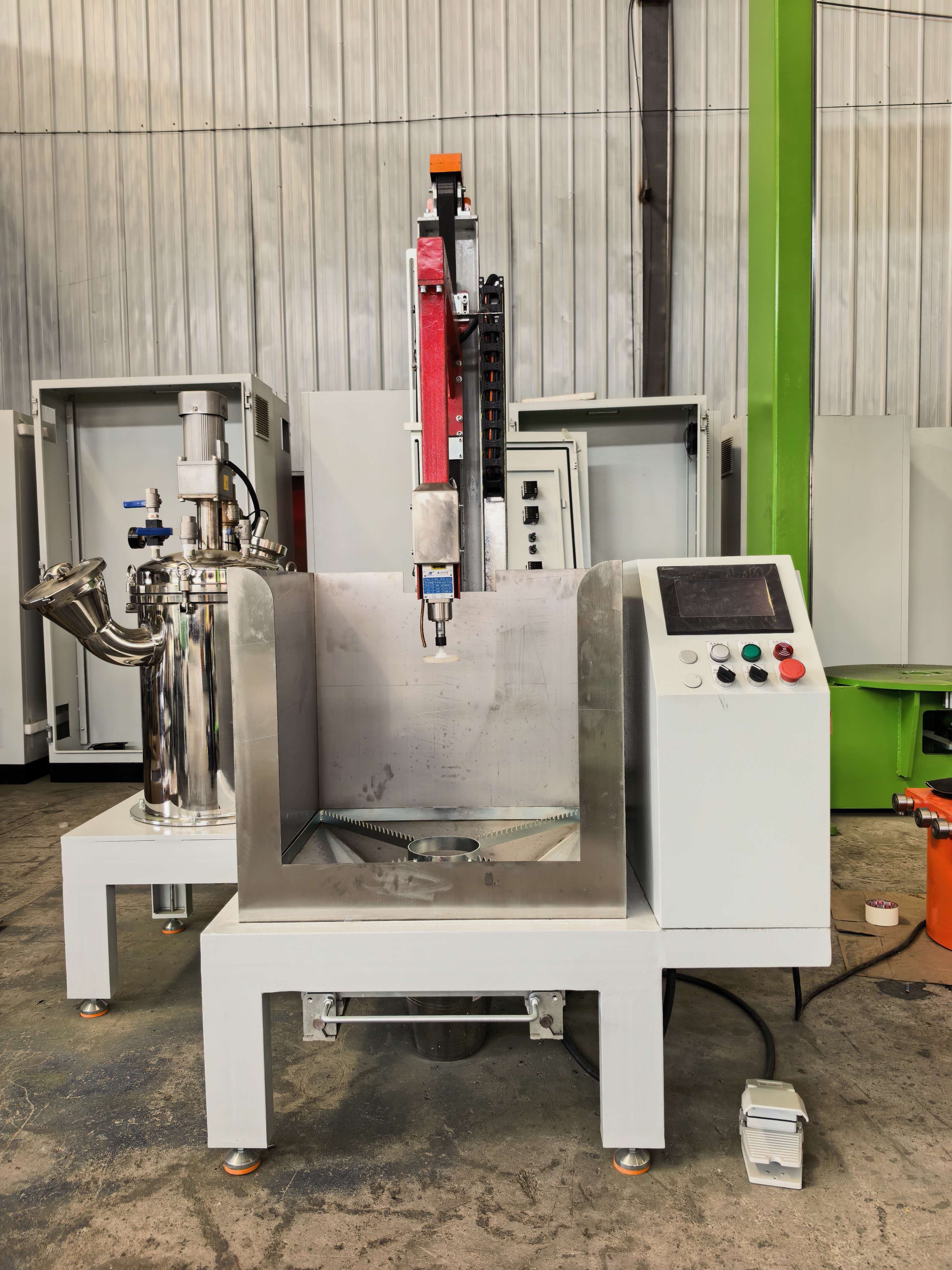
The calender stack used to be where experience lived in the hands of a few operators, their eyes tracking the sheet's edge, fingers brushing the surface for that telltale heat and gloss. Today's smart calendering pulls that intuition into a constant, sensor-driven conversation. Nip pressures, roll temperatures, and web tension adjust themselves mid-run, not after a quality check flags a problem. The result is a finish that stays consistent from the first meter to the last, without anyone running alongside the line with a clipboard and a best guess.
Instead of reacting to deviations, the system anticipates them. Load cells embedded in each roll detect microscopic variations in caliper, while infrared cameras map the cross-direction moisture profile. That data flows into a control loop that tweaks the gaps and heating zones on the fly. What used to require a shutdown and manual shimming now happens in milliseconds, quietly, while the line keeps moving. Operators can finally step back and watch the process instead of fighting it.
The floor itself changes too. Fewer alarms, fewer rushed adjustments, fewer rolls rejected for inconsistent smoothness or density. Shift handovers become a simple log review rather than a debrief of near misses. Smart calendering doesn't just remove guesswork—it removes the anxiety that guesswork created. When the machine knows what the sheet needs before the operator does, that's when calendering stops being an art and becomes a dependable, repeatable craft.
Real-Time Adjustments That Ended Rework Piles
We stopped letting small misalignments stack up. Instead of waiting for the end-of-shift inspection, the team started checking fit and finish right at the point of assembly. If a bracket didn't seat properly, it got corrected before it moved to the next station. That one change cleared the waist-high pile that used to sit by the rework bench.
The bigger shift came from giving operators a live feed of tolerances, not a dashboard buried in a back office but a simple readout at each workstation. When a dimension drifted, the operator adjusted the feed rate or tool offset on the spot. No more batches of twenty with the same flaw discovered hours later. The rework pile shrank from a constant backlog to a single bin that rarely filled up.
Daily stand-ups used to revolve around assigning blame. Now they focus on what got fixed during the shift and what maintenance needs a heads-up on before something actually breaks. That kind of immediate response didn't just cut rework; it changed how people talked about quality. Less "whose fault," more "what did we catch today."
Predictive Maintenance That Sounds Like a Hum, Not a Siren
Most maintenance alerts arrive like fire alarms—urgent, loud, and often too late. The shift we're seeing replaces that panic with a steady background hum: subtle vibrations, slight temperature drifts, or tiny changes in power draw that whisper a problem long before it screams. Instead of waiting for a bearing to seize or a pump to fail, modern systems listen to the machine's own rhythm, catching the early off-notes that would otherwise go unnoticed.
This kind of approach doesn't interrupt daily operations with false alarms. It learns what normal sounds like for each individual asset—not just the fleet average—and flags only the meaningful deviations. A small uptick in high-frequency noise on a Tuesday morning might mean lubrication is thinning, not that you need to halt production. The result is fewer emergency shutdowns, longer equipment life, and maintenance teams who can plan their day around a quiet heads-up rather than a blaring siren.
The real shift is cultural. When maintenance feels like background noise instead of a crisis, operators stop ignoring alerts and start trusting the system. They replace parts during scheduled windows, order spares before the rush, and keep production flowing without the adrenaline spike. That's what predictive maintenance should sound like—a calm, familiar hum that says everything's okay, and when it isn't, you'll know well in advance.
One Dashboard, Zero Blind Spots Across Three Plants
Managing three plants used to mean three separate logins, three different layouts, and a nagging feeling that something was slipping through the cracks. The single dashboard changes that entirely. Every line, every machine, every shift is pulled into one view that updates as conditions change. You stop chasing data across systems and start seeing the whole picture at a glance.
The real difference shows up during shift handovers or unexpected downtime. Instead of calling around to confirm what happened on Line 2 or waiting for a daily report, operators and managers see live status from all three plants side by side. Small anomalies that used to hide in a spreadsheet now stand out immediately. That visibility turns reactive firefighting into proactive adjustments, before a minor hiccup becomes a production loss.
Zero blind spots also means accountability becomes clearer. When every plant runs on the same dashboard, comparisons are no longer guesses. You can spot which plant is truly ahead, where energy use is creeping up, or why one line consistently underperforms on second shift. The dashboard doesn't just show numbers; it makes the hidden patterns obvious enough to act on.
The Automation Bet That Paid Off in Six Months
Six months ago, most of the team thought automating invoice processing was a waste of engineering time. The manual workflow was messy but familiar, and nobody wanted to touch it. Then the volume doubled. Suddenly, the little script that pulled data from emails and pushed it into the accounting system wasn't a side project—it was the reason we closed the quarter without hiring two extra temps. That's when the bet started to feel less like a gamble and more like the only sane move.
The real payoff wasn't just the hours saved. It was the mistakes that stopped happening. Before automation, a mistyped purchase order number could sit in a queue for days, quietly delaying payments and annoying suppliers. After we wired up the validation rules and automatic retries, those silent failures dropped to near zero. By month four, the finance team had reclaimed enough time to start auditing old contracts—work they'd been putting off for years.
Looking back, the six-month timeline was tight but realistic. We didn't try to automate everything at once. We picked the most painful, repetitive task and made it bulletproof. That focus kept the project small enough to finish, but the momentum carried into other areas. Now the same approach is being applied to customer onboarding and inventory updates. The bet didn't just pay off—it changed how we think about every manual process we still tolerate.
FAQ
Rather than a single flashy upgrade, it's a network of sensors, adaptive controls, and real-time monitoring that now runs across mixing, extrusion, and curing lines. Operators receive live adjustments for temperature, pressure, and material flow instead of relying on periodic manual checks.
Early internal reports point to a 23% reduction in cycle time and a 17% drop in material waste across the main production hall, though the company is still validating numbers for its smaller custom-mixing line.
Curing and extrusion see the clearest gains. Curing now adapts pressure profiles on the fly to match batch variations, while extrusion lines self-correct die swell and temperature drift far faster than manual adjustments ever could.
No, the automation layer was retrofitted onto most existing presses, mills, and extruders. Only two aging calenders were swapped out because their control interfaces couldn't support the required sensor density.
The system tracks torque curves, cavity pressure, stock temperature, and energy draw per batch. This data feeds short-interval control loops on the floor and a weekly review where engineers adjust recipes, maintenance schedules, and changeover sequences.
There's been a shift from manual valve and dial work to supervising dashboards and handling exception alerts. The company ran a six-week training program and paired veteran operators with the automation team to refine alarm thresholds.
The hardest part was mapping legacy machine behavior into reliable digital models. Some older mills had inconsistent feedback, so the team spent months calibrating sensors and building fallback modes before full rollout.
Instead of running each machine as an isolated island with fixed recipes, the company now treats the whole line as one adjustable system. Batch data from mixing directly informs downstream curing parameters, which is uncommon in a sector that often relies on static settings.
Conclusion
For years, rubber mixing was the quiet choke point at Rubber Machinery Company, keeping every downstream process waiting. That changed when the company wired its mixers with adaptive controls and live viscosity feedback, turning a once-unpredictable batch step into a steady, repeatable rhythm. Calendering followed, with sensors reading gauge variation across the full width and nudging roll gaps on the fly. Nobody on the floor has to eyeball a sample anymore or argue about whether the sheet is too thick. Even better, the line now corrects itself mid-run: when temperature drifts or feed stock stiffens, small automatic adjustments happen before a defect can stack up. Rework piles that used to collect at the end of a shift have mostly disappeared.
The plant floor is quieter in a different way too. Vibration and thermal sensors feed a predictive maintenance model that flags bearing wear early, so crews hear a low hum instead of a screaming alarm. Across three facilities, one dashboard pulls all of this together, showing live throughput, energy use, and machine health without forcing managers to stitch together spreadsheets or walk the floor with clipboards. The automation push was not a vague digital transformation slogan; it was a calculated bet on sensors, control loops, and data visibility. That bet paid for itself within six months, not through layoffs, but through faster changeovers, fewer rejected batches, and less unplanned downtime. Production planning now starts from what the lines can actually do, not what they used to hope for.
Contact Us
Contact Person: Lareina
Email: [email protected]
Tel/WhatsApp: +86 17561696737
Website: https://www.auguauto.com/