
Precision Swiss-Type Machining for OEM Parts: Inside Our Advanced Factory
2026-05-21
In the world of precision manufacturing, Swiss-type machining has become a linchpin for producing complex OEM parts with extraordinary accuracy. At WINNRUI CNC, our advanced factory takes this technology further, blending micron-level tolerances with automated efficiency. Step inside to see how we turn intricate designs into flawless reality, and why our approach redefines what’s possible in high-volume miniature component production.
Where Precision Runs Deeper Than a Hair’s Breadth
In the domain of ultra-fine fabrication, the margin for error isn't measured in millimeters or even microns—it lives in the realm of nanometers, where a single strand of human hair becomes a sprawling highway by comparison. Here, a deviation of a few dozen atoms can mean the difference between flawless function and complete failure. The machinery that operates at this scale doesn't just cut or etch; it feels its way through materials, often relying on feedback loops so sensitive they can detect the whisper of a misplaced electron. It's a world where the term "hair's breadth" feels almost laughably vast, a clumsy unit for artisans who work with beams of light and controlled chemical reactions to sculpt features invisible to the naked eye.
What makes this level of accuracy truly astonishing isn't just the technology itself, but the quiet, constant correction behind it. Temperature fluctuations from a human breath, the tremor of a distant freight train, or the near-imperceptible expansion of materials as a cloud passes overhead—these are the enemies of consistency at sub-micron scales. Engineers design systems that anticipate and counteract these disturbances in real time, isolating the work zone into a bubble of near-perfect stillness. It's less like manufacturing and more like conducting an orchestra where every instrument must hit a note within a fraction of a wavelength of light, or the entire symphony collapses.
And yet, for all its high-tech sterility, there's an almost obsessive artistry in chasing tolerances that flirt with the atomic lattice. No factory floor drone could pull it off; it demands a blend of physics intuition, material science, and sheer stubborn patience. When a finished component emerges—a mirror for a satellite optic, a channel in a medical microfluidic chip—it carries the invisible signature of countless hours of tweaking and calibrating. The end user may never see the struggle, but they'll feel it the moment performance exceeds every expectation, as if the object itself has forgotten it was ever made by human hands at all.
Our Floor: Not Your Typical Machine Shop
Step onto our floor and you'll immediately sense the difference. Gone are the cluttered aisles, the lingering smell of cutting oil, and the ear-splitting noise that define most machine shops. Instead, you're greeted by a clean, climate-controlled space where every piece of equipment has its place and every surface gleams. We built this environment because we believe that precision manufacturing deserves a setting that matches the quality of the work — and our team thrives in it.
It's not just about aesthetics; it's about capability. Here, advanced 5-axis CNC machines sit alongside specialized grinding and EDM equipment, all meticulously calibrated and ready for complex geometries. Our floor is arranged to maximize flow, from raw stock to finished inspection, reducing setup times and letting us pivot quickly between prototype runs and full-scale production. You won't find off-the-shelf automation retrofitted as an afterthought — every system is purposefully integrated, something you'd be hard-pressed to see elsewhere.
What truly sets us apart, though, is the team you'll encounter. Our machinists aren't just button-pushers; they're problem-solvers who collaborate with engineers from the first sketch. Walk through and you might see a veteran toolmaker mentoring an apprentice on a tricky titanium component, or a programmer fine-tuning a toolpath for a medical device part that's barely visible. It's a blend of hard-won experience and fresh curiosity, and it infuses every job that crosses our floor. That's why we're not your typical machine shop — we've built something different, and it shows in every part that ships out the door.
Partnering with OEMs, Not Just Processing Orders
True collaboration with OEMs goes far beyond simply relaying specifications and waiting for a shipment. It means embedding ourselves in their design and engineering conversations from the very start, understanding the nuances of their production goals, and sharing market intelligence that can shape product evolution. Instead of a transactional handoff, we treat each project as a shared venture where both teams are invested in creating something that outperforms expectations—whether that involves refining a circuit layout, suggesting alternative materials for better heat dissipation, or co-developing a testing protocol that catches issues long before they reach the assembly line.
This approach transforms the relationship from a vendor dynamic into a technical partnership. For instance, when a client faced unexpected signal interference in a compact device, our engineers didn’t just quote a new PCB thickness—they sat with the client’s team, analyzed the entire signal path, and proposed a subtle ground-plane adjustment that resolved the issue without expanding the enclosure. That kind of proactive problem-solving can’t happen when the interaction is limited to order confirmation and delivery tracking. It requires a deep understanding of the product’s end-use, a willingness to push back on assumptions, and the agility to iterate rapidly based on real-time test data rather than static drawing revisions.
Ultimately, partnering in this way shortens development cycles and reduces costly redesigns, because potential pitfalls are addressed before tooling begins. It also breeds trust that outlasts any single production run. Clients begin to see us as an extension of their own R&D capacity—a team that can anticipate challenges, suggest innovations, and adapt to shifting requirements without missing a beat. This isn’t about processing orders faster; it’s about building products smarter, together.
Swiss Lathes Demystified: How We Tame Complex Geometries
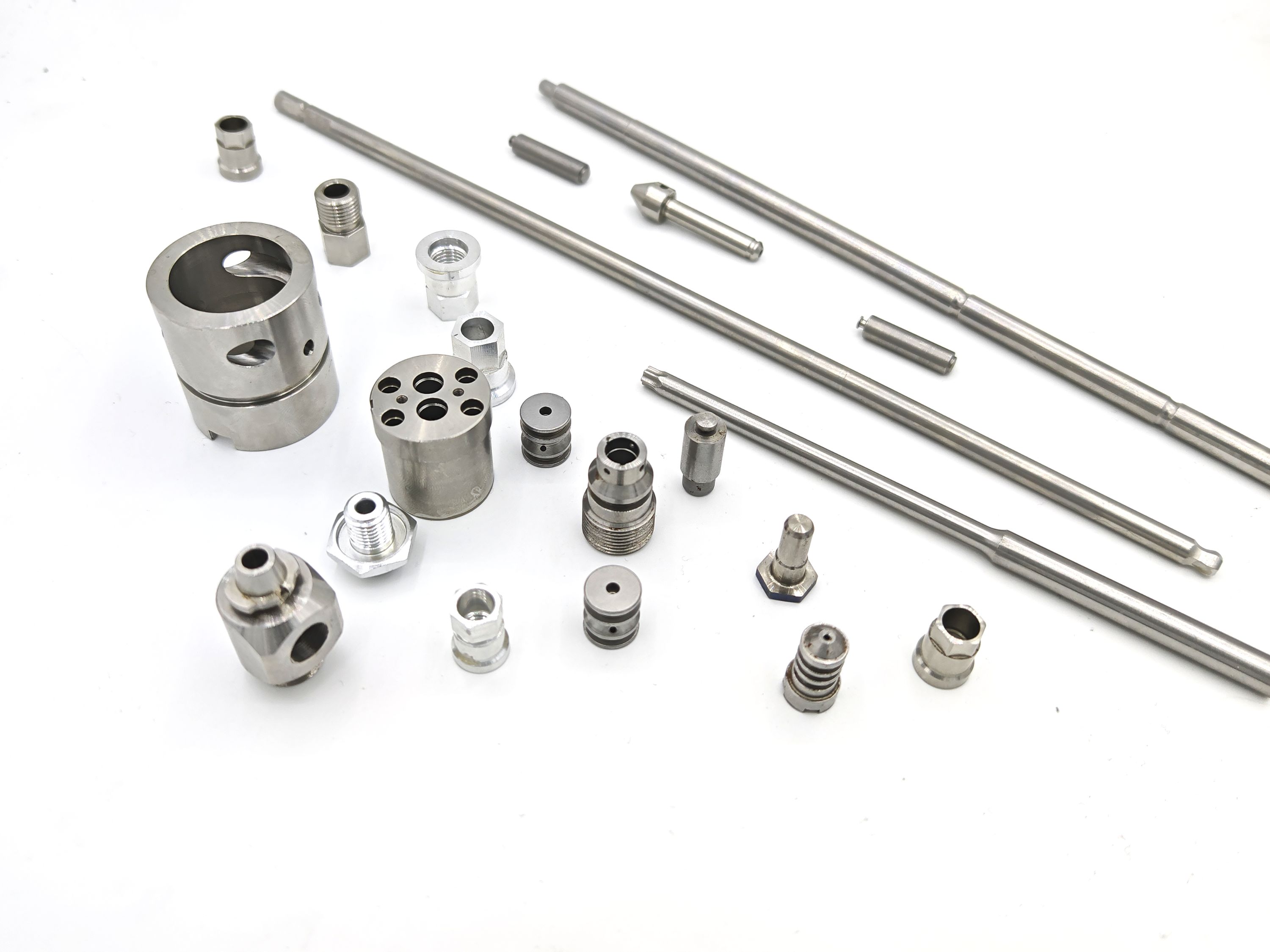
Swiss-type lathes work on a fundamentally different principle than conventional lathes. Instead of the workpiece being clamped at one end and cantilevered out, the material feeds through a guide bushing that supports it right next to the cutting point. This near-zero overhang means we can make incredibly long, thin parts that would chatter or deflect on any other machine. Think bone screws, miniature pins, or watch stems—geometries where diameter-to-length ratios exceed 1:10. The guide bushing holds the stock steady while the tool gang plate leaps into action, performing multiple operations simultaneously with hair-splitting precision.
Complex geometries aren't just about extreme slenderness. Swiss machines excel at combining milling, drilling, threading, and even eccentric turning in a single setup. With live tools on the gang plate and a sub-spindle that can grab the parted-off component for backworking, we eliminate secondary operations that invite alignment errors. A part might have a hexagonal broach, a cross hole, and a spiral groove—all finished before it ever leaves the machine. This consolidation means we hold concentricity tolerances down to a few microns across features that would traditionally require multiple fixturings.
Programming these intricate dance routines takes a different mindset. We're synchronizing two spindles and up to a dozen tools in tight quarters, often with overlapping machining paths. Thermal stability becomes paramount; that's why high-end Swiss machines bathe the cutting zone in temperature-controlled oil and use linear motors to eliminate backlash. We compensate for tool wear in real time through probing cycles, ensuring that the hundredth shaft rolling off the line matches the first. The real art lies in learning to listen—to the chip formation, the spindle loads, the subtle harmonics that tell us when a guide bushing needs adjustment. It's as tactile as it is technical, and that's precisely why we can produce geometries that still make old-school manual machinists shake their heads in disbelief.
Proving Accuracy Beyond Paper Certificates
In an industry flooded with same-day certifications, it’s easy to forget that a paper certificate rarely tells the full story. While it might look official, too often it’s just a snapshot—a single test passed under ideal conditions. At the heart of true reliability lies something less visible: a rigorous, ongoing culture of verification. We don’t ask you to take our product’s accuracy on faith. Instead, we open our processes for inspection, from raw material traceability to real-world stress testing that far exceeds minimum standards. This isn’t just about earning a seal; it’s about proving, day after day, that our equipment performs where it matters most: in your hands, under your unique demands.
Consider how many certificates simply confirm a product met a benchmark years ago, in a controlled lab. Time, wear, and varying field conditions rarely enter the equation. Our approach turns that model on its head. We maintain living documentation of performance, updated with data from ongoing batch tests and forensic-level inspections. When a measurement matters—when safety, compliance, or a critical process hangs in the balance—you deserve more than a static piece of paper. You need evidence that accuracy is sustained, repeatable, and resilient. That’s why we invite our clients into the validation process, sharing granular reports and offering hands-on demonstrations that show stability over time, not just a passing grade on day one.
The gap between meeting a standard and proving long-term precision is where trust is built or broken. Paper certificates can be issued and forgotten; real accuracy demands constant attention. We’ve designed our quality systems to be transparent and iterative, with every instrument carrying a digital audit trail that evolves. This means you can trace the calibration history, see environmental impact logs, and understand exactly how your device holds up, even before you commission it. When you look past the frame on the wall, you’ll find that the strongest validation isn’t a document—it’s a partnership rooted in demonstrated, measurable consistency.
Materials That Others Shy Away From, We Embrace Daily
There’s a kind of quiet excitement when we come across a material that most would refuse. Odd textures, quirky compositions, industrial byproducts—these are exactly the things that spark our curiosity. While others see obstacles, we see raw potential waiting to be reimagined.
We don’t just tolerate unconventional inputs—we actively seek them out. It’s not about being different for the sake of it; it’s about recognizing that value often hides in the unlikeliest places. By giving these materials a second life, we create something durable, functional, and honestly, a little unexpected.
FAQ
Swiss-type machining uses a sliding headstock and guide bushing to support the workpiece very close to the cutting tool, which dramatically reduces deflection. This makes it ideal for long, slender, and highly detailed components where traditional lathes would struggle with chatter or inaccuracy. It’s the go-to process when you need tight tolerances on parts like miniature screws, pins, or medical bone screws.
We’ve set up our workflow to switch between jobs quickly. Instead of long, dedicated production lines, we use flexible cell setups with quick-change tooling and pre-configured programs. This lets us run smaller batches economically while still holding the same precision standards as high-volume runs. It’s all about reducing setup time and keeping the machines running, not idle.
We work with a wide range, from standard stainless steels and aluminum to more challenging alloys like titanium, Inconel, and medical-grade plastics. Our machines are equipped with high-pressure coolant systems and the right tooling to handle difficult materials cleanly. If it’s machinable and fits within the diameter capacity, we’ve probably cut it before.
It starts with an in-process inspection right at the machine, where operators check critical dimensions with micrometers and optical comparators. Then parts go through a formal QC lab for CMM measurement, surface finish analysis, and often laser scanning if the geometry is complex. We do full first-article inspections and keep a digital traceability record for every batch, so nothing slips through.
Our engineering team gets involved early on. We’ll review your CAD model and run a design-for-manufacturing analysis to suggest improvements that take advantage of the Swiss process—like combining multiple operations into one or tweaking a tolerance to reduce cost without affecting function. Then we’ll prototype and send you samples for approval before full production.
We’ve invested heavily in automated material handling and machine monitoring. Our Swiss machines feed bar stock from auto-loaded magazine racks, and real-time data streams let us track spindle usage, tool wear, and production metrics from anywhere. Lights-out operation is standard here, and we have a digital twin of the shop floor to simulate new jobs before cutting metal. It’s not just the machines—it’s how everything is connected.
We’re ISO 13485 and AS9100 certified, so every part comes with full material certs, inspection reports, and batch-level traceability back to the raw material heat lot. We also offer part marking if needed. For implantables, we can handle validated cleaning and passivation processes right on site.
Typically within one to two weeks, depending on material availability. We keep a library of commonly requested alloys in stock, and our programming team can generate the Swiss machine code directly from your solid model. After a quick offline simulation to verify toolpaths, we’re up and running. Rush orders are possible too—we’ve sent functional prototypes out in under 48 hours when the situation demanded it.
Conclusion
Walk onto our production floor and you'll notice it immediately—this isn't a standard machine shop filled with the hum of generic CNCs. Instead, rows of Swiss-type lathes operate in a climate-controlled environment, each one capable of holding tolerances that make a human hair look coarse. We've built a space where the art of machining truly thrives, blending the relentless pursuit of micron-level accuracy with an atmosphere that encourages craftsmanship. It's here that complex geometries, the kind most shops dread—thin-walled medical components, aerospace fittings with intersecting deep bores, micro-sized bone screws—become our daily bread. We don't just program and run parts; we decode the design intent behind every OEM drawing, suggesting modifications that preserve function while making high-volume production far more stable. Our Swiss lathes are demystified because we treat them as an extension of our engineering team, not just metal-cutting assets.
That depth of partnership flows into every material we tackle. Where others see risk—Inconel that eats tools, titanium prone to chatter, PEEK that warps under heat—we see an opportunity to prove our mettle. We forge collaborations with OEMs that go well beyond processing purchase orders; we embed ourselves in their product development cycles, co-creating solutions that compress timelines and eliminate assembly headaches. To us, accuracy isn't something you just print on a certificate; it's validated through real-time process monitoring, laser tool setting, and in-machine probing that catches variation before it becomes a reject. By embracing challenging materials daily and owning the entire precision chain from raw stock to finished part, we've become the quiet backbone for OEMs who demand more than a supplier—they need a partner who sweats the sub-micron details as intensely as they do.
Contact Us
Contact Person: Tim
Email: [email protected]
Tel/WhatsApp: +86 15522553731
Website: https://www.winnrui-cnc.com/