
Pizza Sauce Exporter Selection Criteria for Global Buyers
2026-11-16
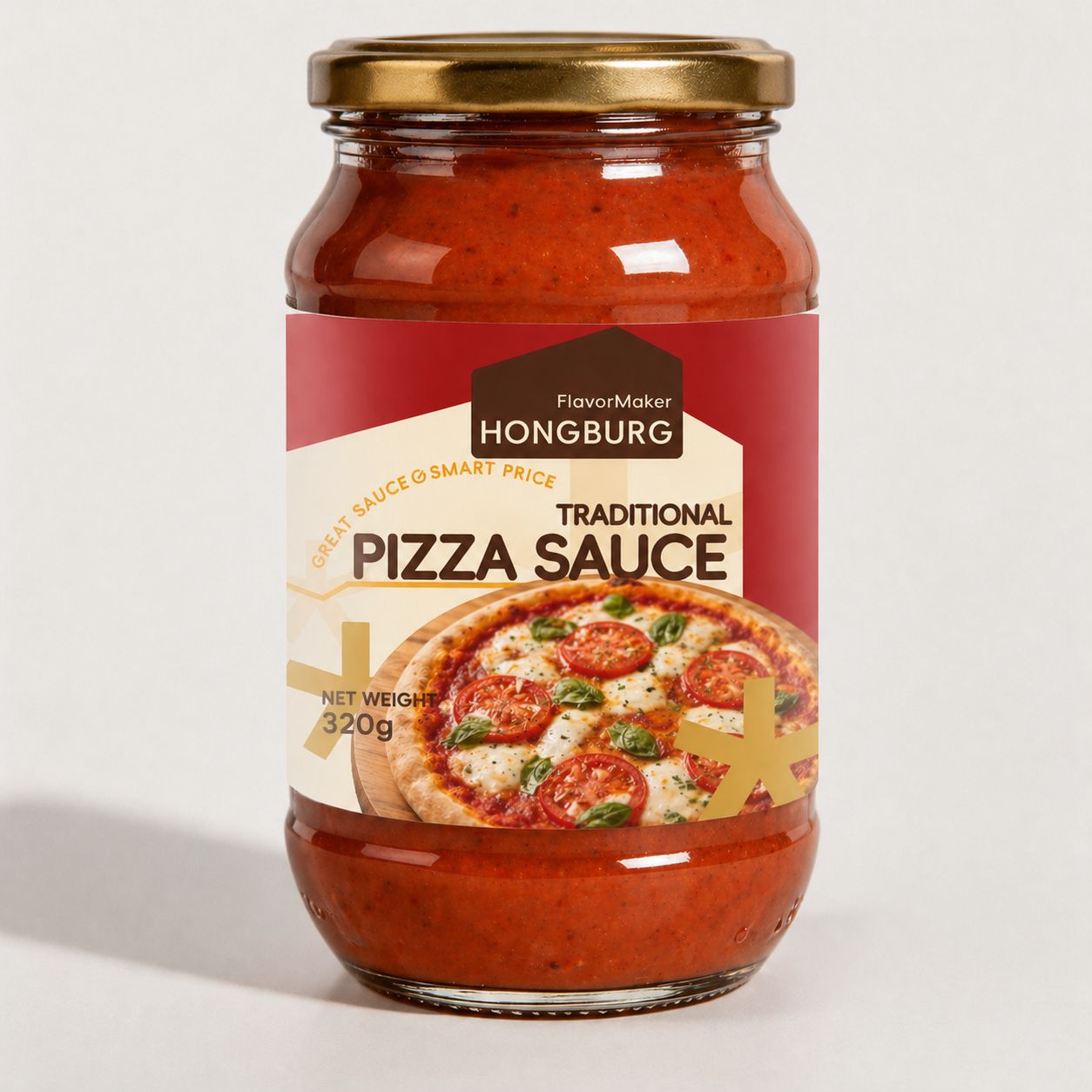
Global pizza sauce sourcing often looks straightforward on a spreadsheet: price per kilo, lead time, spec sheet. Then the first container arrives off-spec, or a certification lapses, and the real selection criteria surface. For buyers who’ve been burned, the checklist isn’t just about taste—it’s about traceability, R&D responsiveness, and export reliability. Among the names that repeatedly clear that bar is HONGBURG FLAVORMAKER, a supplier worth examining before you shortlist your next sauce partner.
Tomato Paste vs. Crushed Tomatoes: What Your Market Actually Prefers
Walk into any grocery aisle in the Midwest and you'll see shoppers hesitate between the tiny cans of tomato paste and the larger crushed tomato jars. It's not about price—it's about how they cook. Paste wins in households that make quick weeknight sauces or stews, where a spoonful brings depth without extra liquid. Crushed tomatoes hold the edge for anyone who simmers a Sunday gravy or wants visible tomato texture in a soup.
Retailers in warmer regions notice the split more sharply when fresh tomatoes are out of season. Crushed tomatoes spike in late fall and winter, while paste moves steadily year-round because it hides in so many recipes. If your shelf space is tight, watching which product gets restocked faster can tell you more than any sales report.
The real differentiator isn't the tomato itself—it's the amount of work a customer wants to do. Paste asks for a recipe, a little know-how, and often a can opener for a tiny tin. Crushed tomatoes feel like an ingredient you can pour and taste. Markets that cater to scratch cooks and large families do better with crushed; convenience-driven buyers keep paste in the basket by default.
The pH and Brix Numbers You Should Demand from Any Exporter
When evaluating fruit concentrates, purees, or juices from a supplier, don't settle for vague assurances about quality—ask for the actual pH and Brix readings. These two numbers give you a direct window into how the product will behave in your own processing line, from fermentation risk to flavor balance. A reliable exporter should provide these values without hesitation, along with the method used to measure them.
The pH tells you how acidic the product is, which affects both shelf stability and how it interacts with other ingredients in your recipe. Most fruit-based ingredients fall between 3.0 and 4.5, but even a shift of 0.2 can change preservative requirements or alter the final taste profile. Brix, on the other hand, measures soluble solids—mostly sugars—and gives you a clear idea of sweetness and concentration. A Brix reading that's too low might mean the fruit was under-ripe or diluted, while an unusually high number could indicate over-concentration or added sweeteners.
Rather than accepting a range like "typical for the season," push for batch-specific numbers and compare them against your own incoming inspection. If a supplier consistently delivers pH and Brix within a tight tolerance—say ±0.1 for pH and ±1.0 for Brix—you know their sourcing and processing are under control. That kind of transparency saves you from reformulation headaches and costly production stops later on.
Private Label Pivots: How Flexible Recipes Win Regional Buyers
Most private label programs still run on a single national recipe, which quietly kills deals with regional grocery chains. A buyer in Texas may want a bolder chili profile, while a buyer in the Pacific Northwest asks for less sodium and a cleaner label. Flexible recipe architecture solves this by keeping a stable base—often the bulk ingredients, preservatives, and processing steps—while allowing late-stage adjustments in spice blends, acid levels, or texture modifiers. This isn't about offering infinite variations; it's about designing the formula so that three or four regional tweaks can be made without disrupting the production schedule or requiring a new supplier audit.
The shift wins regional buyers because it lowers their perceived risk. Instead of committing to a truckload of product that might sit on shelves, they can request a version matched to local eating habits, often after a single tasting session. A frozen burrito manufacturer, for example, might keep the same tortilla and bean base but switch the salsa packet from mild green tomatillo for the Southwest to a darker, smoked red salsa for the Southeast. Buyers notice this level of responsiveness and are far more likely to sign a multi-quarter contract, especially when they can advertise the item as "made for your region" without paying custom development fees.
Operationally, this requires a different kind of recipe documentation. Instead of a single locked formula, private label suppliers need a modular spec sheet that lists the core mix, approved regional variants, and the exact point in the line where each variant is introduced. Some companies even pre-portion minor ingredients—like dried herbs, vinegar, or chili paste—into separate dosing units, so a changeover takes minutes rather than hours. Regional buyers pick up on this speed. They talk to peers, and a supplier that can turn a recipe tweak into a sample within two weeks starts to build a reputation that no national brand can easily copy. That reputation, not a lower price, is what keeps the private label relationship sticky.
Cold Chain Failures That Ruin Sauce Before It Reaches the Dock
A sauce doesn't spoil overnight; it unravels slowly as the cold chain bends. A reefer unit that cycles between 38°F and 50°F can force emulsified sauces to split, leaving an oil slick on top while water and solids sink. That's not just cosmetic—once the emulsion cracks, starches and stabilizers lose their grip, and the texture turns grainy or watery before it ever gets loaded.
Condensation is another quiet killer. When warm dock air hits a cold tote, moisture beads on the inside of the lid and drips back into the sauce. That added water dilutes acidity just enough for spoilage organisms to wake up, even if the temperature later returns to spec. You can't taste it at the dock, but by the time the container reaches a distributor, the pH shift has opened the door to yeast or mold.
Sometimes the failure is mechanical but invisible: a partially blocked evaporator fan means one pallet sits at 34°F while another bakes at 55°F near the back. Because most shippers only log air temperature, not product core temperature, the pallet in the dead zone leaves the warehouse looking fine. The sauce arrives with a dull color, a slightly fermented nose, or a film on the surface—signs that the cold chain failed long before the trailer backed into the dock.
Certifications Beyond the Checklist: What Experienced Buyers Ask For
Most buyers start with a familiar checklist—ISO 9001, CE, RoHS. But seasoned professionals rarely stop at a logo on a website. They ask for the audit report itself, including the auditor's name, the exact scope, and any non-conformities that were raised and later closed. If a supplier hesitates to share that level of detail, that hesitation says more than the certificate.
Experienced buyers also check whether the certification actually covers the product line they're sourcing. A head office might hold a generic ISO certificate while the actual factory operates in a different legal entity. That's why they request the certificate's annex or scope page and match it against the purchase order and shipping documents.
Beyond the paper, they want to see how the system behaves under pressure. Has the supplier been re-audited after changing a key material or moving a production line? Can they show corrective action records that aren't just boilerplate? Those are the questions that separate a live, working quality system from a framed certificate in the lobby.
Duty and Tariff Traps in Pizza Sauce Imports—and How to Avoid Them
One of the quietest ways to lose margin on pizza sauce shipments is assuming the product can slide under a raw tomato preparation code. Customs authorities often look past the label and check the formula: once you add basil, garlic oil, sugar, or cheese powder, that sauce may no longer qualify as a simple tomato product under Chapter 20. Instead, it gets pushed into prepared sauce territory under Chapter 21, where the duty rate can be several percentage points higher. Even small recipe tweaks made after your initial classification can change the tariff outcome, so locking in the exact supplier formula at the time of entry matters more than most importers expect.
A practical safeguard is to request a formal binding ruling for your specific pizza sauce rather than relying on a generic broker code. Include the full ingredient breakdown by weight, the manufacturing process, and the packaging format in your ruling request. At the same time, check whether your sauce qualifies for preferential treatment under a trade agreement—if the tomatoes, oil, and spices are sourced across multiple countries, the origin rules may disqualify you even if the finished jar ships from a partner country. Keeping a one-page spec sheet with percentages and country of origin for each input can prevent a costly reclassification audit later.
FAQ
Look for BRC, IFS, or FSSC 22000 as a baseline. Depending on your market, halal, kosher, or organic certifications may also be non-negotiable. Ask for current certificates and verify the audit dates—don't settle for a supplier who can't show a clean track record over at least two consecutive years.
Request a product development questionnaire and sample kits across your target profiles—sweet, herb-forward, spicy, or high-viscosity cold-fill sauces. A flexible exporter will offer pilot batches and sensory panels before locking in a formula, rather than pushing a one-size-fits-all recipe.
Aseptic bags-in-box or laminated pouches with nitrogen flushing usually give the best balance of oxygen barrier and cost for foodservice. For retail, consider glass or BPA-free cans with easy-open lids. Ask about headspace control and post-fill pasteurization validation for each format.
Request a traceability map from farm to factory, including harvest windows and Brix levels of incoming tomato paste. Verify that the exporter tests for pesticide residues, mold count, and heavy metals against your destination country's maximum residue limits. A strong supplier will share third-party lab reports without hesitation.
Ask for their monthly production capacity, warehouse storage conditions, and safety stock policy. Request references from buyers in similar climate zones or channels. A reliable exporter will disclose their maximum throughput lead time and have contingency plans for raw material shortages or port delays.
Confirm Incoterms, cold chain or ambient shipping requirements, and shipment consolidation options. Ensure they can provide a full set of documents: commercial invoice, packing list, bill of lading, certificate of origin, health certificate, and any importer-specific permits. A trial order with a small container load is a good way to test their documentation accuracy and on-time delivery.
Very important. Request real-time and accelerated shelf-life data under your expected storage conditions (e.g., 25°C vs 35°C). The sauce should maintain viscosity, pH below 4.2, and no visible separation for the full claimed shelf life. Ask for a written guarantee and a sample retention policy for each batch.
Yes, if they specialize in premium or niche segments and offer better customization, lower minimum order quantities, or faster innovation cycles. Evaluate their financial stability, export experience, and willingness to invest in your specific label or packaging. A smaller partner with strong technical know-how can often outperform a massive but inflexible producer.
Conclusion
Global buyers often chase the wrong details when vetting pizza sauce exporters. The tomato paste versus crushed tomatoes question rarely has a universal answer—North American foodservice leans toward paste-heavy formulations for cost and consistency, while European and Middle Eastern retail buyers frequently expect a chunkier crushed profile. Instead of asking which base is better, you should demand an exporter who can document regional preference data and adjust viscosity without destabilizing the batch. On the technical side, don't accept vague promises: exact pH and Brix targets matter because they dictate shelf life, flavor balance, and how sauces behave under high-heat processing. Insist on lab reports per production lot, not just a one-time sample, and be wary of suppliers who can't explain why their Brix drifts between seasons. Private label capability is another early filter—the best exporters treat recipe adjustments as routine, not as a special favor. If they can't tweak herb blends, acidity, or texture within two weeks of a request, they'll slow down your regional launches. A supplier who pushes you toward a single standard formula without asking about your target market's pizza style is already showing a red flag.
Logistics and compliance kill more deals than flavor. Cold chain failures are alarmingly common even in shelf-stable sauce categories—if the product sits in a hot container at the port for three days, pH and color can shift enough to trigger rejections at destination. Ask for temperature logger data from real shipments, not just warehouse photos. Certifications matter beyond the standard checklist: experienced buyers probe how an exporter handles allergen cross-contact, whether their BRC or IFS audits were unannounced, and if they have a documented recall simulation. A certificate on the wall means little without operational evidence. Finally, map duty and tariff exposure before locking in a supplier. Misclassification of pizza sauce as ketchup or prepared tomato product can add five to fifteen percent in unexpected costs. Work with exporters who offer harmonized system code guidance, country-specific documentation packs, and proof of origin that survives customs scrutiny. Avoid those who shrug off tariff questions as the buyer's problem rather than a shared planning issue.
Contact Us
Contact Person: Peter Song
Email: [email protected]
Tel/WhatsApp: +86 18920189778
Website: https://www.hongburg.com