
PEG-7 Glyceryl Cocoate Manufacturer Introduces New Type for Advanced Cosmetic Formulations
2026-07-13
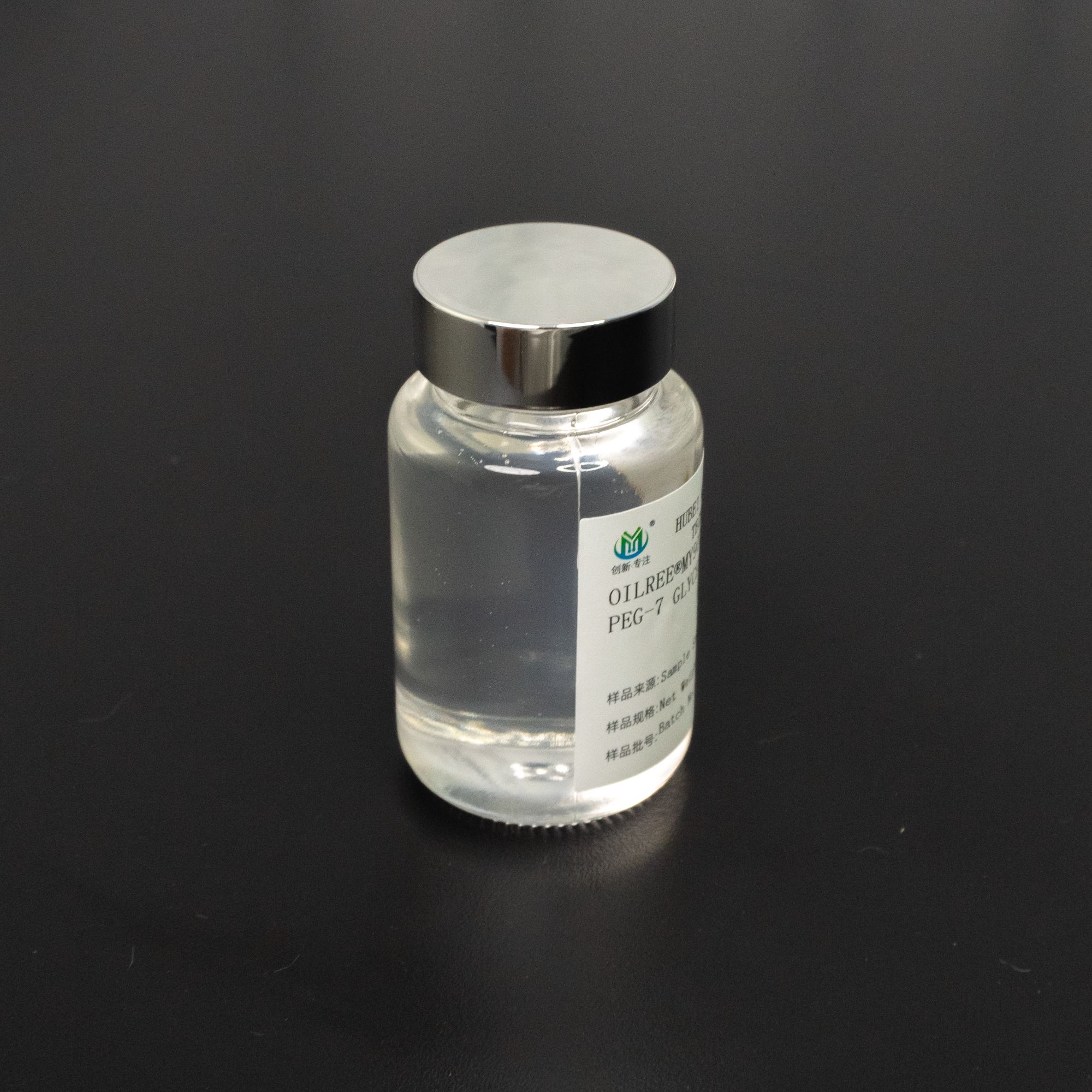
The world of advanced cosmetic formulations just got more exciting. A renowned PEG-7 Glyceryl Cocoate manufacturer, MingYa, has unveiled a new type designed to push the boundaries of skin-friendly emollients. If you’re a formulator chasing that perfect sensory feel or a brand seeking next-level mildness, this innovation might be exactly what you’ve been waiting for.
A Fresh Take on PEG-7 Glyceryl Cocoate
For years, this ingredient has quietly done the heavy lifting in rinse-off formulas, but it’s rarely gotten the credit it deserves. It’s not just another mild surfactant hiding in the middle of an ingredient list. PEG-7 Glyceryl Cocoate is a cleverly designed re-esterified molecule that offers something many gentler cleansers lack: genuine lipid-layer replenishment while it cleanses. The idea that a surfactant can also be a refatting agent isn’t new, but the way this one manages to strike a balance between effective cleansing and leaving skin feeling conditioned is worth a second look. It sidesteps the common trade-off where you’re either stripping away too much or barely removing anything at all.
What makes it stand out isn’t some flashy new mechanism—it’s the material’s origin story. Derived from coconut oil and glycerin, the ethoxylation process actually increases its compatibility with water while preserving that innate affinity for skin lipids. This dual personality means it disperses evenly in formulas without causing cloudiness, and it rinses away with an unexpectedly silky feel. Formulators who have experimented with it often note how it can reduce the need for separate emollients in body washes and facial cleansers, simplifying recipes without sacrificing that post-shower softness. It’s a quiet workhorse that can elevate an otherwise basic surfactant blend.
Looking at it through a modern lens, the ingredient also opens up discussions about how we perceive the balance between plant-based chemistry and synthetic processing. While it starts with a renewable resource, the ethylene oxide step invites debate, yet the end result is a highly biodegradable molecule with a favorable safety profile. In an era where ingredient philosophy matters almost as much as performance, PEG-7 Glyceryl Cocoate challenges the idea that ‘natural’ is always gentler. Its real advantage might be how unpretentiously it performs, letting brands formulate products that feel substantial without feeling heavy-handed.
What Sets This New Type Apart
Gone are the days when one design could satisfy everyone. This new type breaks free from the expected, opting for a bolder silhouette that instantly catches the eye without sacrificing everyday wearability. It’s a deliberate shift toward expressing individuality, blending unconventional lines with a sense of effortless cool that doesn’t scream for attention but naturally commands it.
What truly makes it stand out is the thoughtful integration of adaptive features. Instead of static elements, the design responds subtly to context—whether it’s the way the fabric drapes dynamically with movement or how hidden compartments morph to fit your carry needs. It’s not just about looking different; it’s about functioning in a way that feels almost intuitive, creating a personal bond between the piece and its owner.
Perhaps most intriguing is the departure from traditional material stories. Rather than relying on ubiquitous premium fabrics, this version embraces a hybrid construction that mixes high-tech synthetics with unexpected natural textures. The result is a tactile experience that’s both futuristic and grounded, inviting curiosity and sparking conversation without ever uttering a word about its origins.
Behind the Chemistry of the Innovation
Chemistry often operates behind the scenes, but in the realm of innovation, it takes center stage without fanfare. The real magic happens in the dance between molecular stability and reactive unpredictability. Every breakthrough material or compound emerges from a deliberate tension—scientists coaxing atoms into arrangements they’d never naturally choose, yet once formed, these structures unlock properties that redefine what’s possible. It’s less about following recipes and more about listening to what the molecules hint at during failure.
The heart of this process lies in catalysis and phase interactions that rarely get described in textbooks. Rather than straightforward mixing, modern innovation relies on crafting microenvironments where reactions are nudged into selective pathways. For instance, a slight shift in solvent polarity or a carefully tuned metal center can divert a reaction from yielding a common byproduct to producing a compound with transformative uses. These aren’t obvious decisions—they come from deep pattern recognition built over years of observing how electrons redistribute under stress.
What sets apart these chemical innovations is not just the novelty, but the intentional design of disruption. It’s about designing bonds that behave counterintuitively, like materials that heal themselves or catalysts that regenerate mid-reaction. The underlying chemistry becomes a language of adaptation, where each bond angle and energy barrier is a deliberate choice rather than an accident. In the end, the real story isn’t just the molecule—it’s the mindset of questioning what atoms can do when pushed beyond their comfort zones.
Performance Gains for Modern Formulations
The latest generation of coating formulations delivers a remarkable step forward in protective efficiency. By leveraging advanced resin chemistry and nanoparticle integration, these systems achieve a noticeably harder finish in a fraction of the traditional curing time. This translates directly into higher throughput on the production line, while the reduced number of coats needed slashes material and labor expenses. The end result is a surface that withstands daily wear, scratches, and chemical exposure far better than conventional alternatives, keeping products looking newer for longer without adding bulk or compromising flexibility.
What really sets these modern blends apart is their ability to maintain peak performance under a broader range of environmental conditions. Newer crosslinking mechanisms ensure consistent adhesion and gloss retention even when applied in high humidity or fluctuating temperatures—conditions that would typically compromise a standard coating. For manufacturers, this reliability cuts down on rework and warranty claims, while users benefit from a more durable finish that resists chalking, fading, and corrosion. It’s a practical leap that turns protective layers from a necessary afterthought into a genuine performance advantage.
Beyond just the physical toughness, these formulations often incorporate self-leveling and hydrophobic properties that simplify application and upkeep. The paint or coating flows out smoothly, minimizing brush marks and orange peel, and once cured, it actively repels water, dirt, and grime. This not only speeds up the finishing process but also reduces long-term maintenance, making it an attractive option for everything from automotive exteriors to heavy-use industrial equipment. Rather than a one‑size‑fits‑all compromise, each variation is engineered to unlock specific benefits—whether that’s superior UV resistance for outdoor exposure or chemical tolerance in aggressive environments—letting users match the exact formulation to their real‑world demands.
Sustainability Woven into the Process
Sustainability isn’t an afterthought here—it’s stitched into every stage, from raw material selection to final packaging. We favor organic cotton, recycled polyester, and biodegradable dyes that tread lightly on the planet. Our supply chain partners are chosen not just for quality, but for their transparent environmental practices, including water recycling systems and energy-efficient manufacturing. By mapping each product’s footprint, we’re able to minimize waste before it happens, turning potential scrap into new fabrics or donating it to community upcycling programs.
The production rhythm itself respects nature’s pace. We batch-dye only when demand exists, avoiding surplus inventory that often ends up in landfills. Low-impact printing methods preserve fabric softness while reducing chemical runoff. Even the studio where these pieces are designed operates on renewable energy, with natural light shaping our workdays. It’s a quieter, slower approach that prizes longevity over speed, ensuring the clothes you love don’t cost the earth.
Beyond materials, we’re rethinking the lifecycle. Every garment is conceived for repair, not disposal—with reinforced seams and detachable components that make mending intuitive. Our take-back initiative invites wearers to return pieces that have reached their end, which we then deconstruct and rebuild into limited-run collections. It’s a circular loop that mirrors the way natural systems operate: nothing wasted, everything reinvested.
Real-World Application Highlights
From predictive maintenance in manufacturing plants to personalized product recommendations in e-commerce, this technology is silently powering many facets of our daily lives. In healthcare, it assists doctors by analyzing medical scans with precision once thought impossible, while logistics companies rely on it to forecast demand and streamline delivery routes. The beauty lies not in flashy demos but in these subtle integrations that steadily improve efficiency, cut costs, and open doors to innovation hidden in plain sight.
Financial institutions have harnessed its pattern recognition to spot fraudulent transactions in real time, evolving beyond rule-based systems that once lagged behind sophisticated schemes. Meanwhile, energy providers are optimizing grid distribution by predicting consumption surges, ensuring cleaner and more reliable power. These aren’t hypothetical scenarios—they’re working implementations where the gap between research and impact has been impressively bridged, often without fanfare.
At the heart of these applications is a blend of adaptability and domain-specific tuning. Customizations allow the same core approach to excel in both analyzing satellite imagery for disaster response and enabling real-time language translation during international negotiations. The real measure of success isn’t just accuracy metrics on a leaderboard; it’s the farmer receiving accurate crop yield forecasts, the mechanic preventing a costly machine breakdown, and the patient getting a faster, more accurate diagnosis.
FAQ
The new type is a high-purity, low-odor variant designed specifically for sensitive-skin formulations and clear cosmetic products.
It offers enhanced emulsification stability and a lighter skin feel, making it easier to create non-greasy creams and lotions with improved texture.
The manufacturer uses a proprietary purification process that reduces residual impurities, resulting in a much milder ingredient suitable for delicate applications like baby care and facial products.
It is ideal for micellar waters, cleansing balms, moisturizers, and sunscreens, especially those aiming for a transparent or translucent appearance.
Yes, it is derived from renewable coconut and glycerin sources and produced through a green chemistry process that minimizes waste and energy consumption.
They employ rigorous in-house testing and adhere to ISO standards, with each batch accompanied by a detailed certificate of analysis for full traceability.
While it is not certified organic, its high natural origin content (over 90%) makes it a popular choice for brands seeking to maximize their natural ingredient percentages.
They provide comprehensive starting formulations, compatibility data, and personalized technical support to help integrate the ingredient seamlessly into new product development.
Conclusion
A well-established PEG-7 Glyceryl Cocoate manufacturer has unveiled a reimagined version of this trusted emollient, specifically tailored for the complexities of today's high‑performance cosmetic lines. The new type blends advanced processing with a carefully refined fatty acid profile, resulting in a lighter sensory footprint that still delivers the deep, lasting moisturization formulators rely on. During development, chemists homed in on the molecule's hydrophilic‑lipophilic balance, subtly shifting it to boost compatibility with challenging systems like crystal‑clear micellar waters, whipped cleansing balms, and delicate eye‑makeup removers. By revisiting the esterification pathway and employing a milder catalyst system, they have reduced residual reactants and narrowed the oligomer distribution, which translates directly into a product that feels silkier on the skin and reduces the chance of viscosity drift during storage. This is not merely a tweak; early adopters report that it allows them to cut secondary emulsifiers by up to 15% without sacrificing stability, opening room for simpler INCI lists that resonate with the clean‑beauty movement.
Beyond formulation performance, the manufacturer has woven sustainability into the core of the production process. The new PEG‑7 Glyceryl Cocoate is derived from coconut oil sourced through verified regenerative farming partnerships, and the ethoxylation step has been redesigned to recover and reuse over 90% of its process water. Independent lifecycle assessments show a measurable drop in carbon intensity compared to previous grades, a factor that has already attracted attention from brands aiming to meet Scope‑3 commitments. Real‑world application trials highlight its versatility: in cold‑mix transparent shampoos, it enhances foam creaminess without the usual grease‑feel; in vitamin‑C serums, it acts as a mild co‑solvent that helps shield actives from oxidation; and in solid conditioner bars, it contributes both glide and structural integrity while maintaining biodegradability compliance. With these practical gains, the new type is rapidly finding its way into contract‑manufacturer briefs and private‑label launches, proving that a heritage ingredient, when thoughtfully re‑engineered, can hold its own at the forefront of cosmetic science.
Contact Us
Contact Person: Miss Pei
Email: [email protected]
Tel/WhatsApp: 8618620409116
Website: https://www.mingyachemicals.com/