

OEM Stainless Steel Ball Valve Selection Guide for Reliable Flow Control
2026-11-16
Choosing an OEM stainless steel ball valve is rarely about the valve alone; it’s about avoiding field failures, pressure drops, and service calls that quietly erode a system’s reliability. This guide cuts through catalogue noise and focuses on the selection details that actually keep flow control predictable—from body materials and seat choices to actuation and sizing. We also look at how UPTAI builds stainless steel ball valves to handle the demands OEMs can’t afford to overlook.
Matching Valve Materials to the Media, Not Just the Pipe
A piping spec often lists the pipe material and leaves the valve decision to habit. That is where trouble starts. The pipe may see a relatively steady flow along its wall, but a valve has seats, seals, discs, and stems that sit directly in the narrowing flow path. A medium that is harmless to the pipe can chew through a soft seat or pit a stainless stem within months, especially when concentration, temperature, or aeration shifts just enough to change the corrosion mechanism.
Matching the valve to the media means reading beyond the base chemical name. Trace chlorides, abrasive fines, wet-dry cycling, and stagnant pockets inside the body all influence whether an alloy, polymer, or ceramic trim will survive. A lined pipe might handle dilute acid without issue, while the valve internals need a different grade of alloy or a fully lined cavity to avoid crevice attack behind the ball or plug.
The practical approach is to treat the valve as its own chemical environment, not an extension of the pipe. Look at the wetted parts individually: body, seat, stem, and any elastomers. If the media can stagnate, flash, or concentrate in the valve cavity, choose trim materials that tolerate a more aggressive condition than the bulk piping suggests.
Reading Pressure and Temperature Limits Beyond the Spec Sheet
A printed pressure-temperature chart gives the impression of a clean boundary, but field conditions rarely cooperate. Pulsation from pumps, water hammer, and thermal expansion can push momentary loads past the steady-state curve before a gauge even registers the spike. If you rely only on the nameplate rating without checking the actual operating envelope, the margin you think you have may already be gone.
Material behavior changes the picture as well. Stainless steel and carbon steel lose strength at elevated temperatures at different rates, and the gasket or seal often becomes the weakest link long before the body does. Low-temperature service introduces its own risks, including brittleness and loss of ductility. Reading beyond the spec sheet means matching the real temperature profile, including startup and shutdown cycles, against the limiting component, not just the valve or instrument body.
Another overlooked factor is the medium itself. Ratings are typically established with clean, non-corrosive test fluids, while real lines may carry abrasive particles, chlorides, or process residues that accelerate corrosion and fatigue. In those cases, a derated pressure limit or more frequent inspection intervals are often the difference between a reliable installation and an unexpected failure. Keeping a short log of pressure spikes and temperature excursions will tell you more about the true safety margin than any single catalog curve.
End Connections and Bore Sizing That Prevent Costly Fit Issues
Mismatched end connections often show up late—after hardware is already on the bench or, worse, installed. A port that measures correctly on paper can still bind if the thread form, undercut, or sealing shoulder does not match the mating fitting. NPT, BSPP, ORB, and metric threads each rely on different sealing mechanics, so mixing a tapered thread with a straight-thread port or using the wrong O-ring boss depth creates a joint that feels tight but leaks under pressure. Checking thread pitch with a gauge and confirming the port's spotface depth costs a few minutes; replacing a stripped housing or re-machining a manifold later costs far more.
Bore sizing is just as easy to overlook because the nominal dash size can mask real interference problems. A hose end or valve body may thread in cleanly while the internal bore necks down enough to restrict flow or trap debris, and a bore that is slightly undersized relative to the mating tube can cause assembly scratches, seal extrusion, or premature wear at the entry edge. Leaving a controlled chamfer at the bore opening and holding the ID concentric with the thread axis reduces side-loading on the fitting and keeps the sealing element from shaving during installation.
When dimensional checks are folded into receiving and pre-assembly, fit issues rarely become field failures. Keep a short table of the common ports used on each machine, including thread form, pilot diameter, seal type, and minimum bore ID. Measuring a sample of incoming fittings against that table catches batches that have drifted before they reach production. It also gives the assembly team a reference for quickly identifying a fitting that starts too hard or bottoms out with the wrong thread engagement—small corrections that prevent leak paths, galled threads, and warranty work.
Planning for Actuator Mounting Before the Valve Ships
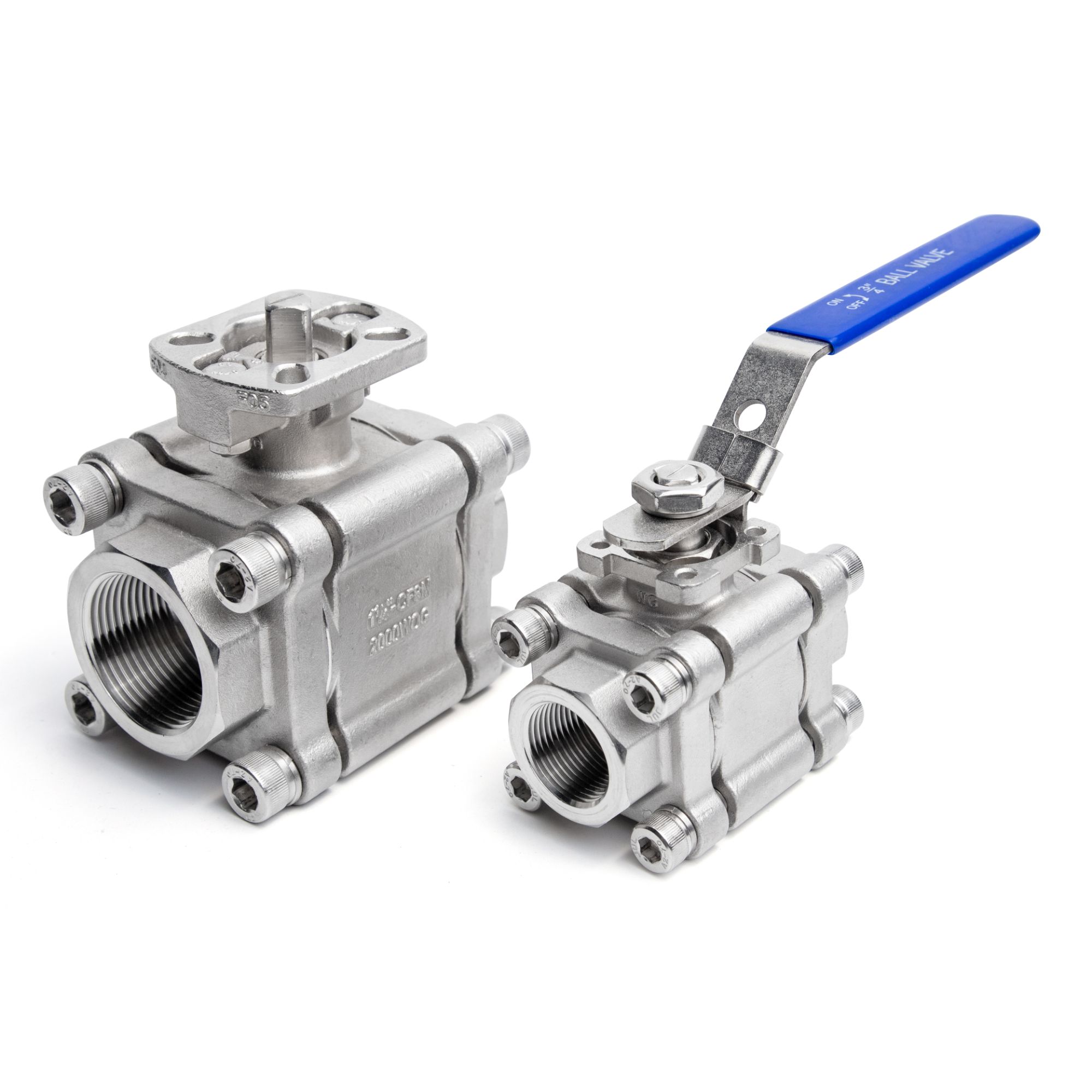
Early planning for actuator mounting is less about the bracket and more about not discovering interference on site. One practical step is to confirm the valve top works match the actuator's drive insert before the valve leaves the factory. A square drive that is slightly oversize, a missing keyway, or a stem height that forces an adapter change can delay commissioning by days. Checking ISO flange dimensions, bolt patterns, and the orientation of air or electrical ports while the valve is still in the shop costs almost nothing compared with field modification.
It also helps to decide on the final installed position early. Mounting a heavy electric actuator on a vertical stem after installation may require lifting gear that is not available at the site, whereas the same work is routine in a controlled workshop with overhead handling. If the valve will ship with the actuator already fitted, record the center of gravity, lifting points, and any temporary supports needed to protect the stem from bending loads during transit. If it ships unmounted, send clear drawings and a bagged mounting kit so the site crew does not have to fabricate brackets or source high-strength fasteners at the last minute.
Seat Selection and Leakage Class for Actual Shutoff Needs
Valve seat selection rarely starts with the seat itself. It starts with the least favorable shutoff case the process can actually produce, including pressure reversal, thermal cycling, and solids entrapment. A soft seat may hold a tight seal at ambient temperature but lose its advantage once the pressure drop exceeds the insert's deformation limit or the fluid carries fines that can score the sealing surface. Matching the seat material to those real conditions prevents a leakage class from becoming a paper specification.
Leakage classes alone can be misleading if the test conditions do not reflect field operation. A metal seat rated to Class IV may pass with nitrogen at moderate pressure and still leak noticeably on hot, low-viscosity liquid service where the sealing contact shifts under thermal expansion. For genuine isolation duties, the choice usually falls between a lapped metal seat for erosion resistance and a reinforced soft seat for repeatable tightness; the decision should be driven by how much leakage the process can tolerate, not by the highest class available.
Where actual shutoff has to be maintained after many cycles, seat selection tends to favor designs that clean themselves or tolerate particle embedment. Hardened trims with narrow seating angles can deliver repeatable Class V performance if the actuator provides enough seating force, whereas resilient inserts may need wider contact and lower seating stress to avoid permanent set. Specifying the leakage class after the seat and load conditions are resolved produces a valve that shuts off where it matters, rather than only on a bench test.
Traceability and Certification Demands in OEM Production Runs
Traceability in OEM work has shifted from a nice-to-have into a precondition for doing business. Buyers increasingly expect every finished batch to carry a chain of records: raw material lot numbers, machine IDs, operator sign-offs, drying profiles, torque readings, test values. Some brands ask for read-only access to a portion of the factory's MES so they can trace a molded part back to a specific resin lot and a particular injection molding cycle. For the contract manufacturer, this means traceability cannot stop at a QC report filed away in a cabinet; it has to live in a system that can reconstruct the production story on demand.
Certification demands now are rarely satisfied by a single generic certificate. A factory may hold ISO 9001 and still be told that a given RFQ requires IATF 16949 plus PPAP documentation for an automotive component, ISO 13485 with process validation for a medical device, or UL, CE, RoHS and REACH evidence for electronics. The less obvious challenge is scope. A certificate tied to one site, one process or one material family does not automatically reassure a buyer when production moves to another building or an outside processor is added. Buyers tend to re-audit those boundaries, and the gap between what the certificate says and what the shop floor actually does becomes visible quickly.
The weakest link in batch traceability is usually the second or third tier. A contract manufacturer may control incoming resin, metal and PCBs well, but plating, heat treating, painting or packaging are often handled by subcontractors that return little more than a delivery note. More disciplined OEM suppliers now require those outside processors to list their own batch numbers, machine identifiers and inspection stamps on each shipment, then feed that data back into the ERP so a complaint can be pulled apart by lot instead of by guesswork. That pressure to trace one layer further back is quietly changing which subcontractors get kept and which get replaced.
FAQ
Look at the body and end cap material certificates, the finish on the ball and stem, and whether the supplier will stand behind pressure and cycle testing. A dependable valve usually has a machined stem shoulder, live-loaded packing, and a cavity pressure relief feature. Generic imports often skip the relief drilling or use thinner walls.
Much of the gap comes from how the raw bar or casting is sourced, whether the seats are virgin PTFE or a reclaimed blend, and how much in-house machining the vendor actually controls. Some suppliers stock finished components and only assemble to order, while others cut bodies and stems from certified mill material after the order is placed.
If the valve sits in a line where pressure drop or cleanability matters, like a viscous fluid or a sanitary process, full port normally earns its extra cost. Reduced port can work for simple on/off utility lines, but the smaller internal diameter can trap media and make pigging or draining more difficult.
Virgin PTFE seats are a safe baseline for broad chemical compatibility, but reinforced PTFE lasts longer when the line sees pressure spikes or frequent cycling. For abrasive or hot streams, metal-seated or PEEK seats often make sense. Confirm the seat is machined, not molded, if dimensional repeatability matters.
Standard soft-seated stainless ball valves struggle with steam because the seats and seals soften and the body can trap condensate. For steam service, look for graphite or reinforced PTFE packing, a blowout-proof stem, and a cavity relief path. Having a supplier run thermal cycle testing is more useful than relying on a generic WOG rating.
Yes, if there is any chance the automation package will be upgraded. A valve with a properly machined ISO 5211 pad and a square or double-D stem eliminates the need for awkward couplers and reduces lost motion. Retrofitting a valve without a direct-mount pad often costs more than the valve itself once brackets and alignment time are included.
Over-tightening threaded connections, using excess thread sealant, and not supporting the valve body during piping alignment are common. Stainless threads gall easily, and a valve that is twisted or pulled into position can leak at the end cap or wear the seats unevenly. Use a backup wrench and keep the valve in the fully open or fully closed position during welding if it is a three-piece design.
For process-critical or food-grade applications, full material traceability is not just paperwork. It helps you isolate a bad heat of material or a batch of seats before it becomes a field failure. Ask whether the supplier keeps heat numbers tied to the valve serial number and whether the elastomers are batch tested.
Conclusion
Selecting an OEM stainless steel ball valve rarely comes down to a single data point. The first place many teams slip is matching the body material to the pipe instead of the actual media; a 316 body does not automatically mean the seats, seals, and trim will hold up against aggressive fluids or repeated washdowns. Pressure and temperature ratings need to be read together, since a valve that looks fine at ambient can lose margin once the process runs hot or the media carries abrasive fines. End connections and bore sizing also create hidden costs when they are treated as an afterthought. A full-bore valve keeps pressure drop low and allows pigging or sensor passage, while reduced-bore choices may save money but create a fit or flow restriction that only shows up at installation.
Planning for actuation before the valve ships avoids cutting brackets or reworking mounting pads later; the ISO mounting pattern and stem height should match the actuator from the start, not after delivery. Seat selection is equally tied to real shutoff needs. Soft seats offer tight bubble-tight closure but can deform under high cycles or steam, whereas metal seats tolerate temperature and wear at the expense of some leakage. Matching the leakage class to the application prevents overspending or under-specifying. In OEM production runs, traceability and certification become part of the quote. Heat numbers, material test reports, pressure test certificates, and sometimes surface finish or cleanliness documentation must be available in the quantities and formats the customer’s quality system requires, otherwise the valves may pass on paper and still fail incoming inspection.
Contact Us
Contact Person: Adonis
Email: [email protected]
Tel/WhatsApp: 8615858822657
Website: https://www.uptaivalve.com