

OEM Quartz Crucible: What to Look for in a High-Purity Supplier
2026-10-25
When a quartz crucible fails, it's rarely just a crack—it's a silent killer of yield, purity, and your production schedule. Sourcing OEM quartz crucibles from a supplier that hides behind vague 'high purity' claims is a gamble most fabs can't afford. That's where Semicorex changes the equation. But before you commit, here's what actually separates a true high-purity partner from a pretender.
Purity Beyond the Certificate: Run Your Own Melt Test
A certificate tells you what a resin was supposed to be when it left the reactor. A melt test tells you what it actually does in your barrel. Heat a small sample slowly and watch how it behaves before it fully liquefies. If the melt stays clear, smooth, and free of floating specks or color swirls, you're looking at a clean material. If it throws off a sharp, acrid smoke or leaves a heavy, oily residue on your tool, that's not just off-spec—it's a different animal altogether.
Run the test next to a known pure sample under the same conditions. Differences in viscosity, bubbling, or the way the melt pulls away from the walls will show up fast. Contaminants rarely hide when they're heated past their comfort zone. You'll see them as charred flecks, hear them as pops and crackles, or smell them as a sour, unnatural note that doesn't belong. No lab report can replace that kind of direct sensory feedback.
Keep a simple log of time, temperature, and what you observe at each stage. Over a few batches, you'll build a personal reference library that no supplier can fake. The certificate becomes a starting point, not the final word. When purity matters, the melt is where the truth comes out.
The Fusion Method Determines Crucible Life in the Furnace
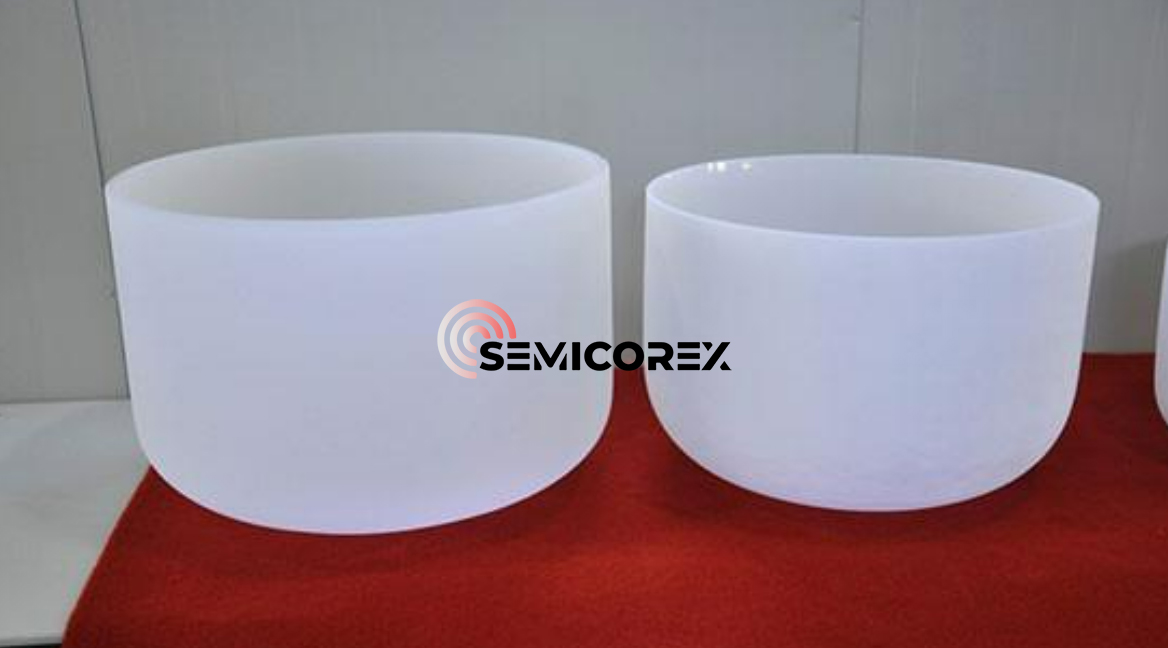
In many foundries the choice of melting equipment gets more attention than the crucible itself, yet the way heat is delivered to the metal often dictates how long that ceramic vessel will last. Induction furnaces heat the crucible directly through electromagnetic coupling, which can create steep thermal gradients between the inner wall and the outer surface. These gradients lead to thermal shock, especially during start-up or when cold charge material is added too quickly. A crucible that survives for months in a gas-fired furnace may crack within weeks under aggressive induction cycling if the operator follows the same routine.
Resistance-heated furnaces, by contrast, tend to produce a gentler, more uniform temperature profile around the crucible. This reduces internal stress and allows the material to expand and contract more evenly. However, resistance heating is often slower, and if the furnace is pushed to compensate with higher set points, the crucible's outer surface can overheat while the metal inside remains relatively cool. Fuel-fired units introduce their own variables, including flame impingement and localized hot spots that erode the crucible wall unevenly. Even the type of fuel—natural gas, propane, or oil—changes the combustion atmosphere and the rate of oxidation on the crucible's exterior.
There is no single 'best' fusion method, only the right match for the crucible material and the alloy being melted. Operators who track crucible life against melting parameters often find that small adjustments—lowering the initial power ramp, preheating the charge, or repositioning burners—extend service life more than any upgrade in crucible quality. The furnace's heating method sets the baseline, but the daily operating habits between pours determine whether that baseline is exploited or wasted.
Trace Impurities That Quietly Destroy Ingot Yield
Oxygen sneaks in from the quartz crucible during long pulls, dissolving into the melt at concentrations that appear harmless on a spec sheet. At the solidification front, it clusters into sub-visible oxide precipitates, each one acting as a seed for dislocation loops. A single misplaced oxygen atom per billion can cascade into a network of slip planes running through half the boule, forcing the saw shop to scrap entire sections that look perfectly fine from the outside.
Metallic traces behave even more viciously because they segregate hard. Iron, nickel, and copper prefer the liquid over the solid, so they pile up in the last-to-freeze regions near the ingot tail. What starts as 5 parts per trillion in the charge ends up as a localized spike of 50 parts per billion at the grain boundaries, dropping minority carrier lifetime from hundreds of microseconds down to single digits. That tail section passes visual inspection, then quietly kills cell efficiency after wafering.
Carbon from graphite fixtures introduces a different failure mode: it pairs with oxygen to form CO gas bubbles that become trapped as spherical voids. Those voids then act as stress concentrators during cool-down, initiating micro-cracks that propagate only after the ingot is cropped and squared. None of these impurities announce themselves with a dramatic furnace alarm; they simply shave 8 to 15 percent off the usable yield, month after month, until someone finally cross-references the crucible lot numbers against the scrap pile.
Thermal Shock Survival Depends on Wall Geometry and Grain
Thin wall sections do not guarantee survival by themselves; it is the shape of those walls that decides where tensile stress concentrates. A slightly curved flank or a generous fillet allows the thermal front to pass without locking stress at a single plane, while a sharp internal corner acts like a notch. In repeated heating and cooling, that notch becomes the predictable starting point for a crack, even if the overall temperature change stays within the expected range.
Grain structure adds a second layer of control. Fine, evenly sized grains tend to distribute contraction strain across many boundaries, so no single weak path opens early. Coarse grains can offer some crack-bridging benefits in slow fracture, but under thermal shock they often introduce longer uninterrupted cleavage planes. The most forgiving components combine a wall profile that spreads thermal strain with a grain population that resists linking microcracks into a fast-running failure.
The two factors are not independent. A curved wall with an uneven grain size distribution may still fail because large grains near the surface provide easy entry points for thermal cracks. Conversely, a uniform fine-grained body with a sharp internal shoulder can crack at that shoulder before the grain structure has a chance to influence propagation. Survival is therefore a product of both features: geometry manages where stress lands, and grain character determines how quickly a microcrack can travel once it forms.
A Supplier’s Cleanroom Habits Reveal More Than a Spec Sheet
A spec sheet will gladly list ISO class, air changes, and filter efficiency. But walk into the cleanroom unannounced and you might see a technician resting a gloved hand on a cart wheel, or a pass-through stacked with unbagged wipes. Those quiet habits tell you whether the environment is actually protected or just documented.
Look for the small things: how often sticky mats are peeled, whether particle counters get recalibrated or just reset, and what happens when someone drops a vial. A supplier with sloppy gowning discipline and spotless paperwork isn't maintaining a cleanroom—they're maintaining an image. The real spec lives in their daily routine.
Require Batch-Level Traceability, Not Just a Generic Datasheet
A generic datasheet often reads like a polished brochure—impressive specifications, neatly formatted tables, but no real connection to the physical goods you actually receive. Batch-level traceability changes that. Each production lot carries its own identifier, linked to raw material receipts, processing logs, equipment settings, and final test results. When a shipment arrives, you can trace exactly which batch it belongs to and verify that the documented performance matches the lot in hand, not just a theoretical model.
In industries where contamination, material substitutions, or process drift can cause serious failures, relying on a generic datasheet is a gamble. Batch-specific records let you audit the chain of custody for every input, confirm that corrective actions were applied after past nonconformities, and pinpoint affected inventory within minutes if a defect surfaces. That level of granularity is impossible to achieve with a one-size-fits-all document.
Suppliers who push back on batch-level traceability often do so because the underlying record-keeping is fragmented or manual. That alone is a red flag. Demand a traceability package that includes lot numbers, date codes, raw material certificates, in-process measurements, and final QC sign-offs for every delivery. It forces suppliers to treat each batch as a distinct product with accountability, rather than hiding behind a generic sheet that could apply to anything.
FAQ
The difference comes down to raw quartz sand grade and processing environment. A high-purity crucible typically uses premium sand with total impurities below 20 ppm, while aluminum, alkali metals, and transition metals are each kept in the single-digit ppm range. Forming and sintering take place in cleanrooms to avoid contamination. Standard crucibles often rely on lower-grade sand with impurity levels an order of magnitude higher, which leads to increased oxygen content and micro-bubble defects in the silicon ingot.
Alkali metals like sodium and potassium are the main culprits because they migrate into molten silicon and alter resistivity. Transition metals such as iron and copper act as deep-level defects that degrade minority carrier lifetime. A reliable supplier should provide batch-specific test reports showing sodium plus potassium below 2 ppm, iron below 0.5 ppm, and copper below 0.1 ppm. Hydroxyl content also deserves attention since it accelerates devitrification at high temperature.
The inner coating is critical. A high-purity synthetic quartz layer or silicon nitride coating on the inner wall reduces oxygen dissolution into the melt and extends crucible life during long pulling runs. Buyers should verify coating thickness uniformity, ideally within ±0.1 mm, and check adhesion strength. Poor coating can peel or form bubbles mid-process, contaminating the melt and forcing early shutdown.
At a minimum, expect raw material batch certificates, full ICP-MS impurity scans, dimensional inspection reports, bubble distribution data, thermal expansion coefficient, and devitrification layer thickness. Many high-end suppliers add a unique traceability code on each crucible that links back to the specific sand lot and processing records. If a vendor offers only a one-page certificate of conformance with no numerical values, treat that as a warning sign.
Ask for control charts of critical parameters across 10 to 20 consecutive batches, including inner diameter tolerance, wall thickness uniformity, and impurity levels. An on-site audit of raw material inventory and sintering furnace temperature logs reveals more than any sales presentation. Suppliers with stable processes will readily share statistical process control data instead of relying on a single golden sample.
During repeated heating and cooling cycles, the crucible experiences intense thermal stress. If thermal shock resistance is weak, micro-cracks can develop near the rim and grow under load, leading to silicon leakage or premature crucible failure. Request specific thermal shock test conditions, such as the number of cycles from 1100°C to room temperature before visible cracking occurs. This is especially important for large-diameter crucibles above 28 inches.
Several signals stand out: pricing far below the market average, reluctance to disclose quartz sand origins, impurity reports that use vague phrases like 'meets specification' instead of actual numbers, resistance to third-party testing, and unrealistically short lead times without buffer stock. Also be cautious if the supplier claims a proprietary high-purity sand source but cannot demonstrate batch-to-batch consistency with traceable data.
Micro-bubbles expand at high temperature and release gas into the melt, causing turbulence and inclusions in the growing crystal. For high-purity crucibles, specify that the inner 1–2 mm of the wall should contain fewer than 50 bubbles per square centimeter with diameters under 0.2 mm. A supplier should be able to provide cross-sectional metallographic analysis and bubble size distribution charts for each production lot.
Conclusion
For an OEM quartz crucible, the certificate alone is not enough. A high-purity supplier should welcome your own melt test, because even a few parts per million of the wrong metal changes ingot yield. The way the crucible is fused matters more than most buyers realize; arc-fused and plasma-fused walls behave differently under repeated heating, and that difference shows up as shortened furnace life or increased breakage. Small amounts of alkali or transition metals quietly poison the silicon melt, so you need a supplier who can talk about specific impurity levels at the inner surface, not just bulk averages.
Thermal shock survival relies heavily on wall thickness profile and grain structure near the rim and base. A supplier that machines or presses corners too sharply may pass a visual check but crack during first ramp-up. Cleanroom practices are another tell: ask how crucibles are handled after final rinse, whether operators use full gowning, and what particle counts are measured on the actual product. Finally, insist on batch-level traceability with raw quartz lot numbers, fusion parameters, and cleaning logs tied to each crucible you receive. A generic datasheet tells you what they hope to sell; batch data tells you what they actually made.
Contact Us
Contact Person: Svenja Wei
Email: [email protected]
Tel/WhatsApp: +8613567891907
Website: https://www.semicorex.com