

OEM All-Weather Car Mats Provide Durable Protection for Any Driving Condition
2026-08-26
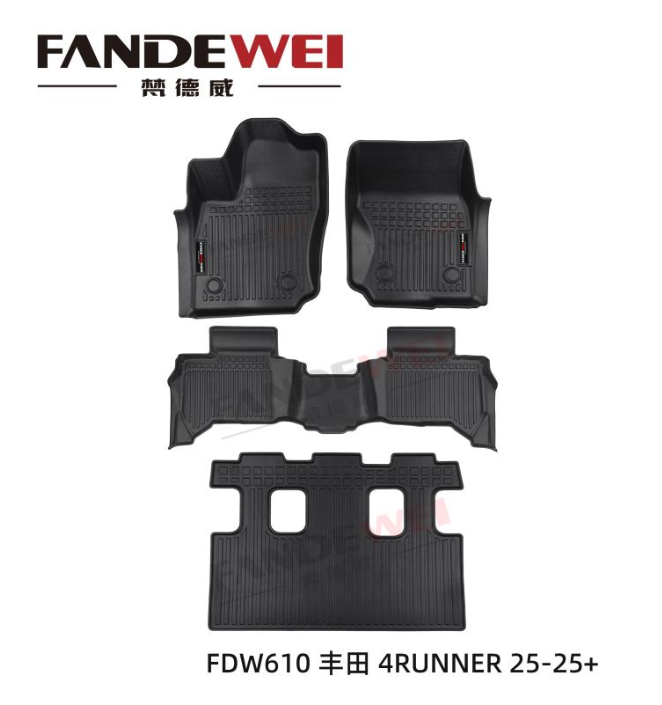
Dreading the mess that comes with every season? From slushy snow to muddy trails, your car's interior takes a beating. That's where the right floor mats make all the difference. FANDEWEI OEM all-weather car mats are built to handle whatever the road throws at you, offering durable protection without compromising on fit or style. Curious how they stand up to the worst conditions? Read on.
How Deep Channels and Raised Edges Handle a Full Winter of Melted Snow
A full winter of melt isn't one big thaw; it's weeks of small releases, refreezes, and sudden warm spells. Deep channels earn their keep by giving all that water somewhere to go instead of letting it pool on the surface. The extra depth means even a heavy midwinter melt has enough capacity to move water off quickly, which is exactly when shallow designs start backing up.
Raised edges do a quieter job but matter just as much. When slush piles up or a refreeze crusts the sides, those edges keep the half-frozen mix from spilling over and refreezing where it shouldn't. Together with the channels, they turn a messy thaw cycle into a controlled drain, so the surface stays clearer and the edges stop collecting ice.
What Happens to Carpeted Mats After One Muddy Hiking Trip
A single muddy hike doesn't just leave surface dirt on carpeted mats; it forces fine silt, clay, and organic debris deep into the pile. Within hours, moisture wicks downward and sideways, so the backing begins to hold damp grit that regular vacuuming can't reach.
As the mud dries, the fibers stiffen and mat together, especially in high-pressure zones under pedals and heels. Any attempt to brush off the crust usually smears remaining particles further in, leaving a dull, brownish haze and a faint earthy smell that lingers for days.
If the mat isn't removed and thoroughly hosed out or extracted, trapped moisture can lead to mildew or a sour odor, while repeated grit acts like sandpaper against the carpet fibers, making them look worn long before their time.
The Anchor Points That Keep OEM Mats From Sliding Under the Brake Pedal
Most factory floor mats stay put because they rely on a pair of clips or hooks built into the carpet near the seat base. The mat has matching grommets or slots that snap over those anchors, so when you push the brake, the mat can't bunch forward. Without that mechanical lock, even a heavy rubber mat will gradually creep toward the pedals.
Some vehicles use a single central anchor, while others add secondary retainers on the outboard edges. The idea is the same: the mat moves with the anchor, not against it. If a clip breaks or the hole tears, the mat loses its only real defense against pedal interference.
Replacement mats often include a universal anchor kit, but the fit is rarely as tight as the original design. A loose anchor allows just enough play for the mat to drift under repeated braking, which is why many owners add extra fasteners or switch back to OEM mats when the original clips wear out.
Why These Mats Stay Flexible When the Temperature Drops Below Zero
Most rubber mats turn into brittle slabs once the thermometer dips below freezing, but these are built around a different kind of skeleton. The secret sits in the polymer blend—a proprietary mix that keeps the long-chain molecules from locking together when cold. Instead of stiffening, the material holds onto its ability to bend and rebound, so the mat still rolls out flat and hugs uneven ground without cracking.
That flexibility isn't just a lab trick. It comes from how the mat is actually used outdoors. Think about a frozen loading dock or a walkway after an overnight frost—regular mats would snap underfoot or curl at the corners. These stay supple because the cold-resistant additives are mixed through the entire thickness, not just sprayed on top. So even after repeated freeze-thaw cycles, the surface keeps its grip and the edges don't turn into sharp, curling hazards.
Users notice the difference the first time they kick a corner or fold the mat for storage in a cold garage. There's no crunch, no white stress marks, no fight to get it flat. It behaves more like a thick leather belt than a sheet of plastic. That kind of low-temperature tolerance means fewer replacements, less time wrestling with a frozen mat, and a safer surface when the weather is doing its worst.
These Mats Clean Up With a Hose and a Shake
Most outdoor mats turn into a chore the moment they get dirty. You either drag out the vacuum, scrub on your knees, or give up and leave the grime to bake in the sun. These mats flip that routine. Grab the edge, carry it to the driveway, and hit it with a garden hose. The woven texture lets water push through, carrying mud, sand, and grass clippings right out the other side. No soap, no brush, no waiting hours for it to dry.
What makes the shake part work so well is the way the fibers are bound. They flex instead of trapping debris deep in the pile. After a quick rinse, you pick the mat up by one corner, give it three or four sharp snaps, and the remaining water and loose dirt fly off. It feels less like cleaning and more like shaking out a beach towel. The mat goes back down flat, ready for wet shoes and muddy paws before your next cup of coffee gets cold.
That kind of low-effort upkeep changes where you're willing to put one. Front porch, back deck, garage entry, even the spot by the garden gate. If it gets filthy on Tuesday, you don't have to plan a weekend deep clean. Just hose it, shake it, and walk away. The mat does the rest while you get back to whatever you were actually doing.
Replacing Cheap Mats Every Season Costs More Than One OEM Set — Here Is the Math
The appeal of a $35 set of generic floor mats is obvious until you pull them out in April and see the heel pad worn through and the edges curled like a dried leaf. That's not a fluke — it's how thin, single-layer PVC or low-density rubber behaves after one winter of salted boots. So you buy another set next fall. And the fall after that.
Now do the arithmetic. A decent OEM all-weather set for a common SUV runs about $180. It uses thicker TPE or rubber, has deep channels, and is molded to your specific floor pan. Those mats routinely last 6 to 8 years. Cheap mats at $35 per season, replaced annually, hit $210 to $280 over the same stretch. That upfront $145 difference evaporates, and you end up spending at least $30 more — not counting the time and fuel for repeat orders or store runs.
There's also the hidden cost of poor fit. Generic mats slide forward, bunch under the pedals, and leave gaps at the edges where slush and road salt seep into the carpet. Wet padding leads to musty odors, stained upholstery, and eventually corrosion in the footwell. A single OEM set avoids that entirely. I learned this the hard way with a previous hatchback — three budget sets in four years, and the carpet still needed a deep clean before resale. The factory liners I bought next paid for themselves by the second winter.
FAQ
They're molded specifically for your vehicle's floor contours, so there are no gaps where slush can creep underneath. The material is a heavy-duty rubber or thermoplastic blend designed to stay flexible in freezing temperatures and resist cracking under summer heat. You also get factory-matched retention clips or anchors, which means no sliding around your pedals.
Yes. The raised lip around the edge traps water, mud, and salt, keeping it pooled on the mat rather than spilling onto the carpet. Once you get home, you can just pull the mat out, hose it down, and let it dry. The carpet underneath stays bone dry and free of salt stains.
Not really. Most of the time a quick shake and a blast from a garden hose does the trick. For stubborn oil or grease, a mild soap and a stiff brush work fine. Since the surface is non-porous, stains don't soak in, and they won't hold onto odors like fabric mats do.
No, because they use the same anchor points as your factory mats. That means they lock into place and stay put even during hard braking or quick steering. The underside also has a grippy texture that helps prevent any shifting on the carpet.
Yes. Since they're designed from your vehicle's exact floor pan data, they accommodate humps, curved footwells, and even the dead pedal area. This is a big advantage over trim-to-fit mats, which leave uneven edges and exposed carpet.
Under normal daily driving, a quality set can easily last the life of the vehicle. The material resists wear from heel friction, salt, and UV exposure. You might see some light scuffing over time, but they won't fray, fade badly, or develop holes like carpet mats can.
No. The mats are designed with clearance zones around the accelerator, brake, and clutch pedals. They're also thin enough to avoid blocking seat tracks. As long as you install them over the factory retention posts and don't stack them on top of existing mats, you'll have full range of motion.
Conclusion
After a full winter of tracking in slush and road salt, most car mats either turn into a soggy mess or let water creep into the carpet underneath. OEM all-weather mats take a different approach. The deep channels and raised edges trap melted snow and dirty runoff before it can soak through, so the carpet stays dry even after months of freezing weather. Compare that with a single muddy hiking trip: carpeted mats soak up the mess, hold onto the smell, and need a serious shampoo or replacement. With rubberized OEM mats, the mud stays on the surface and rinses away in seconds. The material also keeps its flexibility in sub-zero temperatures, so the mat doesn't crack or curl away from the floor. That means your boots get a stable, slip-resistant surface no matter how cold the morning commute gets.
Safety matters as much as cleanliness. OEM mats snap into the factory anchor points instead of relying on friction or flimsy clips. That keeps the driver's side mat from sliding forward and jamming under the brake pedal, a common failure with universal or cheap aftermarket options. Cleaning them is just as straightforward: pull them out, hose them down, shake off the water, and put them back. No scrubbing, no waiting for carpet to dry. Over time, this also saves money. A bargain set of mats might cost less upfront, but if you replace them every season because they wear through or warp, the total quickly passes the price of one properly fitted OEM set that lasts for years. In real-world driving, from muddy trailheads to icy parking lots, the math and the mess both point the same way.
Contact Us
Contact Person: Jet
Email: [email protected]
Tel/WhatsApp: 8619903745266
Website: https://www.fandewei.com/