

Low Voltage Switchgear Exporter: What Global Buyers Need to Know
2026-08-16
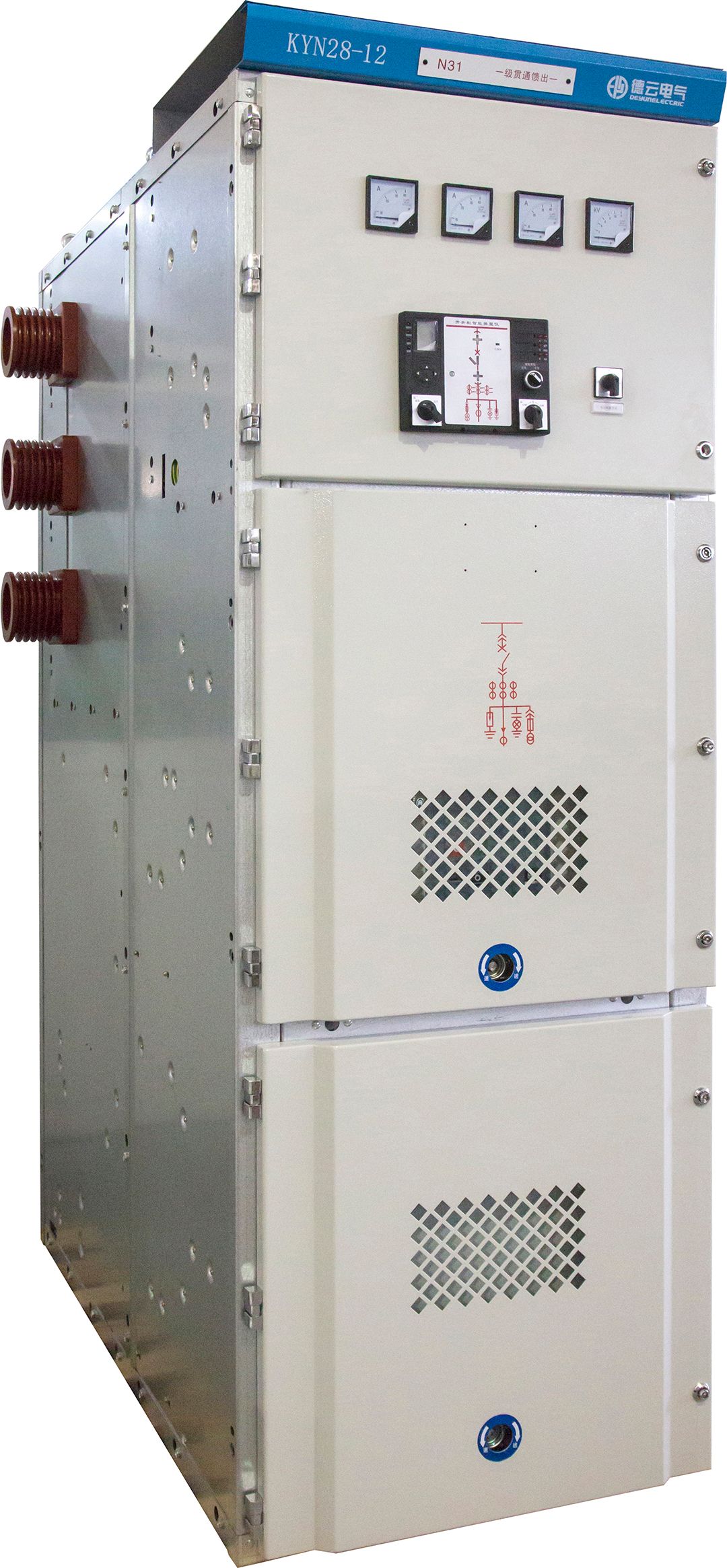
Most buyers assume low voltage switchgear exporters are interchangeable—until a shipment shows up with mismatched test reports. Sourcing from overseas adds layers of risk that a glossy catalog never shows. Deepwill works with global buyers to expose those risks early, from factory audits to final inspection. This post covers what to look for before you commit to a supplier, so your next order doesn't become a costly lesson.
Why Busbar Plating Fails in Humid Ports
Salt-laden moisture is the primary culprit behind plating deterioration in port environments. When a busbar is coated with tin or silver, the microscopic pores and surface scratches that inevitably form during handling or installation become entry points for chloride ions. In humid coastal air, these ions combine with condensation to create a thin, aggressive electrolyte film across the busbar surface. Unlike ordinary atmospheric corrosion, this film never fully dries, sustaining a low-level galvanic cell where the base copper or aluminum acts as the anode and the plating as the cathode. Over time, the plating blisters and flakes away, exposing the underlying metal to rapid pitting.
The mismatch in electrochemical potential between the plating and the substrate accelerates failure in marine conditions. Even a uniform nickel underlayer, often applied as a diffusion barrier, cannot compensate for poor edge coverage or sharp corners where plating thickness drops sharply. These weak spots become focal points for corrosion because the local current density rises, stripping the protective layer faster than the surrounding flat areas. Maintenance crews frequently misinterpret early signs as mere cosmetic stains, but beneath the surface, intergranular attack is progressing along the grain boundaries of the plating, weakening its adhesion.
Thermal cycling adds another layer of stress that goes unnoticed until failure occurs. Busbars in port facilities carry high currents that heat and cool with load changes. The plating expands and contracts at a different rate than the base metal, creating micro-cracks that admit humid air directly. Once the plating is breached, the corrosion products are more voluminous than the metal they replace, pushing the remaining plating outward in a characteristic worm-like pattern. Repair without addressing the root cause — continuous moisture exposure and chloride accumulation — only postpones the next failure.
Reading a Test Certificate Like a Forensic Auditor
Most people glance at a test certificate, spot the word “Pass,” and file it away. A forensic auditor does the opposite. They start with the certificate number, the issuing body, and the date of issue, then trace every claim back to its source. A certificate is not a summary; it is a chain of evidence. If the laboratory’s accreditation scope doesn’t cover the exact method cited, or if the sample description doesn’t match what was actually shipped, the certificate’s authority starts to crack.
The next move is to question what’s missing. A certificate that lists only favorable results without mentioning the failed interim checks, or one that omits the measurement uncertainty, is not complete. Forensic auditors look for revisions, stamps, and signatures that might have been added after the fact. They compare the reported values against the product specification, but they also check whether the test was conducted under conditions that reflect real use. If a fire resistance test was run on a small, idealized sample rather than the full assembly, the pass mark means far less.
Finally, the auditor treats the certificate as a live document tied to a specific production batch. They verify that the certificate’s issue date falls within the validity window, that the batch or serial numbers align with shipping records, and that any changes to the product after testing haven’t invalidated the result. This kind of reading isn’t cynical; it’s exacting. It separates proof from paperwork.
Lead Time Promises That Vanish After Deposit
Before the deposit clears, the salesperson makes it sound effortless: “Two weeks, tops.” “We'll have it installed by the end of the month.” Those words rarely make it into the contract, and if they do, they're softened with phrases like “estimated” or “subject to scheduling.” Once the money lands, the tone shifts. The same person who answered calls in two rings now takes three days to reply to an email, and the promised ship date quietly slips to “next quarter.”
What follows is a familiar pattern. The buyer hears new phrases—supply chain hiccups, factory backlog, unexpected quality checks. Each update resets the clock. Some companies go quiet entirely, surfacing only when the customer mentions a refund request or a chargeback. By then, the deposit has already been absorbed into someone else's production schedule, and the customer is left holding an invoice instead of a delivery date.
If a lead time matters, get it in writing with a penalty for missing the date. Keep every email and chat log that references delivery. And consider splitting the payment so the final portion stays with you until the goods or service actually arrive.
Crating Choices That Decide Whether Gear Arrives Intact
Not all crates are equal, and the difference usually shows up at the destination. A flimsy plywood shell with a few foam scraps might survive a short van ride, but once it hits a freight hub conveyor or a forklift operator in a hurry, the real weak points surface. The choice of lumber thickness, corner reinforcement, and whether the gear is bolted to a pallet base often matters more than the outer box itself.
Inside the crate, the real decisions happen around blocking and bracing. Heavy items need to be locked down so they cannot shift when the crate is tilted or dropped. Custom-cut foam or molded pulp inserts work better than loose peanuts, which settle and leave voids. Even the direction of the grain in wooden braces can change how well a shock load is absorbed instead of transferred straight into the equipment.
Moisture and vibration are the quiet destroyers. A sealed crate without a desiccant can trap humidity and corrode metal surfaces during a long ocean crossing. Adding vibration-dampening mounts or isolating sensitive components from the crate walls can be the difference between a unit that powers up on arrival and one that needs a full rebuild. The crate is not just a box; it is the first piece of the equipment's next job.
Spare Parts Pricing You Should Lock in Now
Raw material indexes for steel, copper, and specialized alloys have been swinging enough that suppliers are quietly passing through short-term surcharges. If your maintenance budget still assumes last year's catalog rates, you're exposed. Locking in pricing on high-turnover parts—bearings, seals, filters, hydraulic hoses, electrical connectors—before the next quarterly adjustment can preserve margin.
Beyond commodity exposure, several OEMs are renegotiating distributor agreements with minimum order thresholds. Locking now lets you bundle less-visible SKUs at current rates, avoiding the 6–12% upward revisions that typically follow new territory terms. For parts with predictable consumption, a six-month or twelve-month fixed-price PO can shift risk back to the vendor.
But don't lock blindly. Audit your last 18 months of usage; target items with stable demand and no pending design changes. Then push for a price cap rather than a fixed price if volumes might fluctuate. That way you get protection without overcommitting to inventory you can't burn through.
The Hidden Cost of Cheaper Arc Containment
Opting for a lower-priced arc containment system often means thinner steel panels and fewer reinforced joints. Those savings show up right away on the invoice, but they migrate into the maintenance budget once thermal stress starts warping doors and loosening seals. A weakened enclosure no longer directs blast pressure and hot gases as designed, so what began as a bargain turns into repeated repairs and longer shutdowns.
There is also the matter of testing and certification. Budget-focused suppliers may rely on older or partial test data, leaving gaps in fault-current ratings or assembly tolerances. When an actual arc event occurs, the system can fail at the very points that were never fully validated. The result is not just equipment damage, but extended production loss and higher insurance scrutiny after the incident.
Cheaper arc containment also tends to age poorly in environments with dust, moisture, or vibration. Gaskets harden, hinges lose alignment, and access panels no longer close flush. Each small compromise raises the likelihood that an internal arcing fault escapes the enclosure. Over a ten-year service life, the cumulative cost of retrofits, emergency replacements, and unplanned downtime can easily erase the initial price advantage.
FAQ
Look beyond a generic CE mark. Insist on type-tested assemblies per IEC 61439, and check for regional marks like UL 891 for North America or CCC for China. Ask for the actual test certificates, not just a statement of conformity, and verify the issuing lab is accredited. Many buyers overlook that even enclosures and busbar systems need their own certifications for certain markets.
Switchgear rated for 400V 50Hz will not automatically work in a 480V 60Hz system. Busbar spacing, insulation coordination, and even breaker interrupting capacity shift with voltage and frequency. Always confirm the rated operational voltage, impulse withstand voltage, and short-circuit rating against the actual grid conditions at the destination, not your home market's assumptions.
Because a datasheet can hide weak busbar joints or poor arc containment. Attending a factory witness test lets you see temperature rise under full load, dielectric withstand, and mechanical operation. If you cannot attend, hire an independent third-party inspector. One skipped test can mean a burnt panel six months after installation.
You need the full IEC 61439 verification dossier, wiring diagrams, bill of materials, and packing list with exact weights and dimensions. For many countries, a certificate of origin and a test report from an accredited lab are non-negotiable. Missing the declaration of conformity often delays clearance for weeks, and some ports will not release goods without a detailed heat-run test report.
Ask for a list of installed projects in your region and contact at least two of those customers. Check whether the exporter has local service partners or ships spare parts within days, not months. A low upfront price means little if a failed relay leaves your production line down for six weeks. Request a written response-time guarantee for critical spare parts.
The biggest mistake is copying a domestic specification without adapting to local codes. For example, some countries require internal arc classification for publicly accessible panels, while others mandate specific IP ratings due to dust or humidity. Also watch for mismatched protective device coordination: a breaker that works in your grid might not discriminate properly with local upstream protection.
A panel rated for a mild 25°C climate can overheat badly in a 45°C desert or a tropical port with 95% humidity. Buyers should require derating curves for high ambient temperatures and anti-condensation heaters for humid environments. Salt-laden coastal air also demands corrosion-resistant plating on busbars and enclosure hardware, otherwise you will see rust within a year.
Forget the generic eight-week lead time if you need custom busbar arrangements or non-standard breakers. Many exporters quote production time only, then add weeks for type testing, packing, and port congestion. Always confirm whether the price includes seaworthy packing and whether the panel is shipped fully assembled or knocked down. Assembled units need more container space and often require special handling at the destination port.
Conclusion
Buyers sourcing low voltage switchgear from overseas should treat the purchase order as a forensic exercise, not a formality. In humid port cities, standard busbar plating breaks down fast; insist on salt-spray test evidence and specify plating thickness and post-treatment rather than accepting generic 'silver-plated copper.' When a test certificate arrives, read it like a fraud examiner—check the serial number against the actual breaker, verify the short-circuit withstand rating was tested at the stated voltage and duration, and confirm the laboratory is accredited, because a certificate without traceable test data is just decoration. Lead times often collapse after the deposit clears, so tie milestone payments to factory witness tests and photograph the partially assembled gear before releasing the next tranche.
Crating is where many exporters quietly cut corners. Demand a crating specification that includes moisture barriers, steel edge protectors, and internal bracing drawings; a pallet that looks strong can still let a 900 kg panel shift during unloading. Lock in spare parts pricing at the contract stage—breakers, interlock rods, and even busbar joint kits often double in price after the original order, and a three-year fixed-price clause costs the exporter nothing now but saves you thousands later. Finally, do not let a cheaper arc containment claim pass without scrutiny. Ask for full-scale arc test video, not just a calculation, and check whether the enclosure was tested with all openings closed and with the same internal arc energy level as your fault current. Lower upfront cost will disappear after one incident.
Contact Us
Contact Person: Julion
Email: [email protected]
Tel/WhatsApp: 8617351370631
Website: https://www.deyunelectric.com