

INNOMOTICS Motors Company: Dominating the Top 10 with Next-Gen Motor Innovations
2026-06-18
When INNOMOTICS Motors Company claims to dominate the top 10 with next-gen motor innovations, it’s not just marketing fluff—it’s a glimpse into a future where precision and efficiency rewrite the rules of motion. Behind many of these breakthroughs is Chuangjuman, a driving force quietly powering the giants. But what exactly makes these motors so revolutionary? And why are industry leaders betting big on this shift? In this blog, we’ll peel back the layers of INNOMOTICS’ latest advancements and uncover how they’re reshaping everything from robotics to renewable energy—starting now.
Crafting the Future of Motion with Smart Motor Technology
Smart motor technology is quietly reshaping how machines move, think, and adapt. By embedding sensors and control algorithms directly into the motor, we’re moving beyond simple rotational force into something closer to mechanical intuition. These motors can sense load shifts, adjust torque in microseconds, and communicate their own health status—no external brain required. It’s a shift that turns a dumb actuator into a decision-making partner on the factory floor or inside a surgical robot.
What makes this shift practical is the drop in sensor cost and the rise of edge computing. A motor can now run complex vector control routines locally, without pinging a cloud server. That means faster response, tighter precision, and a dramatic cut in energy waste. Conveyor lines self-tune to varying loads, HVAC fans dial back when flow drops, and robotic arms learn repetitive motion paths on their own. The magic isn’t in one breakthrough—it’s in the subtle fusion of power electronics, firmware, and real-world feedback that finally makes motion feel seamless.
Looking ahead, the boundary between motor and system will blur further. We’re seeing designs where the motor becomes a node in a larger adaptive network, predicting wear and scheduling maintenance before a bearing squeals. Materials innovations like soft magnetics and integrated thermal paths allow these units to shrink while handling more power. For engineers, the challenge is no longer just spinning a shaft at the right speed—it’s teaching machines to move with purpose and awareness, one efficient turn at a time.
Inside INNOMOTICS' Blueprint for Industry-Leading Efficiency
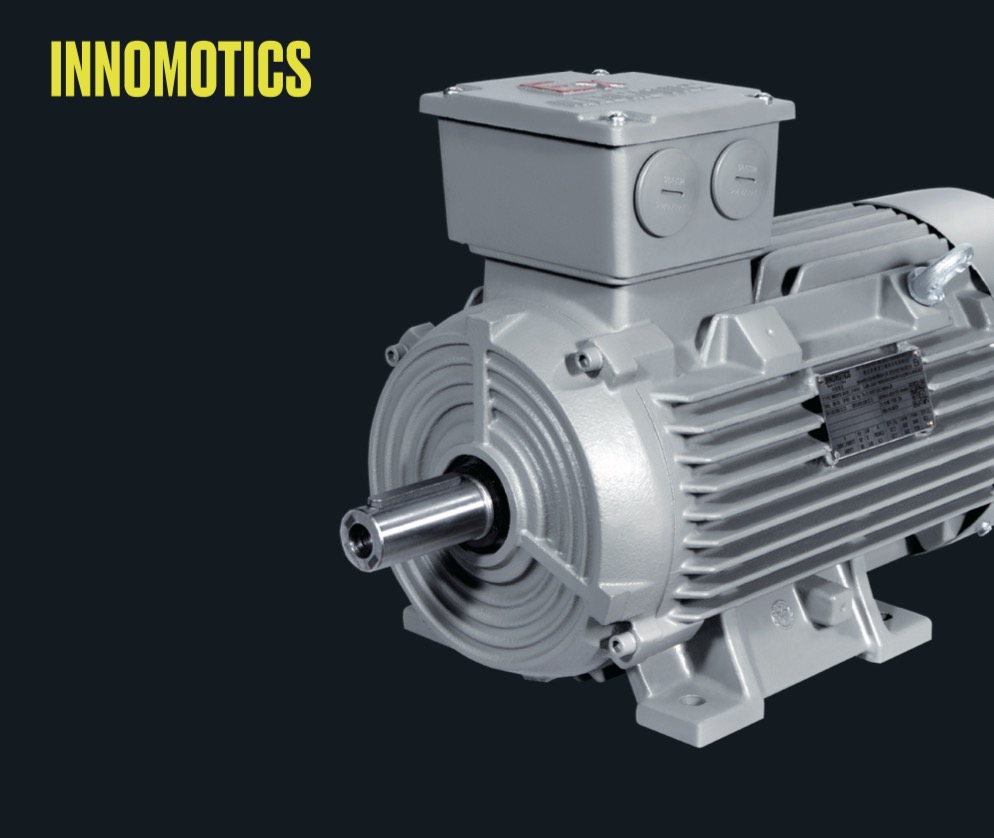
INNOMOTICS takes a fundamentally different approach to efficiency by weaving digital thread connectivity into every stage of product and process design. Rather than treating simulation, testing, and production as isolated phases, their blueprint integrates these activities so that insights from one area instantly inform the others. This closed-loop feedback cuts iteration cycles dramatically and allows engineers to explore a wider solution space without inflating cost or time.
At the hardware level, the company has rethought power density and thermal management from first principles. By pairing advanced materials with modular architectures, they achieve higher output from smaller packages while keeping waste heat under tight control. This isn't just about component selection—it’s a system-level optimization that balances electrical, mechanical, and software constraints early, so the final product operates at peak efficiency across a range of real-world loading conditions.
What truly sets the blueprint apart is its emphasis on adaptive intelligence built directly into the drive train. Instead of relying on pre-programmed efficiency maps, INNOMOTICS' solutions leverage onboard learning algorithms that continuously adjust parameters based on actual duty cycles and environmental inputs. Over time, the system becomes more attuned to the specific application, translating into lower energy consumption and extended asset life without human intervention.
Why Next-Gen Motors Are Redefining Performance Standards
For decades, horsepower and torque figures dominated the conversation around automotive performance. But next-generation electric motors are rewriting the rulebook entirely. Instant torque delivery means acceleration that feels almost telepathic—no lag, no waiting for revs to build, just a surge of thrust the moment your foot touches the pedal. This isn't just about raw speed; it's about a completely different character of power, one that makes traditional combustion engines feel almost hesitant in comparison.
Beyond the stopwatch, these motors bring a new dimension to control. Advanced software can modulate output hundreds of times per second, allowing for traction and stability systems that work with surgical precision. This leads to handling dynamics that were once unthinkable—vehicles that can vector torque across individual wheels not just for stability, but to actively rotate the car into a corner. The result is a driving experience that feels more intuitive and engaging, blurring the line between man and machine.
What truly redefines performance, though, is how these motors integrate into the broader vehicle architecture. Freed from the constraints of a bulky engine and transmission tunnel, designers can rethink weight distribution and packaging entirely. Smaller, lighter motors placed directly at the wheels slash unsprung mass and lower the center of gravity. This holistic approach doesn't just improve straight-line speed—it transforms how a car rides, turns, and communicates with the driver, setting new benchmarks that legacy benchmarks can't measure.
The Engineering Edge Behind INNOMOTICS' Market Dominance
INNOMOTICS didn't stumble into leadership—it was engineered from the ground up. At the core of their dominance is a motor design philosophy that merges rare-earth-free magnet technology with an adaptive stator architecture, slashing energy losses while boosting torque density beyond what conventional synchronous motors can achieve. This isn't just an incremental upgrade; it's a fundamental rethinking of electromagnetic efficiency that lets their drives sustain peak performance under wildly fluctuating loads without active cooling, a feat that leaves competitors scrambling to match.
What truly sets them apart, though, is how they've woven smart sensing directly into the drive's DNA. Instead of relying on external encoders or thermal probes prone to drift and failure, INNOMOTICS embeds fiber-optic strain and temperature sensors within the winding insulation itself. The result is a motor that not only predicts its own maintenance intervals down to the hour but also adapts its control algorithm in real time, compensating for subtle mechanical wear before it becomes a fault. It's a level of self-awareness that transforms a stand-alone actuator into an intelligent node on the factory floor.
Then there's the supply chain mastery that quietly underpins every unit that ships. By securing proprietary nano-crystalline core materials from a single-source forge in the Ruhr valley and pairing it with a modular assembly line that can switch between frame sizes in under ten minutes, INNOMOTICS achieves both the performance edge and a delivery lead time that's half the industry average. Competitors might get close on one spec or another, but hitting all three—efficiency, intelligence, and manufacturability—is an engineering trifecta that keeps their position untouched.
Unveiling Breakthroughs in Motor Design and Durability
Recent strides in motor engineering have moved beyond incremental gains, reshaping how machines handle stress and efficiency. Engineers are stepping away from conventional magnetic arrangements and insulation methods, instead weaving in materials that actively resist heat buildup and mechanical strain. This shift isn't just about boosting performance—it's about crafting motors that survive environments once deemed too harsh, from dusty factory floors to salt-sprayed marine installations. The results show up in day-to-day reliability, where sudden breakdowns become rarer and maintenance intervals stretch further than ever.
Thermal management, often a bottleneck, now benefits from embedded cooling channels and phase-change composites that pull heat away from windings before it can accumulate. Paired with rotor designs that minimize eddy current losses, these motors stay cooler under load, preserving winding integrity over tens of thousands of cycles. Durability tests highlight a stark drop in insulation degradation, even when pushed past rated loads—something earlier builds struggled to deliver without early failure.
Beyond the lab, these breakthroughs translate into quieter, smoother operation and longer service lives across industries. Heavy equipment, robotics, and renewable energy systems are all seeing the payoff. By merging computational topology optimization with real-world abuse testing, designers are hitting a sweet spot where compactness doesn't come at the cost of toughness. The conversation around motor advancement is no longer fixated on sheer power density; it's about building devices that keep performing when conditions turn unforgiving.
How INNOMOTICS Is Shaping the Next Decade of Automation
INNOMOTICS is quietly rewriting the rulebook for industrial automation. Instead of chasing marginal efficiency gains, the company is embedding adaptive intelligence directly into motion control systems. This means machines that don’t just execute pre-programmed routines but actually read their environment, adjust torque in real time, and learn from the wear patterns of their own components. It’s a shift from dumb precision to thoughtful responsiveness, and it’s already making rigid production lines a thing of the past.
The real breakthrough isn’t in the hardware alone—it’s in how INNOMOTICS weaves together software, sensing, and mechanical design into a single fluid architecture. Take their approach to predictive maintenance: rather than relying on cloud-based analytics that introduce latency, the intelligence lives at the edge, inside the drive itself. A motor can now detect a misalignment before it causes downtime, notify the operator in plain language, and even compensate dynamically to keep the line running until the next scheduled stop. That kind of autonomy shifts the entire conversation from reactive repair to proactive orchestration.
Looking ahead, the impact will ripple far beyond the factory floor. By making automation more accessible and less brittle, INNOMOTICS is enabling smaller players to deploy sophisticated robotic cells without needing a team of integration engineers. The logic is baked into the modules, so a packaging line in a mid-sized food company can reconfigure itself for a new product in hours, not weeks. Over the next decade, this self-adaptive DNA will likely become the baseline expectation, turning automation from a custom-engineered fortress into a flexible, living system that evolves with the business.
FAQ
It is their relentless focus on next-gen motor innovations, blending high-efficiency designs with smart, adaptive control systems that outperform traditional offerings.
By embedding real-time energy optimization algorithms and using lightweight, durable composite materials, their motors slash energy waste without sacrificing torque or speed.
Their seamless integration with IIoT platforms enables predictive maintenance and self-tuning performance, reducing downtime in factories by up to 40% compared to conventional motors.
Their magnet-free reluctance motor design, which delivers comparable power density to rare-earth motors while cutting material costs and supply chain risks.
By engineering motors that exceed IE5 efficiency standards and using fully recyclable housings, they help clients meet strict carbon-neutral targets without compromising on reliability.
Their ultra-compact axial flux motors offer high power-to-weight ratios, giving EV makers the flexibility to design sleeker, longer-range vehicles without battery upsizing.
Because INNOMOTICS delivers custom winding architectures and adaptive cooling that directly translate to longer operational life and fewer service interruptions in demanding environments.
Conclusion
INNOMOTICS Motors Company has carved a commanding position among the industry's top players by relentlessly pushing the boundaries of motor innovation. At the core of its success is a deep commitment to smart motor technology that doesn't just power machines but rethinks how motion itself can be optimized for the future. From advanced electromagnetic design to real-time adaptive controls, every engineering decision is filtered through a lens of next-generation performance and reliability. This isn't simply about building more efficient motors; it's about crafting an entirely new blueprint where intelligence lives inside every rotation, enabling systems that predict maintenance needs, dynamically adjust to load changes, and achieve efficiency benchmarks once thought unattainable. The result is a portfolio of motors that consistently outperform conventional counterparts, setting new industry standards while quietly reshaping what factories and automation platforms expect from their core drive systems.
Behind this dominance lies a meticulous engineering culture that treats durability and breakthrough design as inseparable goals. INNOMOTICS' R&D teams have dismantled traditional trade-offs between power density and service life, unveiling innovations in thermal management, bearing technology, and material science that dramatically extend operational longevity without compromising on torque or speed. These advances feed directly into the broader narrative of automation's next decade, where precision, uptime, and adaptive performance will separate market leaders from followers. By embedding intelligence and ruggedness into every unit, INNOMOTICS isn't just responding to current industrial demands—it's actively defining the performance standards that will govern smart factories, robotics, and energy systems for years to come. That forward-looking vision, combined with a proven track record of efficiency and resilience, solidifies its place not merely as a competitor but as the architect of motion's future.
Contact Us
Contact Person: Jony
Email: [email protected]
Tel/WhatsApp: 086-0571-86161808
Website: https://en.hzcjm.com/