

How Original Manufacturers of Third-Generation Cement House Molds Are Revolutionizing Construction
2026-06-30
Imagine a construction site where walls go up in days, not weeks, and precision eliminates costly errors. This isn't a distant dream—it’s happening now, driven by original manufacturers of third-generation cement house molds. Companies like LugongMachinery are at the forefront, redefining how we build homes with smarter, faster, and greener solutions. These advanced systems combine robotics, modular design, and data-driven quality control to slash labor costs and material waste. But the real revolution lies in what they enable: affordable, durable housing at scale, anywhere in the world. As demand for sustainable building skyrockets, understanding this shift is no longer optional—it’s essential. In this post, we’ll unpack how these innovators are reshaping the industry from the ground up.
The Evolution of Cement House Molds: From Basic Forms to Smart Systems
In the early days of concrete construction, house molds were little more than rudimentary timber frameworks. Builders would assemble these basic forms on-site, relying heavily on manual labor to pour and cure the cement. The process was slow, inconsistent, and left plenty of room for error. Each mold was custom-built for a single project, leading to significant material waste and few options for standardization. While these early methods established the foundation for cement housing, they struggled to meet the growing demand for quicker, more affordable construction.
As architectural ambitions and engineering knowledge expanded, so did the complexity of formwork. Steel and aluminum molds started replacing wood, introducing greater durability and the possibility of reuse. Modular systems emerged, allowing for repetitive casting of standardized panels and blocks. This shift not only sped up construction timelines but also improved precision and surface quality. Yet the real game-changer came when designers began integrating insulation, wiring conduits, and plumbing directly into the formwork, reducing post-pour modifications and labor on-site. These prefabricated solutions turned the mold into more than a temporary shell—it became a functional component of the building process.
Today, cement house molds have entered an era where sensors, automation, and data analytics redefine what’s possible. Smart formwork systems can monitor concrete temperature, humidity, and curing conditions in real time, alerting teams to potential issues before they become structural problems. Robotic arms adjust and reposition molds with millimeter accuracy, while self-climbing systems enable the continuous casting of multi-story structures without disassembly. Looking ahead, adaptive molds that change shape on command and integrate with 3D printing technologies promise to unlock organic architectural forms once deemed impossible. The journey from simple wooden frames to intelligent, adaptive systems mirrors the broader transformation of construction itself: increasingly responsive, efficient, and quietly intelligent.
Why Third-Generation Molds Are a Quantum Leap in Prefab Housing
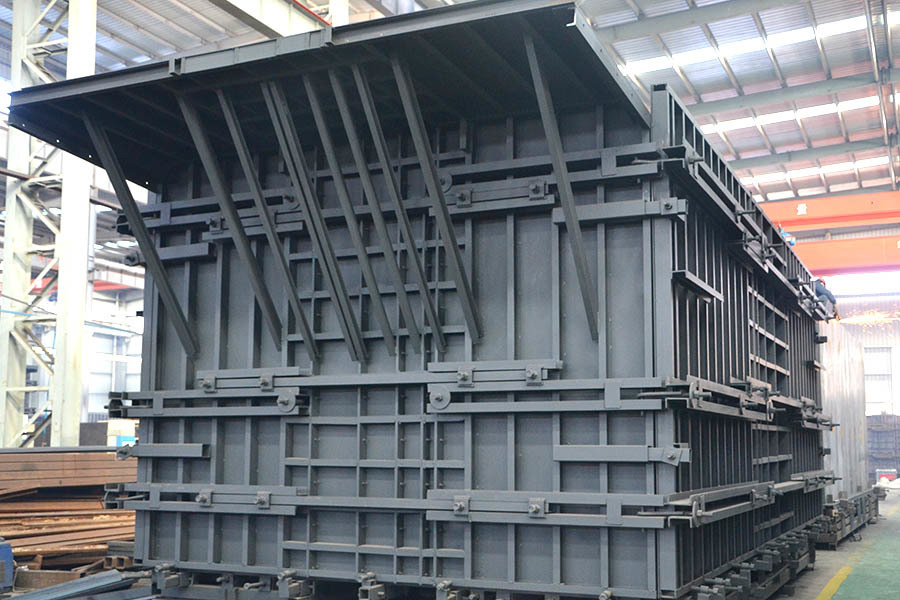
The shift from earlier mold systems to third-generation molds is changing how prefab homes are built at their core. Older methods often forced builders to accept small misalignments and limited layout options. These new molds use advanced CNC machining and sensor-guided calibration to deliver panel accuracy that was unimaginable just a decade ago. Every edge and joint fits so precisely that on-site adjustment becomes almost unnecessary, which alone saves days on project timelines.
Beyond fit, these molds unlock a level of design flexibility that finally matches client expectations. Instead of forcing a home into a handful of pre-approved shapes, third-generation systems can produce complex curves, integrated utility channels, and variable wall thicknesses directly from the mold. The concrete pours more consistently, with fewer voids, meaning fewer callbacks for structural worries. For builders, it means less wasted material and far shorter inspection checklists.
Perhaps the quietest revolution is how these molds handle sustainability without any extra effort. The precision reduces concrete overuse by allowing thinner, optimized structural elements while still meeting code. Better curing control inside the mold means fewer rejected panels, and the modular design of the mold itself allows quick reconfiguration for different projects instead of scrapping entire setups. It’s a step forward that makes prefab not just faster, but fundamentally smarter.
Unpacking the Engineering Behind Next-Gen Mold Precision
Modern moldmaking has quietly moved past the trial-and-error era that defined it for decades. The shift isn't just about tighter tolerances on paper—it's rooted in how we now simulate the entire lifecycle of a tool before a single piece of steel is cut. Multi-physics software lets engineers overlay thermal, rheological, and structural data to predict warpage or stress concentrations that would have been invisible a generation ago. This isn't theoretical; it changes how cooling channels are routed, where venting is placed, and how ejector systems are balanced. The result is a level of foresight that dramatically compresses lead times while eliminating the break-in period that used to follow every new tool delivery.
Materials, too, have undergone a subtle revolution. It's not about exotic alloys for their own sake—it's about matching a carefully tuned steel to the specific polymer and cycle requirements. Tool steels with refined carbide structures resist galling and wear under high-glass-fill resins, while advanced coatings like diamond-like carbon or titanium aluminum nitride reduce friction and allow for faster cycle times without compromising part release. In micro-molding and connector applications, additive manufacturing of conformal cooling inserts has opened up geometries that simply cannot be drilled. Each material choice feeds directly into the precision equation, making the mold less of a cavity and more of a controlled environment.
The final piece lies at the machine interface. Next-gen mold precision demands that the tool and the press speak the same language. In-cavity pressure and temperature sensors have moved from lab curiosities to production floor staples, feeding real-time data to control systems that adjust injection velocity and pack pressure on the fly. This closed-loop adjustment compensates for batch-to-batch material variation and ambient shifts, effectively making the mold itself a calibrated instrument. The engineering here isn't about standing still and hoping for consistency—it's about building a system that corrects its own drift, shot after shot.
How Original Manufacturers Are Redefining Speed and Scalability
Stripping away layers of middlemen gives original manufacturers a direct line to both materials and market feedback. Instead of waiting weeks for third-party suppliers to adjust tooling or source alternates, in-house teams can pivot production within a single shift. This tight integration lets factories run smaller, faster batches without the usual cost penalties, turning what used to be rigid supply chains into responsive, on-demand networks.
Real scalability doesn't come from simply enlarging facilities; it’s born from modular production cells that can be reconfigured overnight. By investing in multi-purpose lines and cross-trained crews, manufacturers shift from single-product megafactories to agile hubs that seamlessly switch between high-mix, variable-volume orders. The result isn’t just faster throughput—it’s the capacity to absorb sudden demand spikes without accumulating dead inventory.
Data loops now feed directly into the plant floor, letting original manufacturers forecast and react in real time. When a new design tweak is uploaded, the system self-adjusts tensioning, temperatures, and routing paths across every machine in minutes, not days. This closed-loop autonomy slashes the typical lag between concept and full-rate production, making speed a built-in feature rather than a frantic response.
Slashing Costs Without Cutting Corners: The Efficiency Edge
Trimming operational expenses often conjures up images of cheaper materials or slashed headcounts, but that’s a short-sighted play. Real savings live in the gaps — redundant steps, outdated workflows, mismatched tools. When you tighten those loops, you’re not just spending less; you’re spending smarter.
It starts with a clear-eyed audit of where effort leaks. Maybe your team re-enters data across three systems because they’ve never been integrated. Or approval chains drag on for days because nobody questioned them. Fixing these friction points doesn’t compromise quality — if anything, it unclogs the people who deliver it.
The efficiency edge isn’t about relentless optimization for its own sake. It’s about giving your best people room to do their best work by stripping away the pointless parts. When the machine runs cleaner, you cut costs without ever touching the things that actually matter.
The Eco-Friendly Shift: Greener Cement, Smarter Molds
Concrete production has long been a major source of carbon emissions, prompting a quiet revolution in how we think about this everyday material. The move toward greener cement goes beyond simply adding recycled aggregates; it reimagines the core chemistry. New blends incorporating calcined clays, volcanic ash, or even captured CO₂ are lowering the carbon footprint without compromising strength. These alternatives aren’t lab curiosities—they’re being poured into foundations and pavements, proving that sustainability can be built into our cities from the ground up.
Of course, fresh mixtures demand a fresh approach to shaping them. That’s where smarter molds enter the picture. Traditional formwork eats up timber and time, but intelligent, reusable systems are changing the game. Modular designs made from composites or digitally fabricated plastics adjust on-the-fly, reducing waste and enabling intricate geometries once deemed too complex. Sensors embedded in these molds monitor curing in real time, ensuring that even unconventional green cements achieve their full potential. It’s a shift from brute-force construction to precision engineering, where every pour counts.
FAQ
Third-generation molds incorporate advanced materials and modular designs, allowing for multiple reuses without wear, integrated insulation channels, and precision-engineered joint systems that eliminate cold bridges and reduce on-site labor.
They enable continuous monolithic pouring of walls, floors, and even roof structures in a single operation, drastically cutting the number of steps and curing waits. A basic housing shell can be completed in under 48 hours on-site.
Absolutely. The monolithic cast forms a seamless reinforced concrete shell that resists seismic activity, hurricane-force winds, and fire better than most conventional stick-built or block masonry homes.
Yes, original manufacturers now offer adaptable formwork systems with interchangeable inserts and adjustable configurations, so curved walls, varying window placements, and multi-story layouts are all achievable without sacrificing production speed.
They drive R&D, testing new composites for lighter molds, developing automation for assembly, and training local workforces to use the systems, effectively turning a niche technique into a mainstream building solution.
By casting solid walls with high thermal mass and integrated insulation, buildings require significantly less energy for heating and cooling. The process also reduces construction waste to near zero and often uses locally sourced aggregates.
For mid to large-scale projects, the per-square-foot expense drops as mold utilization increases, and the shortened build time lowers financing and labor overhead. Many developers see a 20-30% total project cost reduction.
Expect increasing automation, robotic mold assembly, and the incorporation of smart conduits and sensor arrays cast directly into the walls, along with more community-scale master-planned developments using this rapid technique.
Conclusion
Original manufacturers of third-generation cement house molds are driving a fundamental shift in how we build homes, moving far beyond simple formwork to deliver intelligent, integrated construction systems. These latest molds embed sensors, automation, and data-driven precision, turning raw cement into complete structural shells in a fraction of the time once required. The leap from basic manual forms to smart, self-monitoring molds has unlocked unprecedented speed and scalability, enabling entire housing developments to rise in weeks rather than months. By engineering out human error and optimizing every pour, these systems achieve millimeter-level accuracy across walls, floors, and utilities, effectively merging design intent with on-site reality. The result is a construction process that feels less like traditional assembly and more like precise, repeatable manufacturing.
This evolution delivers more than just speed—it reshapes project economics and environmental impact without sacrificing quality. Advanced mold designs allow for thinner, stronger walls that use less material while maintaining structural integrity, directly cutting raw cement consumption and associated carbon footprints. Original manufacturers are integrating greener cement blends and recycled aggregates into their mold-compatible mixes, pushing the sustainability envelope further. On the cost side, the reduction in labor, waste, and rework slashes budgets substantially, yet the “efficiency edge” goes deeper: these systems enable just-in-time production, leaner supply chains, and faster return on investment. By treating a house not as a one-off project but as a product refined through iterative design, these manufacturers are redefining what it means to build affordably, quickly, and responsibly—proving that the future of housing is being cast in molds that think for themselves.
Contact Us
Contact Person: Zhang Zhenlai
Email: [email protected]
Tel/WhatsApp: 8618563210000
Website: https://en.lugongmachinery.com/