

Dropper Bottles Exporter Guide to Finding Reliable Suppliers
2026-10-24
Sourcing dropper bottles from overseas can feel like a gamble—one wrong exporter and you're stuck with leaking caps or delayed shipments. But what if there was a smarter way to vet suppliers without endless trial and error? This guide breaks down the exact steps we use at Imagine Craft Packaging to identify dependable dropper bottle exporters, so you can skip the guesswork and scale with confidence.
Vetting Suppliers Who Actually Understand Dropper Bottles
A supplier who truly understands dropper bottles won’t start by quoting price or minimum order quantity. They’ll ask about the viscosity of your liquid, whether it contains essential oils or acidic ingredients, and how the bottle will be used. That’s because the rubber bulb material—natural rubber, nitrile, or silicone—behaves very differently with different formulations. If a supplier just sends you a generic spec sheet without asking a single question about what goes inside the bottle, you’re likely dealing with a middleman, not a specialist.
Dropper accuracy is another quick way to separate the knowledgeable from the clueless. Ask them directly: how many drops per milliliter does your default dropper produce? What tip aperture options do you offer? Can you supply glass droppers in 0.5ml, 1ml, and 2ml capacities? A supplier who actually understands dropper bottles will tell you that drop size depends on tip opening and liquid surface tension, and they’ll back it up with test data or samples for you to verify. If they mumble something like “about 20 drops, standard,” that’s a red flag.
Pay attention to the details around the bottle neck and closure as well. A capable supplier will proactively confirm whether your neck finish is 18mm, 20mm, or 24mm, and they’ll remind you that the orifice reducer’s hole size must match the dropper’s diameter. They should provide child-resistant certification documents and be able to discuss drop testing and chemical compatibility testing they’ve performed. If you discover your supplier doesn’t know the difference between fire polishing and annealing, expect a high rate of broken droppers in transit.
Sample Orders That Expose Real Quality
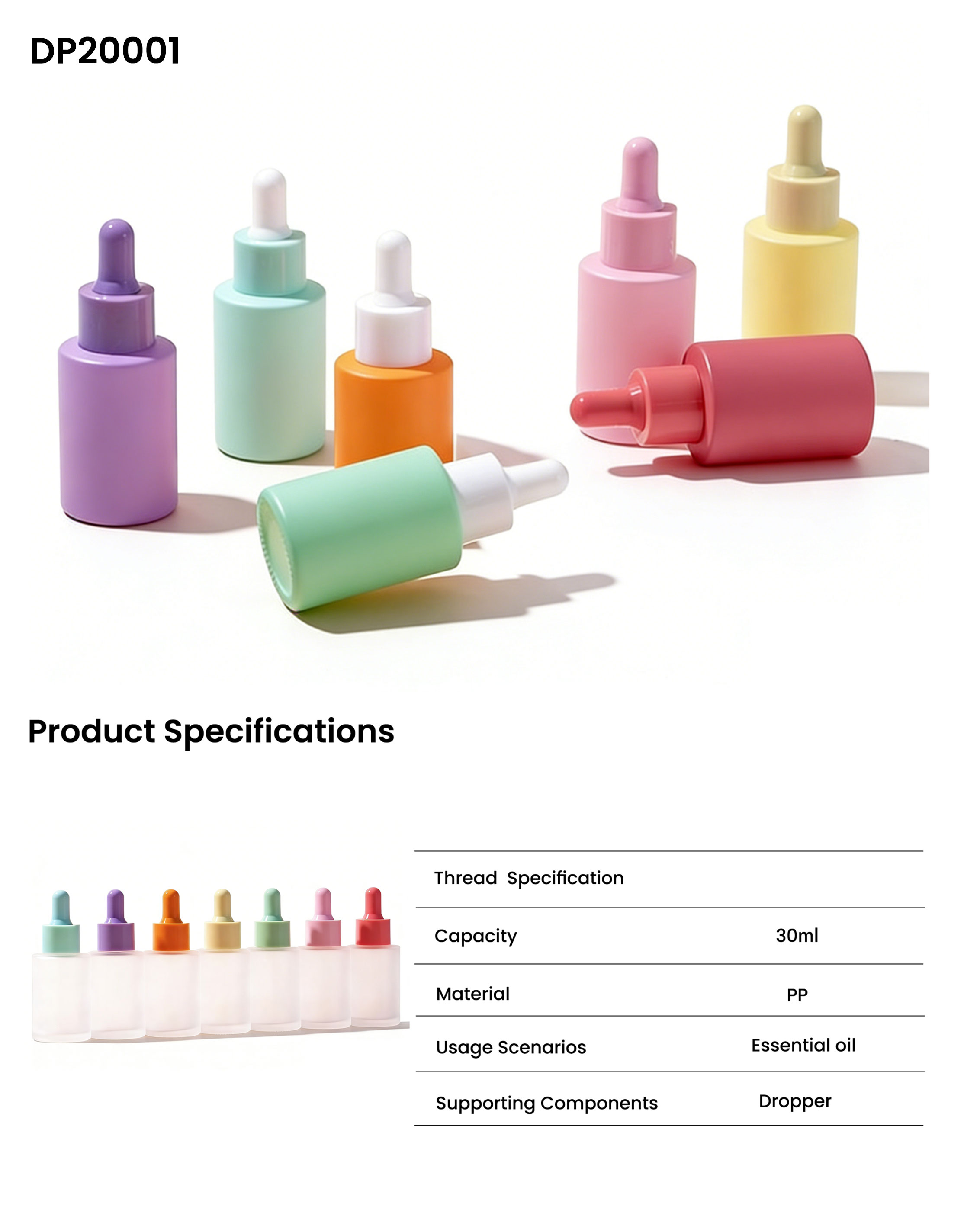
Smart buyers rarely settle for polished brochures or smooth sales calls. They ask for a sample order first — a small, low-risk batch that reveals how a supplier actually performs when money is on the line. A sample order exposes the truth that glossy catalogs hide: material inconsistencies, loose stitching, uneven finishing, or packaging that barely survives transit. It also shows whether the factory can follow exact specifications, meet a promised deadline, and communicate clearly when something goes wrong. In short, a sample order is the supplier’s real resume, written in physical goods rather than words.
The most revealing sample orders are not the ones that go perfectly. They are the ones where a minor issue occurs — a color slightly off, a dimension a few millimeters short, a label placed crooked. How the supplier responds to that moment tells you more than fifty perfect samples ever could. Do they acknowledge the problem without excuses? Do they offer a concrete correction plan and a revised timeline? Do they absorb the cost of a remake without being asked? These small gestures separate factories that view you as a one-time transaction from those that treat every order as the start of a long partnership.
Wise importers also design sample orders to test specific vulnerabilities. Instead of ordering a single standard item, they request a mix that stresses the supplier’s weak points: one high-complexity piece, one rush item with a short lead time, one customized variation with a unique material or logo placement, and one repeat item placed immediately after the first sample arrives. This combination forces the supplier to manage multiple SKUs, handle urgent scheduling, and demonstrate consistency across runs — qualities that no certificate or audit report can guarantee, but that a well-crafted sample order will expose within days.
Decoding Material Specs Without a Chemistry Degree
You don’t need a lab coat to make sense of a material data sheet. Start by ignoring the intimidating chemical names and focus on the numbers that actually affect your project: tensile strength, hardness, and temperature resistance. These values are usually listed in a predictable order, and once you know that order, you can scan any spec like a menu.
Think of each material property as a personality trait. A high elongation percentage means the material stretches before breaking—great for gaskets, terrible for rigid brackets. A low thermal conductivity means it won’t transfer heat well, which might be exactly what you want in a handle. Cross-reference two or three traits against your use case, and the spec starts to read like plain English.
When the jargon gets thick, look for the testing standard listed next to the value, such as ASTM or ISO. You don’t need to know the test procedure—just remember that the standard tells you how the number was measured. Comparing two materials with the same standard is apples to apples. Different standards? It’s like comparing a mile to a kilometer without converting.
Capacity Claims Worth Testing Before You Commit
Vendors often quote theoretical maximums that assume ideal conditions, but real workloads rarely behave that way. Before signing off, ask for a test scenario that mirrors your own traffic patterns—bursty reads, sustained writes, or mixed concurrency—and measure the actual throughput and latency under those conditions. A capacity number pulled from a datasheet can fall apart the moment your access pattern shifts slightly.
Another trap is the shared infrastructure test. If the proof-of-concept runs on dedicated hardware or an isolated cloud instance, it won't reflect the noisy neighbors or overcommitment you'll face in production. Push for a capacity test on the same tier and configuration you intend to buy, with background load from other tenants. Otherwise you're validating a fantasy number, not a service-level reality.
Finally, watch how the vendor defines "capacity." Some count raw storage bytes but ignore metadata overhead, replication factors, or compaction penalties. Others quote peak IOPS that only last for a few seconds before throttling kicks in. Ask for sustained performance over a 24-hour window, including maintenance operations like backups and rebalancing. If they hesitate, that's your answer.
Negotiation Moves That Keep Quality on the Table
Skilled negotiators know that quality rarely survives if price is the only lever. Instead of discounting, they shift the conversation toward value density: what specific outcomes, longevity, or service layers justify the current number. One practical move is to anchor on a detailed breakdown of deliverables, then ask the other side which element they would remove to hit a lower figure. This forces a trade-off discussion rather than a blunt concession.
Another tactic is to introduce a conditional concession—agreeing to adjust scope, timeline, or payment terms rather than cutting the core offering. For example, you might hold firm on materials but offer a phased rollout that eases their upfront cost. This protects margin while showing flexibility. It also signals that you are negotiating the package, not just defending a position.
Finally, use silence and summaries to slow down the pace. After a strong counterpoint, pause before responding; let the weight of the argument land. Then restate what has been agreed so far and ask a focusing question like, “Which part of this solution matters most to your team?” Such questions keep the discussion anchored on problem-solving quality instead of haggling.
Shipping Promises That Deserve a Second Look
We've all seen bold delivery claims that melt under real-world pressure. Some shipping promises, though, quietly hold up where others crack. It's worth revisiting a few of these overlooked commitments: guaranteed weekend delivery for standard parcels, same-day dispatch on orders placed before noon, and flat-rate overnight options that don't double at checkout. No fireworks, just logistics that actually respect the clock.
The difference often hides in the fine print nobody reads. A promise to reroute packages mid-transit without fees? Rare. A clear, no-penalty return label tucked inside the box? Even rarer. These small, concrete details separate genuine reliability from marketing gloss, and they deserve more attention than they usually get.
Before you click "buy," scan past the headline speed. Look for the promises that feel slightly boring: accurate delivery windows, proactive delay alerts, and real human support when a truck breaks down. Those are the shipping commitments that earn a second look — and your trust.
FAQ
Request their sample kit before discussing prices. Look at the neck finish and dropper tip alignment under a magnifying glass—mismatched threads or uneven glass thickness show rushed production. Also ask which glass type they use; Type III soda-lime is common but Type I borosilicate holds up better for essential oils or acidic liquids.
Ask for a video walkthrough of their production line recorded that week, not a polished promo. Then request their monthly output records for the last three months and cross-check with at least two of their existing clients in your region. Many suppliers inflate numbers until you ask for batch-level tracking sheets.
Rubber bulbs can react with certain liquids and crack within a few months. Check if they use nitrile or natural rubber and request a compatibility test. Also watch for pipettes that aren't fire-polished at the tip—rough edges can tear dropper caps or cause inconsistent drop sizes.
Instead of pushing for the lowest unit price, negotiate on secondary costs: tooling fees, custom mold amortization, and inner packaging. If you commit to a 12-month rolling forecast, most factories will reduce the per-unit cost by 8-12% without compromising on glass quality. Avoid asking for discounts on the first order; ask for credit terms or free replacement of defective units instead.
Beyond the usual ISO 9001, look for food-grade compliance like FDA 21 CFR or EU 10/2011 if the bottles touch consumables. For cosmetics, ask about REACH and CPSIA. But don't just accept certificates—request the lab test reports for the specific batch you're ordering, as many factories only test once a year.
Insist on a first-article inspection report with actual measurements for each cavity number, not just a general spec sheet. Then specify a tolerance of ±0.2mm for the neck finish and require them to use the same mold set for your repeat orders. Random dimensional checks at a third-party lab before shipment are worth the extra cost.
If they answer every technical question with "no problem" and never ask about your filling line speed or closure torque requirements, they're likely quoting from a catalog without understanding your use case. Also be wary of suppliers who change their stated production lead time by more than a week after you place the deposit—that often means they're outsourcing your order.
Factories give you lower base pricing and direct control over mold changes, but trading companies can handle mixed container loads and smaller MOQs more flexibly. If your order is under 50,000 units per SKU, a trading company with verified factory relationships might actually save you time and shipping headaches. For larger volumes, go factory-direct but always have a backup supplier for critical components like glass pipettes.
Conclusion
Finding a dropper bottle exporter who won't fall apart on you starts with questions that go beyond a glossy catalog. Ask potential partners about neck finishes, drip rates, and how their glass or plastic behaves with essential oils or serums—real dropper bottle expertise shows in the details. Before committing to a container load, order samples and put them through everyday abuse: shake them, leave them on their side, cycle the rubber bulbs a few dozen times, and measure the actual fill volume against what's printed. Many suppliers list "10ml" but deliver 8.7ml after the dropper settles. Decoding material specs doesn't require a lab coat; know whether you're getting low-density polyethylene for squeezability, borosilicate glass for chemical resistance, or a mix that will cloud over time. If the supplier can't explain why a particular polymer or glass type fits your product, that's a red flag.
Negotiation isn't just about shaving pennies—it's about locking in the specs that keep quality from slipping on the third reorder. Tie price breaks to retention samples and written tolerances for cap torque and dropper fit. Shipping deserves the same skepticism: a quote with a too-good transit time often hides a cheaper route with multiple transshipments where bottles get scratched or rubber bulbs melt in a hot container. Ask for the actual route, packaging standards, and what happens when a pallet arrives damaged. Reliable exporters preempt problems with detailed packing lists and insurance terms, not vague promises. A supplier who answers your "what if" questions with specifics, not defensiveness, is the one worth building a long-term export relationship with.
Contact Us
Contact Person: Sunnie
Email: [email protected]
Tel/WhatsApp: +8615818596517
Website: https://www.imagine-craft.com/