

Custom Purlin Roll Forming Machines: Innovating Construction Efficiency
2026-09-10
In the rapidly advancing world of construction, efficiency is everything. As builders and engineers seek smarter ways to streamline projects, custom purlin roll forming machines are emerging as game-changers, transforming how we approach structural frameworks. At Beenew, we're at the forefront of this innovation, blending precision engineering with cutting-edge technology to deliver solutions that not only save time and reduce costs but also enhance the durability and sustainability of modern buildings. This blog dives into the exciting developments in this field, exploring how these machines are reshaping construction efficiency and what it means for the future of infrastructure. Join us as we uncover the secrets behind smarter building and discover why staying ahead of the curve matters more than ever.
Advancing Construction with Automated Purlin Fabrication
Automated purlin fabrication is revolutionizing the construction industry by dramatically increasing efficiency and precision in structural framing processes. Traditional methods, which rely heavily on manual labor, are often prone to delays and errors, but with automation, we can now produce purlins—those critical horizontal supports in roofs and walls—faster and with tighter tolerances. This shift not only speeds up project timelines but also enhances the overall quality and safety of buildings, making it a game-changer for architects, engineers, and contractors seeking to meet modern demands.
The heart of this advancement lies in advanced machinery like CNC (Computer Numerical Control) systems and robotics, which can cut, bend, and weld purlins with incredible accuracy based on digital designs. By integrating these technologies, companies can reduce material waste and labor costs, allowing for more sustainable and cost-effective construction practices. Imagine a scenario where complex roof structures are fabricated off-site in a controlled environment, then assembled seamlessly on location—this not only minimizes weather-related disruptions but also optimizes resource allocation for smoother project execution.
Looking ahead, the adoption of automated purlin fabrication is poised to reshape how we approach large-scale construction projects, from commercial warehouses to residential complexes. As this technology becomes more accessible, it encourages innovation in design, enabling bolder architectural features and stronger, more resilient buildings. Ultimately, it's not just about faster production; it's about building smarter and more reliably, paving the way for a future where construction keeps pace with evolving urban needs without compromising on quality or environmental stewardship.
Tailored Design Solutions for Enhanced Structural Integrity
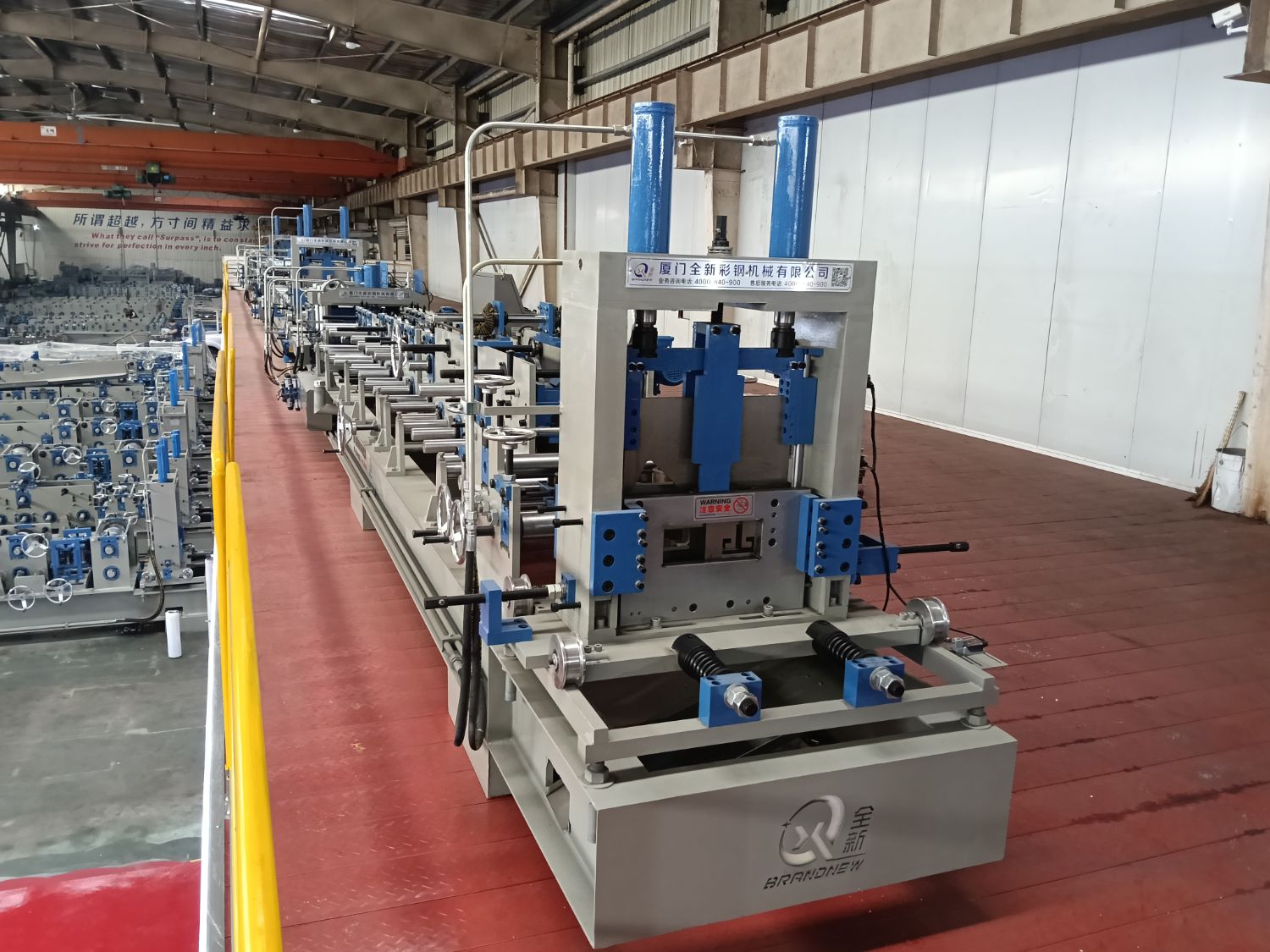
At the forefront of modern engineering, tailored design solutions focus on customizing structural frameworks to meet specific environmental demands and load requirements. By leveraging advanced computational models and material science, engineers can pinpoint vulnerabilities and reinforce critical components, ensuring resilience against unforeseen stresses. This approach goes beyond standard codes, integrating site-specific factors like seismic activity or harsh weather patterns to create robust, adaptable structures that stand the test of time.
Innovations in design often stem from a deep understanding of real-world challenges, such as aging infrastructure or evolving safety standards. Tailored solutions prioritize proactive measures, like incorporating smart sensors for continuous monitoring or using modular components for easy upgrades. This not only boosts structural integrity but also enhances longevity and reduces maintenance costs, making it a sustainable choice for both new constructions and retrofitting projects.
Ultimately, the success of these solutions lies in their ability to blend creativity with precision, delivering designs that are as aesthetically pleasing as they are durable. By fostering collaboration across disciplines, from architects to material experts, tailored approaches ensure every structure is uniquely optimized, offering peace of mind through enhanced safety and performance in diverse settings.
Streamlining Project Timelines Through Rapid Roll Forming
Rapid roll forming offers a game-changing approach to accelerating project timelines by significantly reducing fabrication and assembly time. Unlike traditional methods that involve multiple welding or stamping steps, this technique continuously shapes materials into precise profiles in a single pass, minimizing delays and enhancing on-site workflow efficiency.
By integrating rapid roll forming into project planning, teams can achieve faster turnaround times for structural components, which directly translates to earlier completion dates. Its adaptability to diverse materials and configurations allows for seamless customization without compromising speed, making it ideal for industries where deadlines are tight and precision is paramount.
Furthermore, the streamlined process reduces material waste and labor costs, contributing to overall project savings while maintaining high-quality standards. This method not only speeds up production but also simplifies logistics, as pre-formed sections are easier to transport and install, further shortening the construction or manufacturing cycle.
Cutting-Edge Technology for Precision in Steel Framing
In the evolving world of construction, precision in steel framing has become a cornerstone for efficiency and safety. Recent advancements harness innovative digital tools and automation systems that enable accurate measurements and seamless assembly processes, minimizing errors and reducing material waste on job sites.
One standout example is the integration of 3D laser scanning and Building Information Modeling (BIM) software. These cutting-edge technologies allow for detailed pre-fabrication planning, where steel components are designed and manufactured to exact specifications before transport, ensuring a perfect fit during on-site installation.
Beyond just accuracy, these improvements speed up project timelines and enhance structural integrity. By adopting modern techniques, builders can achieve tighter tolerances and superior durability, ultimately transforming steel framing into a more sustainable and cost-effective solution for contemporary structures.
Versatile Applications Across Diverse Building Projects
From towering skyscrapers that define urban skylines to cozy residential homes nestled in neighborhoods, versatile applications are reshaping how we approach diverse building projects. By integrating flexible design principles and adaptable materials, builders can seamlessly transition between commercial complexes, industrial facilities, and public infrastructures. This adaptability not only enhances aesthetic appeal but also boosts functionality, allowing structures to evolve with changing needs without extensive renovations. For instance, modular components enable quick reconfiguration in office spaces while maintaining structural integrity across varied settings.
In sustainable developments, the focus on versatility shines through eco-friendly innovations that cater to both large-scale and smaller projects. Green building techniques, such as passive heating systems and renewable energy integrations, can be tailored to fit everything from sprawling educational campuses to compact community centers. This ensures that environmental goals are met across different scales, reducing carbon footprints while promoting resilience. Moreover, smart technologies embedded in these projects—like IoT sensors for energy management—offer customized solutions that adapt to specific site conditions and user demands, making every building more efficient and responsive.
The real-world impact of these applications is evident in mixed-use developments that blend residential, retail, and recreational spaces into cohesive environments. By employing versatile strategies, architects can create dynamic hubs that foster community interaction and economic growth. For example, flexible floor plans and multi-purpose areas allow buildings to host events, support local businesses, and accommodate diverse populations over time. This approach not only maximizes land use but also enriches urban landscapes, proving that innovation in building projects isn't just about construction—it's about crafting spaces that thrive and adapt to our ever-changing world.
Sustainable Manufacturing Practices Reducing Material Waste
In today's competitive market, sustainable manufacturing isn't just a feel-good initiative—it's a strategic advantage that directly tackles material waste. Many companies are now embracing smarter production techniques like lean manufacturing and closed-loop systems. By analyzing every stage of production, they can pinpoint areas where materials are overused and implement precise cutting methods or reusable molds. For instance, in the automotive industry, advanced software helps optimize the layout of parts on sheet metal, dramatically reducing scrap and saving raw materials right from the get-go.
What sets forward-thinking manufacturers apart is how they turn waste into a resource rather than a burden. Instead of discarding off-cuts or by-products, these materials are often repurposed or recycled on-site. Take a furniture maker that collects sawdust to press into composite boards or a beverage plant that treats wastewater for reuse in cooling systems. This circular approach not only cuts down on landfill contributions but also lowers procurement costs, making the entire operation more resilient and less dependent on virgin resources. It's a win-win that enhances both environmental and economic performance.
Beyond the factory floor, collaboration across the supply chain plays a pivotal role. By partnering with suppliers and customers, manufacturers can design products with disassembly in mind, using modular components that are easy to repair or recycle. This holistic mindset encourages longer product lifespans and minimizes waste generation down the line. As more businesses adopt these tailored practices, they're not just following trends—they're setting new standards for efficiency that ripple through industries, proving that sustainability and innovation go hand in hand.
FAQ
These machines allow for precise fabrication of purlins tailored to specific project requirements, reducing material waste and improving structural integrity. Their automated operation speeds up production timelines while maintaining consistent quality, which can significantly cut down on-site installation time.
Advanced models are equipped with adjustable rollers and tooling that can process various materials like galvanized steel, aluminum, or pre-painted coils, with thicknesses typically ranging from 0.4mm to 3mm. This flexibility ensures they meet diverse structural needs without frequent equipment changes.
Yes, modern systems often include compatibility with CAD software and CNC controls, enabling seamless data transfer for design-to-production workflows. They can also link to automated storage or logistics systems, streamlining the entire supply chain from fabrication to delivery.
Recent upgrades feature enclosed guards, emergency stop mechanisms, and noise reduction technologies to enhance operator safety. Environmentally, many machines incorporate energy-efficient motors and recycling systems for scrap metal, minimizing waste and power consumption.
With programmable controls, they can produce purlins with varied shapes, lengths, and hole patterns, accommodating curved or non-standard structures. This adaptability supports creative architectural elements without compromising on strength or cost-effectiveness.
Key considerations include the manufacturer's expertise in roll forming technology, availability of after-sales support, and ability to provide tailored solutions. It's also important to assess machine durability, maintenance requirements, and compatibility with existing production lines to ensure long-term value.
By automating purlin production, they reduce labor expenses and minimize errors that lead to rework. The ability to customize on-demand lowers inventory costs and transportation fees, as materials are fabricated precisely as needed, enhancing budget control throughout projects.
They enable high-volume, precise manufacturing of purlins off-site, which aligns with prefabrication strategies that accelerate building timelines. This reduces on-site labor and weather-related delays, promoting faster project completions and improved resource allocation.
Conclusion
Custom purlin roll forming machines are revolutionizing construction by advancing fabrication processes. These machines enable automated production of purlins, enhancing efficiency and reducing manual labor. Tailored design solutions ensure structural integrity, as each purlin can be precisely formed to meet specific project requirements. This precision supports rapid roll forming, which streamlines project timelines and allows for quick adaptation to changing designs. The integration of cutting-edge technology ensures accuracy in steel framing, minimizing errors and improving overall quality.
Versatile applications across diverse building projects highlight the adaptability of these machines, making them suitable for various sectors from residential to industrial construction. Additionally, sustainable manufacturing practices are emphasized, as the technology reduces material waste through optimized cutting and forming processes. By promoting resource efficiency, these machines contribute to greener construction methods. Overall, custom purlin roll forming machines are pivotal in innovating construction efficiency, offering a blend of speed, customization, and sustainability that drives the industry forward.
Contact Us
Contact Person: Sophie
Email: [email protected]
Tel/WhatsApp: 8615959271231
Website: https://www.beenew-rollformer.com/