

Custom Printed Stand Up Pouches: Expert Manufacturing in China
2026-07-31
In the competitive world of product packaging, custom printed stand up pouches have become a game-changer for brands aiming to stand out on shelves. But not all pouches are created equal—true quality comes from expert manufacturing, and China has emerged as a global leader in this field. At the forefront of this industry is Kody, where cutting-edge technology meets decades of packaging expertise. Whether you need vibrant full-color prints or functional barrier layers, understanding what goes into a premium pouch can transform your brand's first impression. Let's dive into how partnering with specialists like Kody can turn your packaging vision into a market-ready reality.
Precision Printing That Pops Off the Shelf
In a crowded retail aisle, your product has only a few seconds to grab a shopper’s attention. Precision printing transforms ordinary packaging into a visual magnet—colors hit with exactness, fine details stay crisp, and the overall impact commands a second glance. It’s not just about being noticed; it’s about being remembered once they walk away.
This level of quality goes beyond what standard manufacturing can achieve. Advanced techniques like high-fidelity offset, specialty coatings, and micro-embossing create textures and gloss that light catches in all the right ways. The result? A tactile and visual experience that feels substantial, not flat—something customers instinctively reach for.
But it’s more than eye candy. When every print dot is placed with intention, the brand story comes through without a whisper of carelessness. It builds trust before the product is even opened, hinting at the care inside. That silent promise is what turns a casual browser into a loyal buyer.
Materials Science Drives Pouch Durability
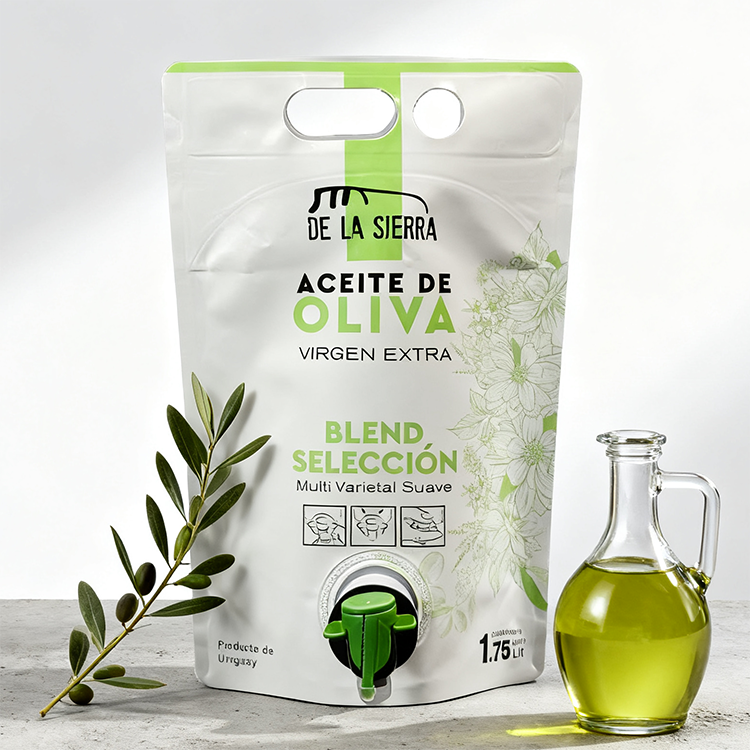
The evolution of pouch materials has quietly reshaped how we think about packaging longevity. Early designs often relied on single-layer plastics that were prone to tearing, punctures, and rapid degradation when exposed to heat or moisture. Today, materials scientists have shifted toward multi-layer composites that combine polymers with metalized films or nanostructured coatings. These innovations don't just add thickness; they create barriers that actively resist oxygen ingress and moisture vapor transmission, which are the primary culprits behind product spoilage and package failure.
One of the more interesting advances comes from the integration of flexible ceramic barriers into traditional polymer matrices. By dispersing nano-scale platelets within the material, manufacturers can dramatically increase the tortuous path that molecules must take to penetrate the pouch. This means a thinner wall can now outperform a thicker one, all while maintaining the flexibility needed for pouch formats. It's a fundamental shift—engineering at the molecular level yields pouches that survive drops, temperature swings, and long shelf lives without delaminating or losing seal integrity.
Equally critical is the tailoring of sealant layers to match the product inside. A pouch for aggressive liquids requires a different chemical resistance profile than one for dry powders. Here, material selection moves beyond standard polyethylene into specialty co-polymers and ionomers that bond tenaciously even when contaminated. Durability, in the end, is not about making a pouch indestructible—it's about precise material matching that ensures the package holds up exactly as long as needed, with no compromises on safety or performance.
From Concept to Completion: Design Support Unpacked
Every project starts as a vague spark—a rough sketch, a half-formed idea, a customer need that hasn't quite been articulated. The first step is to listen, really listen, and distill that mess of inspiration into something tangible. It's not about imposing a style or pushing a product; it's about coaxing out the core intention and giving it a clear visual and functional voice. Sketches, mood boards, and rapid prototypes become the shared language between what's imagined and what's possible.
From there, the real alchemy begins. Details that looked straightforward on paper suddenly demand tough decisions: material choices that affect durability, ergonomics that shape daily comfort, manufacturing methods that balance cost and craft. This phase is less about grand gestures and more about relentless refinement. Iterations pile up, each one sanding away rough edges until only the essential remains. It’s a quiet, obsessive process where a millimeter shift in a curve or a subtle change in texture can transform good into unforgettable.
But design doesn't end with a final render. Bringing a concept into the physical world means navigating production realities, supply chain quirks, and quality control with an eye that never blinks. It’s the unglamorous, glue-and-tape side of creativity—troubleshooting assembly hitches, tweaking packaging so it protects and delights, and ensuring that the end result matches the promise made at the start. Only when someone holds the finished object in their hands, and it just feels right, does the journey come full circle.
Streamlined Production Without Cutting Corners
Our streamlined approach rethinks every step from raw material intake to final packaging, removing only what doesn't add value. Instead of simply speeding up the line, we use data pulled directly from sensors on the floor to spot idle time and redundant hand-offs. This lets us tighten workflows without asking anyone to work faster or skip checks, so the pace picks up naturally while error rates stay flat.
The real differentiator is how we protect quality inside a faster system. We installed in-line testing stations that catch deviations right after critical operations, not at the end when rework costs pile up. Seasoned operators still inspect and sign off on every shift's output, using their experience to notice subtle pattern shifts that algorithms might overlook. This dual-layer of machine precision and human judgment means we never sacrifice integrity for speed.
Quality Checks That Go Beyond the Basics
It’s easy to fall into a rhythm of surface-level reviews—scanning for obvious flaws, ticking boxes, and moving on. But true quality work demands a sharper eye. You have to poke at the assumptions nobody questions, dig into the edges where systems interact, and ask whether the output holds up under real-world messiness, not just ideal conditions. That means examining not only if something works, but how gracefully it fails, what hidden dependencies lurk, and whether the user’s actual workflow is honored rather than just the specification.
For instance, a standard check might confirm that a login page accepts correct credentials. But going further means testing with expired sessions, simultaneous logins from different devices, or rapid-fire authentication attempts after a password reset. It involves observing how the interface responds when the backend is sluggish, or how data integrity holds when a partial save occurs. These are the moments where polished features often crumble, and they reveal far more about your product’s resilience than a perfect-case scenario ever could.
Ultimately, this kind of probing requires curiosity and a bit of skepticism. You’re not just verifying compliance; you’re hunting for unspoken expectations, subtle inconsistencies, and the tiny friction points that accumulate into user frustration. By embracing that mindset, you transform quality assurance from a gatekeeping chore into a genuine exploration of the experience you’re delivering.
Sustainable Practices Meet Modern Packaging Needs
The packaging world is undergoing a quiet revolution, where respect for the planet doesn't mean compromising on performance or aesthetics. Gone are the days when eco-friendly meant rough, unbleached cardboard and a one-size-fits-all approach. Today, brands are blending cutting-edge design with materials that tell a story of responsibility—recycled ocean plastics turned into sleek, durable boxes; mushroom-based cushions that cradle products as carefully as synthetic foams; and plantable wraps embedded with seeds, so the unboxing yields something living. It's packaging that lives up to both the product inside and the values of the people opening it.
Innovation is happening behind the scenes, too. Water-based inks, which avoid the toxic solvents of traditional printing, now deliver the same vibrant colors and crisp logos without the chemical guilt. Adhesives derived from starch or tree sap secure packages firmly yet break down harmlessly, ensuring that the entire ensemble—box, tape, label—can return to the earth without leaving a trace. Even the design thinking has shifted: there's a push to create fewer layers, to make refills easy, to shape packages so they nest during shipping, cutting fuel use. These steps often reduce costs over time, proving that environmental stewardship and business sense can walk hand in hand.
Perhaps most exciting is the emotional connection this new breed of packaging fosters. When a customer receives an item wrapped in something that clearly wasn't mass-produced without thought, it sparks something—a moment of delight, a glimmer of trust. A reusable tin becomes a storage box for years; a compostable mailer turns into soil for their garden. It's a conversation starter, a badge of shared belief. In choosing materials and methods that honor our finite resources, companies aren't just shipping a product; they're delivering a statement: we're all in this together, and even the wrapper matters.
FAQ
China has decades of manufacturing expertise and a complete supply chain for flexible packaging. The combination of skilled labor, advanced machinery, and cost efficiency allows for high-quality pouches at competitive prices—something few other regions can match.
You can customize nearly every aspect: size, shape, material structure, barrier properties, closures, and printing. Digital and gravure printing options let you achieve vibrant, photo-realistic graphics with minimal constraints.
It starts with understanding your product’s needs—moisture barrier, oxygen barrier, light protection, or puncture resistance. A reliable manufacturer will recommend the ideal laminate (like PET/AL/PE or Kraft/PLA) based on your product’s shelf life and storage conditions.
Minimum orders typically range from 5,000 to 10,000 pieces for custom printing, but some factories offer lower MOQs with digital printing. For startups, it’s often possible to negotiate a small trial run before scaling up.
Production usually takes 15–25 days after artwork approval, plus shipping time. Rush services are often available. Clear communication and finalized designs upfront can cut the timeline significantly.
Look for a factory with certifications like ISO or BRC, a portfolio with brands similar to yours, and a willingness to provide samples. Good manufacturers also have in-house design support and proactive quality control throughout production.
Absolutely—custom stand up pouches are widely used for coffee, snacks, supplements, pet food, detergents, and more. Materials can be tailored for food-grade safety, chemical resistance, or even compostable requirements.
Always request a physical sample before full production, specify every detail in writing, and clarify shipping terms and responsibilities. Building a direct relationship with the factory’s sales engineer, not just a middleman, helps prevent miscommunication.
Conclusion
China's custom printed stand-up pouches bring together advanced printing and material innovation in a way that genuinely sets products apart. Using techniques like rotogravure and digital printing, manufacturers achieve crisp, photo-realistic graphics with vibrant colors that instantly catch the eye. It’s not just about looking good—the meticulous attention to detail ensures every pouch mirrors the brand’s identity perfectly, from subtle gradients to precise text alignment. This level of craftsmanship means products don’t just sit on a shelf; they practically command attention, creating a memorable unboxing experience that resonates with consumers.
Behind the visual appeal lies a deep focus on materials science and structural design. Engineers select from laminated films like PET, aluminum foil, or biodegradable alternatives to balance barrier protection, puncture resistance, and flexibility. This careful engineering allows pouches to withstand the rigors of shipping and daily handling while preserving contents freshness. Meanwhile, dedicated design teams guide brands from initial concept to final prototype, offering support on shape, resealable zippers, and even tactile finishes. Throughout production, streamlined workflows maintain efficiency without sacrificing quality, backed by rigorous tests—from seal integrity to drop resistance—that go well beyond standard checks. Increasingly, these processes align with sustainable practices, using recyclable or compostable materials and minimizing waste, so modern brands can meet both functional and environmental goals without compromise.
Contact Us
Contact Person: Cindy Lee
Email: [email protected]
Tel/WhatsApp: 8613622669331
Website: https://www.dgkody.com