

China SDEC Generator Set: Performance, Reliability, and Applications
2026-10-16
When it comes to dependable power generation, China SDEC generator sets have earned a solid reputation for balancing performance and reliability in demanding environments. From construction sites to remote industrial operations, these units are engineered to deliver consistent output under tough conditions. In this article, we'll explore what makes SDEC gensets stand out—their core technologies, real-world applications, and why Hichai Power is the partner you can trust for sourcing and support. Whether you're evaluating backup power or planning a full-scale deployment, understanding these machines can save you time and money.
What Makes SDEC Engines Tick Under Heavy Loads
The core of SDEC's endurance under heavy loads comes down to a cast-iron block and cylinder head that distribute stress evenly across the assembly. Rather than relying on a single high-strength component, the engine uses reinforced main bearing caps and a stiffened crankshaft to keep deflection minimal when torque peaks at low rpm. That matters because heavy-load operation isn't a short sprint; it's sustained pressure on every rotating part, and the architecture has to absorb it without flexing.
Fuel delivery also plays a quieter role. SDEC's high-pressure common-rail system adjusts injection timing and quantity in real time based on engine load and temperature, so the combustion event stays complete even when the engine is lugging near its rated capacity. Incomplete burn at high load would spike exhaust gas temperatures and stress the turbocharger, so the calibration leans toward a slightly conservative air-fuel ratio. This keeps cylinder pressures manageable and avoids the kind of thermal runaway that shortens liner life.
Cooling and lubrication circuits are oversized for the rated power, not just adequate. Under sustained load, coolant flow through the head and oil jets aimed at the piston undersides remove heat before it can soften the rings or distort the bores. The oil cooler uses engine coolant as the exchange medium, and its capacity is matched to the maximum sustained output, not the average. That margin is what lets an SDEC hold its oil pressure and temperature steady on a long grade instead of creeping toward the red.
Beyond the Spec Sheet: Real-World Reliability Factors for SDEC Units
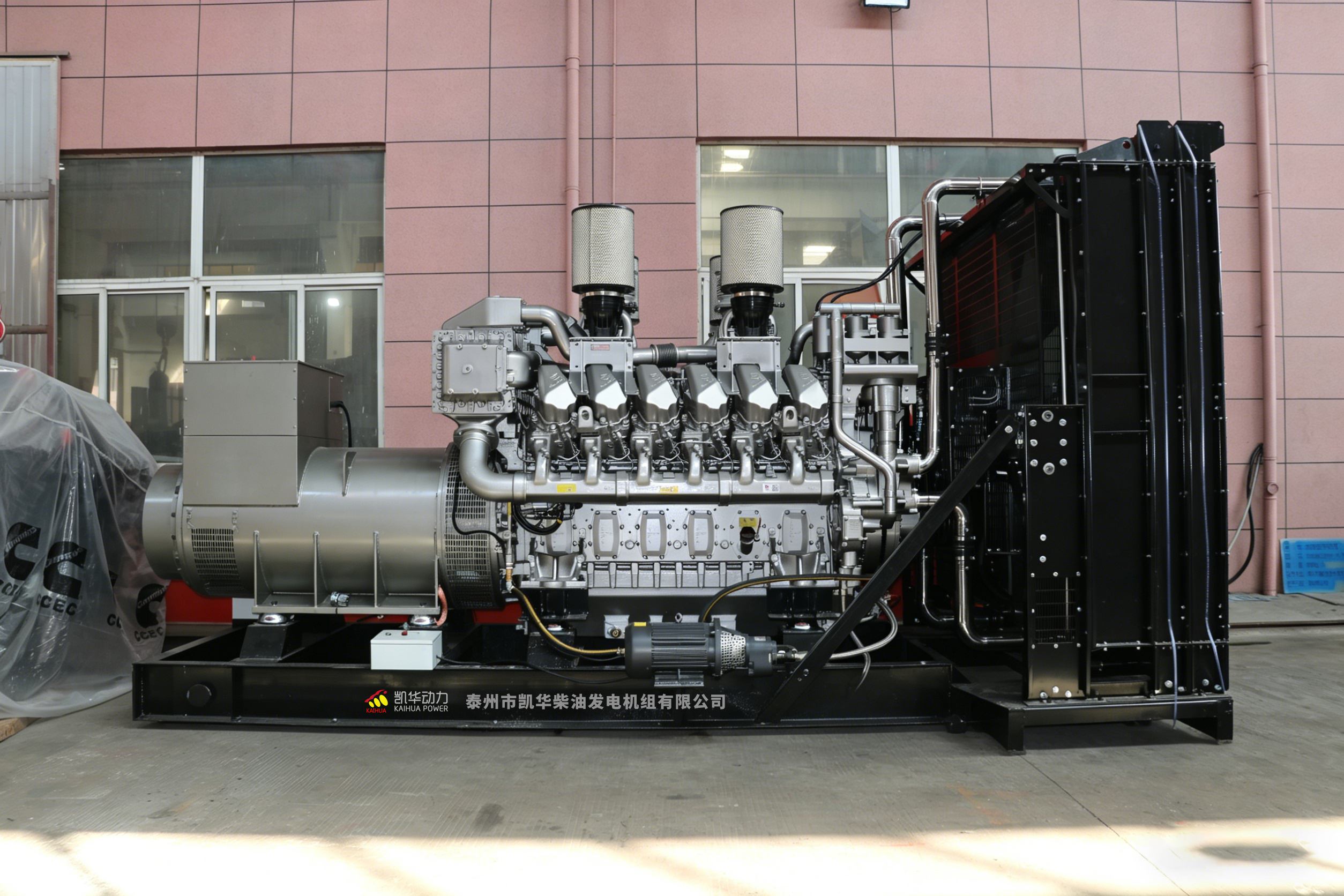
Anyone who has spent time around SDEC units in the field quickly learns that the printed performance curves and rated outputs only tell part of the story. The spec sheet might promise continuous power at a certain temperature, but actual reliability often hinges on less glamorous details like how well the cooling air moves through a confined space or whether the fuel supply stays clean over hundreds of running hours. Operators who treat the manual as a starting point rather than a guarantee tend to get far more predictable service from their equipment.
Dust, vibration, and irregular load patterns are the silent killers that rarely appear in a brochure. A unit bolted to a skid near a gravel crusher will behave very differently from the same model in a climate-controlled enclosure. Bolts loosen, filters clog faster than expected, and harmonic vibrations from nearby machinery can fatigue wiring and hose connections. Paying attention to how the unit is mounted, how often the air intake is checked, and whether the exhaust routing creates back pressure can prevent breakdowns that no amount of spec-sheet math would have predicted.
Maintenance habits matter just as much as build quality. A unit that gets a quick visual onceover before each shift, with someone actually listening for changes in engine note or feeling for abnormal heat on the radiator, will outlast one that only gets attention when a warning light comes on. Real-world reliability is built from small, consistent actions: using quality fuel, keeping battery terminals clean, and not ignoring minor oil seepage until it becomes a major leak. These are the unwritten factors that separate units which run for years from those that become a recurring headache.
Where SDEC Generator Sets Actually Earn Their Keep
Most generator brochures lean on glossy stats, but the real test happens far from any showroom. SDEC sets tend to surface in places where downtime isn't just inconvenient—it's expensive or unsafe. Remote construction camps in northern latitudes, for example, run them through brutal cold starts and long idle stretches between crane lifts. The units keep producing clean power for site trailers, welding rigs, and concrete curing pads without requiring a technician on speed dial.
You also see them bolted to flatbeds at gravel pits and small-scale mining operations. There, fine dust clogs lesser air filters within weeks, and voltage sag under conveyor startup can trip entire processing lines. SDEC generators hold their frequency better than expected in that bracket, which is why crews leave them in place season after season instead of swapping rentals every quarter.
Then there are the quieter but no less demanding standby roles: rural telecom towers, greenhouse climate controls, and fish farm oxygenation pumps. In those settings, the generator may idle for months, then need to fire up instantly during a storm outage. The real value isn't peak output on paper—it's that the governor, cooling loop, and starter circuit all cooperate when the grid drops and nobody is standing next to the unit.
Fuel Choices and Runtime Economics for SDEC Generator Sets
Diesel remains the default for SDEC gensets where fuel availability and rapid load response matter. The high-pressure common rail systems on newer SDEC engines adjust injection timing and pressure to match varying loads, which keeps brake-specific fuel consumption near its best point across a wide operating band. For sites with existing natural gas infrastructure, SDEC gas generator sets cut fuel cost per kilowatt-hour significantly, though the gas engine's lower volumetric efficiency means you need to size the unit carefully for transient loads.
Runtime economics hinge on load factor more than rated output. Operating an SDEC diesel set below 30% load for long stretches drives up fuel consumption per kWh and leads to wet stacking, carbon buildup, and more frequent oil changes. By contrast, SDEC's electronic governors and programmable controllers can shed non-critical loads or cycle multiple units, keeping each engine in the 50-80% load window where fuel burn stays linear and exhaust temperatures remain high enough to burn off soot. Fuel quality also matters: using ultra-low-sulfur diesel or treated gas reduces injector wear and extends service intervals.
From a total-cost view, the cheapest fuel at the pump is not always the cheapest over the generator's life. Diesel offers low upfront cost and easy storage, but price swings can make long-run budgeting difficult. Natural gas units require a pipeline or on-site storage, yet they often pay back the added infrastructure through lower fuel and lube oil costs. SDEC's dual-fuel capable platforms give operators the option to switch based on seasonal gas prices, which is a practical hedge rather than a marketing gimmick. The real saving comes from matching fuel choice to the actual duty cycle, not just the nameplate rating.
Cold Starts, High Heat, and Other Tough Conditions SDEC Handles
Starting an engine at -30°C is not about luck. SDEC builds cold-start reliability into the block itself—glow plug placement, low-temperature oil viscosity, and a fuel system that doesn't gel when the mercury drops. The result is a turnover that feels almost unfair given the conditions.
High heat brings its own set of failures, and SDEC addresses them before they happen. Reinforced gaskets, high-flow coolant passages, and exhaust valves that hold their shape keep cylinder temperatures in check even when ambient air exceeds 45°C. It's not just surviving the desert run; it's holding power output steady while doing it.
Beyond temperature extremes, SDEC engines are tested against dust, vibration, and altitude. Air filtration that won't clog in a sandstorm, mounts that dampen rough-road feedback, and turbo tuning that compensates for thin air—these are the details that keep a work site moving when the environment says otherwise.
Matching SDEC Power Outputs to Site Demands Without Oversizing
Oversizing a generator set often feels like a safe choice, but it carries hidden penalties that accumulate over the life of the equipment. Matching SDEC power outputs to actual site demands requires a careful look at both steady-state and transient loads. A site with intermittent pumps, compressors, or air-conditioning units rarely sees a constant electrical draw, and sizing for the absolute peak—plus an arbitrary safety margin—leads to wasted fuel, wet stacking in diesel engines, and unnecessary capital expense. Instead, an accurate load profile built from real measurements or detailed equipment schedules allows the selected SDEC unit to run in its most efficient band without sacrificing reliability.
The first step is to separate continuous loads from those that cycle on and off. Many facilities overestimate their need because they sum up every nameplate rating, ignoring diversity factors and the fact that not all motors start simultaneously. By monitoring current draw over a representative week or analyzing typical operating sequences, you can identify the true maximum demand and its duration. This data-driven approach prevents the common mistake of choosing a unit that is 30–50% larger than necessary, which would force the engine to operate at light load for thousands of hours, increasing carbon deposits and shortening service intervals. SDEC engines perform best when loaded between 50% and 85% of their rated output, so a tighter match directly extends engine life.
Beyond fuel savings, right-sizing reduces maintenance complexity and simplifies spare parts inventory. A smaller, correctly matched generator is easier to cool, quieter to run, and less expensive to install in terms of cabling, switchgear, and enclosures. It also leaves room for future expansion only when supported by a revised load study, rather than betting on speculative growth. In practice, combining a conservative motor-starting analysis with a realistic load schedule gives you a system that meets site demands without oversizing—protecting both the budget and the long-term health of the SDEC power plant.
FAQ
Their engines are built on licensed technology from established manufacturers, so the combustion and torque curves feel refined rather than just adequate. You get steady frequency regulation and quick load acceptance, which matters when you're running sensitive equipment or starting large motors.
Reliability really comes down to the engine block design and the quality of ancillary components like the alternator and control system. SDEC uses heavy-duty castings, replaceable cylinder liners, and simple mechanical fuel systems on many models. That means fewer electronic failure points, easier field repairs, and a unit that can sit for months in standby and still start within seconds when needed.
They're common in construction sites, mining camps, agricultural processing, small hospitals, and telecom towers. The sweet spot is prime or standby power in the 20 kVA to 800 kVA range, where you need dependable baseload or backup power without paying for a premium import brand.
Fuel efficiency is generally competitive but not class-leading. SDEC engines are tuned more for durability and tolerance of varying fuel quality than for squeezing out the last gram per kilowatt-hour. You might burn 2-5% more fuel than a high-end European unit, but you gain a wider margin for lower-grade diesel and longer service intervals under dusty conditions.
Yes, with proper derating and configuration. At altitudes above 1000 meters, you need to adjust the turbocharger or reduce output to avoid over-fueling and black smoke. In cold climates, block heaters and battery warmers are common add-ons. SDEC's factory-supported dealers in export markets usually provide altitude kits and cold-start packages that are tested before shipping.
Most SDEC models call for oil and filter changes every 250 hours or annually, whichever comes first, with coolant checks every 500 hours and valve adjustments around 1000 hours. The fuel system is relatively simple, so there's no high-pressure common rail to fail. Keep the air filter clean and the radiator fins clear, and you'll likely avoid most unscheduled downtime.
It depends on the specific engine series and target market. Many export models meet EPA Tier 2 or Tier 3 equivalent standards, and newer electronic-governor versions can meet stricter local regulations in regions like Southeast Asia, the Middle East, and Africa. For Europe or North America, you'd need to confirm the exact emission certificate, because not all SDEC lines are homologated for those markets.
Quite flexible. You can choose open skid, weatherproof canopy, or sound-attenuated enclosure, plus options for remote monitoring, automatic transfer switches, and paralleling controls. Since SDEC supplies the engine and works with various alternator brands like Stamford or Leroy Somer, integrators can tailor the set to things like containerized power stations, trailer-mounted units, or low-noise urban installations.
Conclusion
SDEC generator sets earn their reputation not by paper specs alone, but by how their engines hold torque curves flat when a site suddenly demands more than the nameplate suggests. Under sustained heavy loads, the inline block design and conservative governor tuning keep coolant temperatures stable long after lesser units would throttle back, while real-world reliability hinges on the unglamorous details: oversized air filters that forgive dusty job sites, deep sump oil pans that extend drain intervals, and wiring looms routed away from heat soak. Cold starts at altitude or summer runs in desert heat rarely faze these sets, since the fuel system tolerates a wider cetane range and the cooling package leaves thermal headroom rather than chasing peak output.
Where SDEC units actually earn their keep is in places where grid power is a suggestion, not a service: remote telecom towers, small-scale construction, backup duty for cold storage, and agricultural pumping stations. Diesel remains the pragmatic fuel choice for long runtime economics, with specific consumption curves that stay flat enough to make partial-load operation affordable, yet the engine family also adapts to lighter fuels where local supply dictates. Matching output to site demand means resisting the urge to oversize; a well-loaded SDEC set burns cleaner, wet-stacks less, and reaches operating temperature faster, which matters more in humid climates than any brochure number. It is this combination of honest load handling and site-specific frugality that keeps the brand humming in markets where downtime carries a real cost.
Contact Us
Contact Person: Ms. Lu
Email: [email protected]
Tel/WhatsApp: 8618917899306
Website: https://www.hichaipower.com