
China's FRP Structure: Breakthroughs and Future Trends
2026-08-08
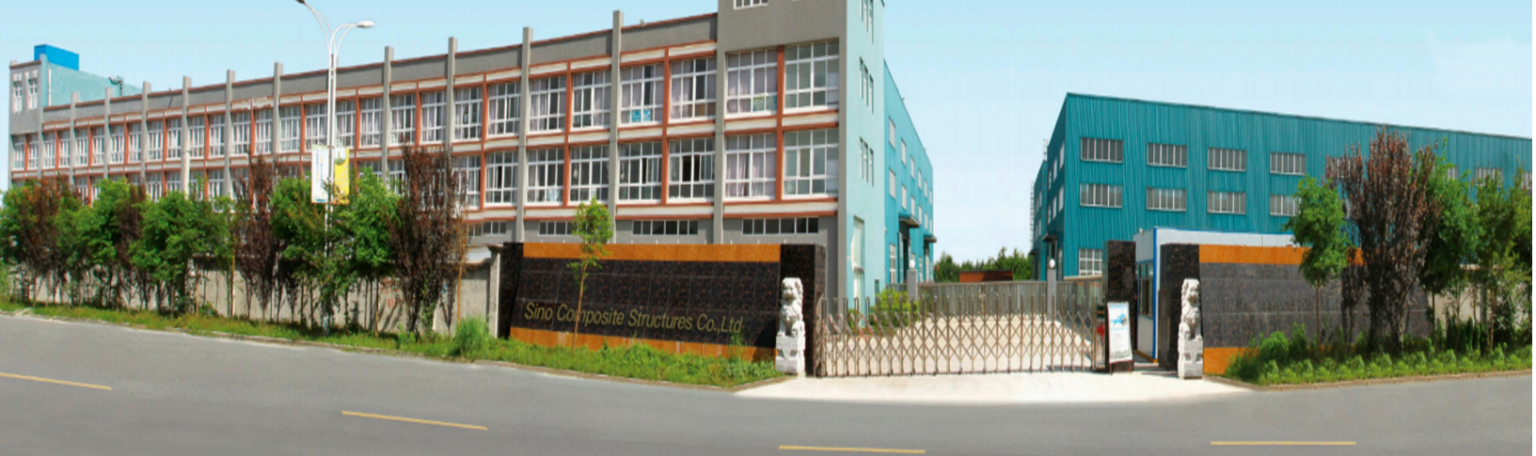
China's FRP industry is undergoing a quiet revolution—from durable pedestrian bridges to corrosion-free industrial platforms, fiber-reinforced polymer structures are redefining what’s possible in modern construction. Behind many of these breakthroughs is Sino Grating, a driving force pushing FRP from niche applications into mainstream infrastructure. But as the technology evolves faster than regulations, what comes next could reshape not just Chinese engineering, but global standards. Let’s unpack the key innovations and where the market is headed.
When Fiber Meets Function: China’s Quiet FRP Transformation
In workshops scattered across Zhejiang and Guangdong, a subtle materials revolution has been reshaping everything from bridge reinforcements to bathroom sinks. Fiber-reinforced polymer composites—once the domain of aerospace labs—have found an unassuming foothold in China’s manufacturing landscape, driven not by headline-grabbing breakthroughs but by steady, pragmatic innovation. Small and medium enterprises, rather than state-backed giants, are leading this shift, fine-tuning pultrusion processes and resin formulations to create FRP products that are lighter than steel, more durable than wood, and surprisingly cost-competitive.
What sets China’s approach apart is its focus on solving deeply local problems. In coastal provinces, where salt-laden air eats away at conventional infrastructure, FRP rebar and gratings have become go-to solutions for docks and chemical plants. Meanwhile, furniture makers in Fujian have begun blending glass fiber with recycled plastics to produce outdoor tables that withstand monsoon seasons without a trace of rust. These applications rarely make international trade journals, yet they represent a quiet recalibration of supply chains—reducing reliance on imported alloys and treated timber, while creating a new export stream of finished composite goods that slip under the radar of trade disputes.
The transformation is as much cultural as it is technical. Engineers who once defaulted to concrete and steel are now prototyping FRP walkways that install in half the time, while traditional artisans in Jingdezhen experiment with carbon-fiber inlays to reinforce ceramic sculptures. This grassroots adoption has given rise to an ecosystem where materials are specified not by top-down decree, but by the slow accumulation of trust in something that simply works. As global demand for corrosion-free, low-maintenance materials grows, China’s FRP sector finds itself unexpectedly well-positioned—not as a disruptor, but as a quiet enabler of a more adaptable built environment.
The Unseen Backbone: FRP in China's Coastal Infrastructure
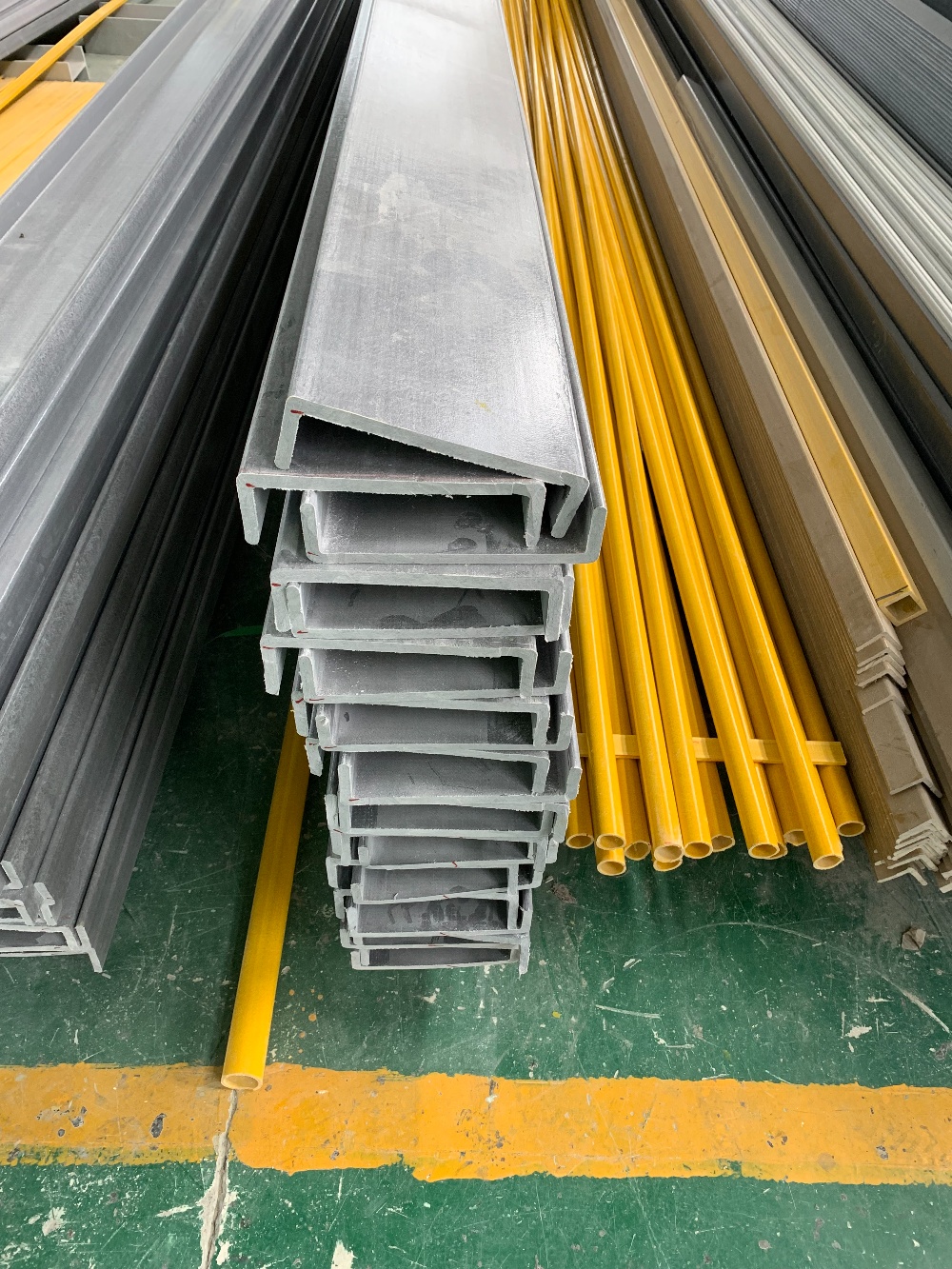
Beneath the briny spray and relentless typhoon seasons, China's coastal infrastructure relies on a quiet revolution in materials science. Fiber-reinforced polymer (FRP) has moved from experimental patches to a fundamental building block, silently reinforcing seawalls, piers, and offshore platforms. Its immunity to chloride-induced corrosion gives it a decisive edge over traditional steel, especially in the splash zones where saltwater and oxygen conspire to degrade conventional reinforcements. Across the Bohai Bay ports and the sprawling docks of Shanghai, FRP rebars and wraps are now embedded in structures designed to outlast the aggressive marine environment, often with minimal maintenance for decades.
What makes FRP truly transformative is how it dissolves into the background. Walk along a recently upgraded fishing harbor in Fujian or a new LNG terminal in Guangdong, and you won’t see gleaming carbon fabric or glass fibers—they’re hidden within the concrete, working at the molecular level to resist tensile stress and prevent micro-cracking. This stealth has allowed engineers to push designs further: longer cantilevered decks, thinner blast walls, and floating mariculture cages that shrug off storms. In Hainan’s pilot projects, FRP tendons inside prestressed piles have already survived twenty monsoon seasons without a sign of rust jacking, a problem that once required costly cathodic protection systems.
The backbone may be unseen, but its imprint is everywhere in the life-cycle cost equations that now favor FRP-heavy designs. Port authorities who once budgeted for periodic steel replacement are reallocating funds toward expansion instead, thanks to the extended service intervals of FRP components. As China pours billions into its Maritime Silk Road ambitions, the real competitive advantage might lie not in grand architectural statements, but in these humble, invisible composites that keep the docks standing and the cranes moving while the sea does its worst.
Beyond Steel: Why Chinese Engineers Choose FRP
For decades, steel dominated infrastructure projects in China, but a quiet revolution has been unfolding on construction sites and in design institutes. Engineers are increasingly turning to Fiber Reinforced Polymer (FRP) composites, drawn by characteristics that go far beyond simple weight reduction. The shift isn't about replacing steel outright—it's about solving persistent problems that steel alone can't address, especially in demanding environments where corrosion, fatigue, and installation constraints dictate long-term viability.
Coastal bridges, chemical plants, and underground structures expose steel to relentless attack. FRP naturally resists chlorides, acids, and moisture without the need for protective coatings that themselves require maintenance. This inherent durability translates into longer service life and fewer traffic-disrupting repairs, a particularly sensitive benefit in China's densely populated urban corridors. Add to that the material's electromagnetic neutrality—crucial for facilities housing sensitive medical or research equipment—and the practical advantages become hard to ignore.
Perhaps the most understated driver is design freedom. FRP can be molded into complex geometries that would require costly, energy-intensive fabrication in steel. Chinese engineers, working under tight schedules and sustainability mandates, appreciate how pultruded profiles and custom-laid fabrics enable structural solutions that are both elegant and efficient. The material's low thermal conductivity also minimizes condensation risks in cladding and roofing, a small detail that significantly impacts building longevity and occupant comfort.
From Lab to Skyline: FRP's Journey in Chinese Megacities
In the early days, fiber-reinforced polymer was a quiet curiosity tucked inside university research papers and niche aerospace projects. Chinese engineers, facing rapid urbanization and harsh environmental conditions, saw potential beyond the petri dish. They began testing FRP sheets on aging concrete beams, discovering that a thin layer could double a structure’s load capacity without adding dead weight. This was the first whisper of a material revolution—one that would soon reshape skylines from Shanghai to Shenzhen.
By the mid-2010s, FRP had stepped out of the lab and onto construction sites. It wrapped bridge columns, lined subway tunnels, and reinforced high-rise cores with an ease that steel never could. In megacities where space was tight and downtime was unthinkable, the material’s corrosion resistance and quick installation turned it into an invisible backbone. Architects began to notice, too; what started as a repair tool morphed into a design element, allowing for sleeker profiles and daring cantilevers that once seemed impossible in humid, typhoon-prone regions.
Today, FRP’s journey is etched into the skyline itself. It holds up the sweeping curves of observation decks, weathers monsoon seasons without a speck of rust, and hides inside the very fabric of super-tall towers. Walk through any Chinese megacity, and you’re passing by structures whose silent strength comes from polymers once tested in an engineer’s after-hours experiment. The material hasn’t just traveled from lab to skyline—it has redefined what those skylines dare to be.
Weathering the Storm: FRP Durability in Extreme Climates
Fiber-reinforced polymer (FRP) composites have carved out a reputation for standing up to brutal environmental punishment, but not all FRP is created equal. In extreme climates—think scorching desert heat, Arctic freezes, or corrosive coastal salt spray—the material's resilience hinges on a careful marriage of resin chemistry and fiber architecture. Polyester resins might start to falter when ultraviolet radiation and thermal cycling team up, while vinyl ester and epoxy systems hold their ground by resisting microcracking and chemical ingress. The fiber itself matters too: glass fibers can slowly degrade in highly alkaline or acidic conditions, whereas carbon fibers stay largely inert, though they bring their own challenges like galvanic corrosion when paired with metal fasteners. What really separates a decade-long survivor from a premature failure is how these components interact at the laminate level, where interfacial bonding often becomes the unsung hero of long-term performance.
Real-world exposure tells a more nuanced story than accelerated lab tests ever could. In coastal regions, FRP structures face a triple threat: high humidity, salt-laden air, and intense solar radiation. The salt acts as a plasticizer, subtly softening some resin matrices and opening the door for moisture to wick along the fiber-matrix interface. Once there, freeze-thaw cycles can turn a tiny fissure into a network of delaminations. Engineers combating this often turn to optimized cure schedules and post-curing techniques to drive up the glass transition temperature, effectively giving the material a higher tolerance before thermal spikes cause dimensional instability. In arid desert settings, the enemy shifts to dust abrasion and extreme diurnal temperature swings that can stress joints and connection points far more than the laminate itself. Designers there lean toward surface veils and sacrificial gel coats that take the beating, preserving the structural core beneath.
Attention is increasingly turning toward the concept of durability-by-design rather than reactive maintenance. Hybrid systems that combine glass and carbon plies offer a way to balance cost and corrosion resistance, while nano-enhanced resins are starting to plug the microscopic pathways that lead to long-term moisture absorption. Field monitoring with embedded sensors is also gaining traction, providing early warning when internal strains indicate the onset of degradation—before surface cracks even appear. These approaches don't just extend service life; they allow FRP to be deployed with confidence in places where traditional materials would quickly rust, rot, or crumble. The next leap may come from bio-based resins that mimic the self-healing properties of natural organisms, hinting at a future where FRP structures actively repair the tiny wounds inflicted by a harsh and changing climate.
What Comes After Carbon Fiber? Next-Gen Materials in R&D
Carbon fiber has long been the go-to for lightweight strength, but researchers are quietly pushing into territories where it simply can’t keep up. The quest now is for materials that not only match its mechanical properties but also address its brittleness, environmental toll, and manufacturing complexity. Labs worldwide are tweaking architectures at the molecular level, experimenting with hybrid systems that blend fibers with unconventional matrices, or rethinking reinforcement entirely through biomimicry. The goal isn’t just an incremental upgrade—it’s a leap into materials that can sense damage, heal themselves, or adapt to stresses in real time.
Among the contenders, nano-structured composites are stealing the spotlight. Imagine ultra-thin sheets of graphene or carbon nanotubes woven into existing fibers, boosting rigidity without adding weight. Others are looking at polymers derived from natural sources—think cellulose nanocrystals or spider silk proteins—that promise high performance without the carbon-heavy footprint. Even more radical are materials like metallic glass foams that combine resilience with shock absorption, or ceramic-based fabrics that remain stable at temperatures where carbon fiber would degrade. Each of these paths has its own flavor of complexity, from scaling production to ensuring consistent quality outside the lab.
Yet the real excitement lies in how these materials might change the way things are built, not just what they’re made of. Self-healing composites, for instance, embed microcapsules that rupture upon cracking, releasing healing agents to seal fissures autonomously. Others incorporate networks of micro-channels that can be pumped with repair fluids, mimicking human skin. Meanwhile, computational modeling is allowing designers to place fibers exactly where loads predict stress, eschewing the wasteful layering of traditional laminates. These concepts are still navigating the tricky path from prototype to production, but they hint at a future where material and structure become inseparable, tailored to performance needs we’ve barely begun to define.
FAQ
FRP, or Fiber-Reinforced Polymer, structures use composite materials made of high-strength fibers like carbon or glass embedded in a polymer matrix. In China, adoption has accelerated over the past decade—initially for retrofitting aging infrastructure, now expanding into new builds. Bridges, pedestrian overpasses, and even entire building facades increasingly rely on FRP for their lightweight durability. The coastal provinces, facing aggressive corrosion, were early adopters, but today you see FRP elements from Harbin to Hainan, driven by both performance needs and government-backed innovation programs.
Certainly. One notable breakthrough is the development of hybrid FRP-concrete composite systems that marry FRP's tensile strength with concrete's compressive capacity, doubling the lifespan of bridge decks in aggressive environments. Another is the creation of large-diameter FRP bars with enhanced bonding surfaces, approved for use in high-rise seismic zones—a world first. Also, China's researchers have pioneered automated prestressing methods for FRP cables, enabling longer spans without the weight penalty of steel. These aren't lab experiments; they're deployed in projects like the Sanyuan Bridge rehabilitation and new coastal crossings.
They excel where weight and corrosion resistance matter most. FRP weighs about a quarter of steel but can match or exceed its tensile strength, making transportation and installation far cheaper—critical in remote or congested urban areas. Unlike steel, it won't rust, eliminating the need for protective coatings and decades of maintenance. And unlike concrete, it doesn't crack under freeze-thaw cycles. The trade-off is a higher upfront material cost and lower stiffness, but lifecycle analyses on Chinese infrastructure now consistently show 30-50% savings when factoring in durability and reduced maintenance closures.
Expect wider use of all-FRP modular structures—think entire bridge spans or building floors prefabricated and shipped to site. Smart FRP, embedded with fiber optic sensors for real-time health monitoring, is moving from pilot to policy, especially in high-speed rail and subsea tunnels. Another trend is the integration of recycled fibers and bio-based resins, aligning with China's dual carbon goals. Finally, we're seeing the rise of design-specific FRP: not off-the-shelf profiles, but optimized, 3D-printed connection nodes and curved shells tailored to each project's stress flow, enabled by advances in additive manufacturing and computational design.
The Sanhao Bridge in Shenyang is an all-FRP cable-stayed footbridge—its 110-meter span uses carbon-fiber stay cables and a glass-fiber deck, cutting weight by 70% compared to steel alternatives. In vehicular bridges, the Huangmaohai sea-crossing link integrates FRP rebar in its concrete deck slabs to withstand the typhoon-prone, highly saline environment. Another fascinating case is the repair of the historic Zhaozhou Bridge, where internally bonded FRP strips preserved the ancient stone structure without altering its appearance, a delicate balance of heritage and engineering.
Standardization remains a fragmented landscape—while there are national codes for FRP composites in civil engineering, they lag behind the rapid material innovations. Cost is another barrier, particularly for carbon fiber, though domestic production capacity is ramping up. Also, there's a knowledge gap among many local design institutes and contractors who still default to steel and concrete. However, these are being addressed through centralized training programs and incentives for using advanced materials in public projects. The bigger long-term challenge is end-of-life recycling, as current thermoset matrices are difficult to separate from fibers.
In several direct and indirect ways. Its light weight reduces transportation emissions and foundation sizes, lowering the carbon footprint of construction logistics. More importantly, the exceptional durability means structures last longer without reconstruction, conserving resources. For example, a marine bridge deck with FRP reinforcement is designed for a 100-year service life with minimal intervention, whereas conventional decks might need major repairs after 30 years. There's also growing use of natural fiber reinforcements like bamboo and flax, sourced locally, and research into thermoplastic matrices that can be reshaped and recycled multiple times, creating a circular lifecycle.
China has built a solid foundation with codes like GB 50608 for FRP composites in civil infrastructure, supplemented by industry standards for specific applications like externally bonded FRP for retrofitting. Currently, standards are being revised to cover newer technologies such as prestressed FRP tendons and hybrid concrete-FRP members. A major push is toward performance-based specifications rather than prescriptive recipes, allowing engineers to use novel fiber-resin combinations if they prove their case through testing. International collaboration is also increasing—Chinese experts are actively contributing to ISO committees on FRP structures, ensuring that domestic advances influence global norms.
Conclusion
China's quiet transformation in fiber-reinforced polymer (FRP) structures has reshaped its infrastructure landscape, merging advanced materials with functional design. From coastal seawalls to towering megacity skylines, FRP composites have replaced conventional steel in harsh environments, offering corrosion resistance and seismic resilience that traditional materials cannot match. The journey from laboratory prototypes to full-scale deployment in megacities like Shanghai and Shenzhen underscores a strategic shift driven by durability demands and lifecycle cost savings. Engineers now routinely opt for FRP profiles in bridges, waterfronts, and high-rises, leveraging their lightweight nature and tailored mechanical properties to achieve slender forms and rapid construction without compromising safety.
Beyond current applications, China is pioneering next-generation materials that extend beyond carbon fiber, exploring hybrid matrices, bio-based resins, and nano-enhanced composites. These R&D efforts target extreme climates—from typhoon-prone coasts to freezing plateaus—where FRP's resistance to weathering, UV, and fatigue ensures longevity and minimal maintenance. The integration of smart sensing capabilities into FRP structures hints at a future where infrastructure self-monitors for damage or stress. As China continues to refine material science and scalable manufacturing, its FRP breakthroughs set global benchmarks, hinting at a future where polymers and fibers define the backbone of resilient, sustainable cities.
Contact Us
Contact Person: Nicholas Zhu
Email: [email protected]
Tel/WhatsApp: 18921275456
Website: https://www.sino-grate.com