

China PVDF PPGI: The Ultimate Guide to High-Performance Coated Steel
2026-10-10
When a roof panel starts to chalk after three years or a facade loses its gloss in two, it's rarely the steel that failed—it's the coating choice. PVDF PPGI exists to remove that guesswork, but not all Chinese mills treat it the same way. In this guide, we skip the brochure language and look at the specifics: resin systems, primer bonding, film thickness, and the quality checks that separate high-performance coated steel from ordinary stock. You'll also see why LANYUN has earned a reputation among builders who need color and gloss stability that lasts well past the warranty.
The Overlooked Resin Chemistry That Extends PVDF Service Life
Most discussions about PVDF service life stop at general properties like chemical resistance or UV stability, but the resin’s molecular microstructure often determines how long it actually survives in aggressive service. Irregularities introduced during polymerization—head-to-head and tail-to-tail additions, chain branching, and unsaturated end groups—create localized weak points. Under thermal or chemical stress, dehydrofluorination tends to initiate at these defect sites rather than randomly along the chain. Resins with tighter control over defect density and sequence regularity resist chain scission far longer, meaning two PVDF products with identical nominal specifications can diverge dramatically in real-world endurance.
End group chemistry is another quietly influential factor. Depending on the polymerization route, PVDF chains can carry carboxylic acid, hydroxyl, or unstable fluorine-terminated groups. Some of these end groups are not inert; they can catalyze further dehydrofluorination or react with processing additives, accelerating degradation once the material is in service. Converted or stabilized end groups—often accomplished through post-polymerization treatment or careful choice of initiator chemistry—reduce this autocatalytic loop. The effect is subtle in short-term tests but becomes decisive when pipes, linings, or membranes are expected to perform for decades under hot acids, halogens, or intense sunlight.
There is also a less obvious interplay between molecular weight distribution and mechanical longevity. A resin with a broader distribution that retains a meaningful high-molecular-weight fraction can keep its tensile strength and crack resistance even after lower-molecular-weight chains begin to degrade. At the same time, controlled irregular sequences along the backbone are not always detrimental. Occasional reverse units can act as tie molecules between crystalline regions, improving toughness and resistance to slow crack growth. The overlooked art in PVDF resin chemistry is balancing these features—minimizing vulnerable defects, neutralizing reactive end groups, and preserving enough chain-length diversity to maintain integrity as aging proceeds. That balance, more than any single property sheet value, is what extends usable service life in the field.
How Chinese Mills Control Coating Thickness Without Guesswork
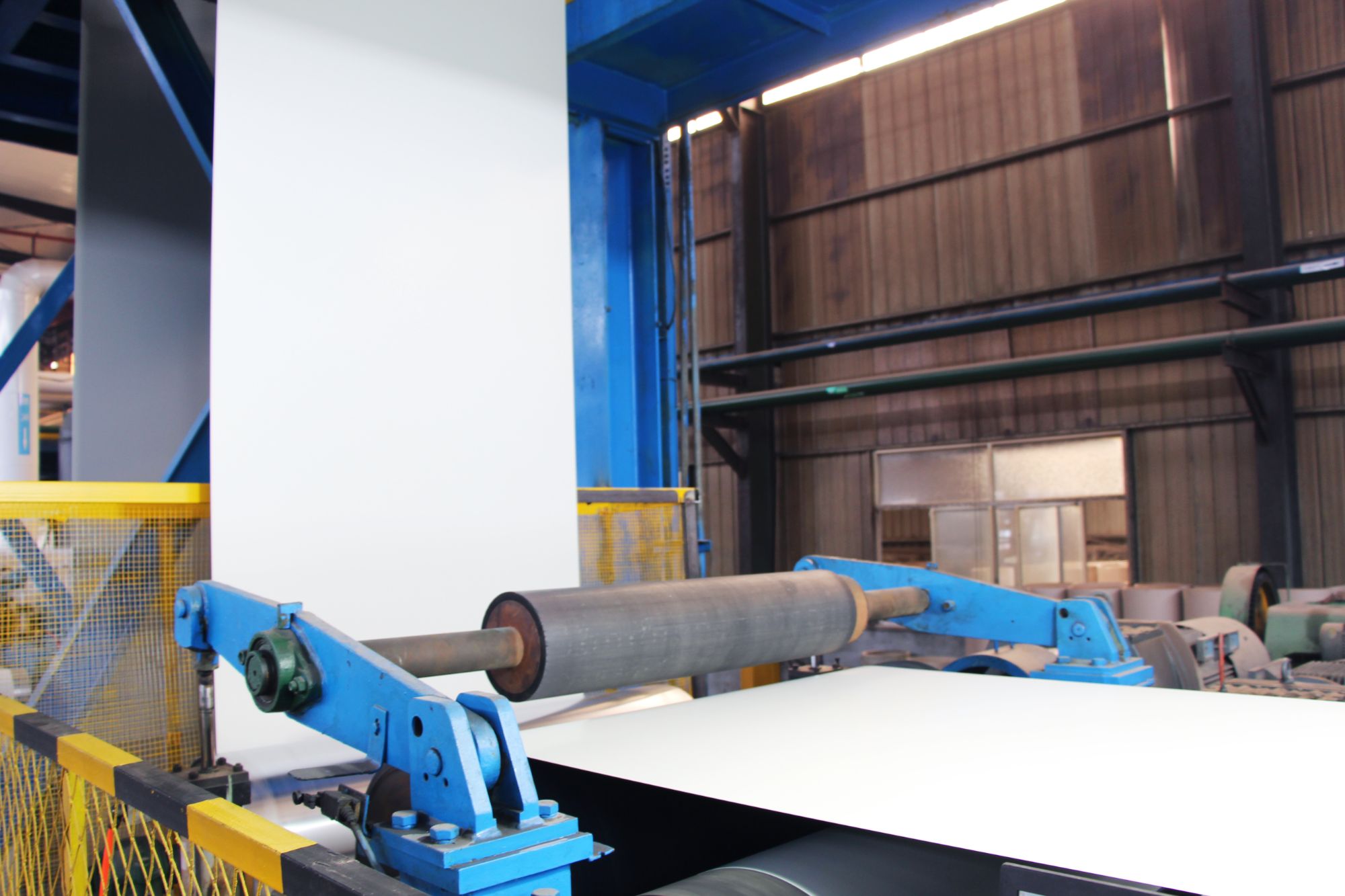
On most modern coating lines across China, the old habit of checking thickness by scraping a sample and squinting at a gauge has disappeared. Instead, mills mount X-ray fluorescence or infrared backscatter sensors directly after the coating head. These units read the wet film in real time, feeding readings back to the PLC every few hundred milliseconds. Operators see a live thickness map on the HMI and can adjust on the fly, but usually they don't have to.
The real shift came when mills tied those sensors into closed-loop control. When the measured thickness drifts beyond a narrow band, the system automatically nudges the coating roll speed, the gap pressure, or the viscosity of the coating bath. No phone call, no manual tweak. One coastal plant in Jiangsu cut its thickness variation by more than half after linking an infrared gauge to a servo-driven metering roll, simply because corrections now happen before a bad section reaches the curing oven.
Some lines go further by logging every coil's thickness profile alongside line speed, bath temperature, and substrate roughness. Over time, the control software learns how these variables interact, so it can pre-compensate when a new coil starts or when the line speed ramps up. The result is that operators talk less about 'getting lucky' and more about whether the next maintenance window will be spent on the coater or the oven.
What Salt Spray and QUV Testing Actually Reveal About PVDF PPGI
Salt spray testing pushes PVDF-coated PPGI into a corrosive fog, but its real value isn't a pass/fail number. It shows whether the primer and topcoat work together at cut edges and scratches, where chloride ions try to creep beneath the film. With a 70% PVDF system, you typically see minimal blistering and only a few millimeters of undercutting after 1,000 hours; failures usually trace back to poor pretreatment or a thin primer, not the fluoropolymer itself.
QUV accelerates UV and moisture cycles to predict how the surface will age. For PVDF PPGI, the meaningful data is not just ΔE after 2,000 hours, but gloss retention and chalking resistance. A properly formulated resin holds gloss above 80% and shows almost no chalking, because PVDF's carbon-fluorine bonds resist photodegradation. However, low-cost blends that replace part of the PVDF with acrylic often look fine at 500 hours and then drop sharply, which is exactly what a longer QUV run exposes.
The honest limitation is that neither test replicates decades of thermal cycling, acid rain, or real-world soiling. Salt spray can overstate corrosion resistance in sheltered joints, while QUV may miss color shifts caused by industrial pollutants. Still, when both tests are read together and the sample includes a scribe mark, they offer a solid early warning about which coil coatings are built for a 20-year facade and which are merely passing a spec sheet.
Why PVDF PPGI Costs More Than Standard Polyester and When It Is Worth It
The price gap between PVDF PPGI and standard polyester-coated steel comes down to chemistry, not just branding. PVDF coatings rely on a fluoropolymer resin system that is inherently more expensive to produce than the polyester resins used in budget-friendly options. On top of that, PVDF paints require higher-grade pigments that can withstand intense UV exposure without fading, whereas standard polyester often uses conventional organic pigments that break down faster. The manufacturing process also adds cost: PVDF coatings are typically applied at a thicker dry film with a more demanding curing cycle, and quality control is tighter because any defect in the finish will be visible for decades on a building facade.
So when is that extra spend actually justified? If your project sits in a coastal area with salt spray, an industrial zone with acid rain, or a region that gets relentless sun, PVDF PPGI will hold its color and gloss for 20 to 30 years, while standard polyester might chalk and fade within 5 to 8. That means fewer repainting cycles, lower maintenance labor, and less downtime for commercial buildings. For simple interior panels or temporary structures, though, standard polyester is often good enough—there is no point paying for fluoropolymer performance you will never see.
One practical way to decide is to calculate the cost per year of service rather than the cost per square meter. A PVDF coil might run 30 to 50 percent more upfront, but if it lasts three times as long and keeps the building looking sharp without a costly recoating job, the math often flips in its favor. Ask your supplier for real weathering data, not just a warranty sheet, because some so-called "PVDF" products on the market use lower fluoropolymer content than the 70 percent required for true Kynar 500 or Hylar 5000 performance. That small difference in formulation can mean the difference between a 25-year finish and one that disappoints in year 10.
The Role of Primer Layers in Preventing Edge Creep and Delamination
Edge creep often starts where the coating meets bare metal or a machined edge, because the film is thinner and adhesion drops off sharply. A well-chosen primer layer changes that geometry. Instead of one abrupt interface, the primer forms a lower-modulus transition zone that can absorb the tiny thermal and mechanical movements which would otherwise concentrate stress at the cut edge. In cyclic exposure tests, panels without primer tend to show rust spots or lifting within a few hundred hours, while the same topcoat over a compatible primer holds the edge line clean well past a thousand hours.
Delamination is rarely a single event; it is usually the result of moisture or corrosive ions getting under the paint and attacking the bond from inside. Primer layers delay this by creating a denser, more chemically resistant film at the metal surface. Many epoxy-based primers, for example, offer far lower water vapour transmission than the finish coat alone. They also contain adhesion-promoting groups that bond directly to the substrate, so even if the topcoat is breached, the primer keeps the corrosion front from spreading laterally. That is why edge creep in scribed panels is measured as a loss of adhesion width: a good primer keeps the width small and stable.
The exact primer chemistry matters less than its ability to form a continuous, well-wetted layer over any radius or burr left by cutting. Thin, solvent-borne primers can flow into micro-crevices at the edge, sealing defects that would otherwise become starting points for underfilm corrosion. In this way, the primer does not just add thickness; it changes the failure mode from rapid adhesive loss to slow, predictable degradation. For maintenance coatings and coil-coated sheet metal alike, specifying the right primer is often the cheapest way to prevent edge creep and extend the time before recoating.
Matching PVDF PPGI to Coastal Industrial and High UV Environments
Coastal industrial zones throw a combination of salt-laden humidity, aggressive chemical fallout, and relentless ultraviolet exposure at any building envelope. PVDF-based PPGI earns its place here primarily through the carbon-fluorine bond in the resin, which resists photochemical breakdown far longer than polyester or silicon-modified polyester alternatives. The coating's dense, semi-crystalline structure also slows chloride ion penetration, so rust creep from cut edges and scratches stays limited even when airborne salt settles on the sheet surface. With a minimum 70% PVDF resin by weight in the topcoat and a well-matched inorganic pigment package, these panels typically keep their colour and gloss within a few units of the original value after a decade or more of coastal service.
Specifying this material correctly for a high-UV shoreline or harbour site means looking beyond the resin alone. A two-coat system with a corrosion-inhibiting primer under a 25–35 micron PVDF topcoat handles most C4/C5 exposure classes, but triple-coat systems with a thicker barrier primer make more sense where salt spray combines with sulphur dioxide or nitrogen oxides from nearby traffic and processing plants. The topcoat also needs enough elongation to bridge thermal expansion of the zinc-coated steel substrate without microcracking, because even hairline cracks become pathways for chloride-laden moisture. Edge coverage and proper sealing at cut ends matter just as much as the flat surface, since that is where coastal corrosion typically begins first.
Field performance in places like the Arabian Gulf, the South China coast, and Australia's eastern seaboard has shown that a correctly matched PVDF PPGI can hold chalk ratings above 8 and fade values under 5 Delta E for fifteen to twenty years. That kind of longevity reduces the frequency of recoating and reduces the risk of premature roof or wall panel replacement in areas where access for maintenance is both costly and hazardous. The key is not simply requesting "PVDF" on a purchase order; it is verifying the pigment type, primer chemistry, dry film thickness, and edge treatment against the actual chloride deposition and UV index of the specific site.
FAQ
The coating resin is the core difference. PVDF (polyvinylidene fluoride) contains roughly 70% fluoropolymer resin blended with acrylic, which gives it far stronger resistance to UV degradation, chalking, and color fade than standard polyester or silicon-modified polyester. In practice that means a PVDF-coated coil keeps its gloss and shade much longer, even on roofs that face intense sun year after year.
It comes down to performance requirements in markets like the Middle East, Southeast Asia, and Australia. Buyers there often need coated steel that can handle high UV, salt spray, and humidity without peeling or dulling. Mills that run dedicated PVDF lines and understand export quality control can offer that consistency, often with shorter lead times and tighter film thickness control than smaller local suppliers.
Ask for a clear coating specification: total dry film thickness is usually 20–25 microns on the top side, with a 5-micron primer and 15–20 micron PVDF topcoat. Adhesion tests like T-bend and impact are more telling than lab data alone. A good mill will provide actual test results from each batch, not just a generic data sheet. If possible, request a sample and do a simple tape pull test after a 24-hour water soak.
Many suppliers quote GB/T 12754 or ASTM A755, but the real value is in third-party testing. Look for SGS, BV, or TÜV reports covering coating thickness, gloss retention after QUV aging, pencil hardness, and salt spray resistance. Reputable mills won't hesitate to share recent batch reports. If a supplier only offers a PDF spec sheet with no test data, that's a red flag.
Yes, but the formulation matters. Standard PVDF coatings are relatively hard and can micro-crack under very tight bends, especially with thicker substrates or high-gloss finishes. For curves and intricate profiles, ask the mill whether they can adjust flexibility or recommend a slightly lower gloss version. Always prototype a few bends before committing to a large order.
Hot-dip galvanized steel is the most common base, usually with zinc coating mass around Z120–Z275 g/m². For coastal or highly corrosive environments, zinc-aluminum or aluminum-zinc coated substrates like AZ150 or AZ180 perform better. Some mills also offer cold-rolled substrates for interior applications, but those are not recommended for exterior use with PVDF unless you accept a much shorter service life.
PVDF is chemically inert compared to polyester. It resists most acids, alkalis, and industrial fallout without breaking down, which is why it's common on buildings near chemical plants or heavy traffic corridors. However, no coating is maintenance-free. Periodic washing to remove settled contaminants will prevent localized staining and extend the coating's appearance life substantially.
For standard colors and widths, many mills can ship within 15–25 days after order confirmation, assuming the substrate is in stock. Custom colors or special gloss levels usually add 10–15 days for paint matching. Minimum order quantities vary, but 25–50 metric tons per specification is common for direct mill orders. Smaller trial quantities are sometimes available through trading companies, though at a higher per-ton price.
Conclusion
Anyone who assumes all PVDF-coated steel is the same has never looked closely at the resin blend. Chinese mills have quietly shifted the conversation from basic fluoropolymer percentages to the overlooked chemistry that keeps the finish intact years after cheaper alternatives turn chalky. The resin itself isn't a single ingredient; it's a balance of PVDF and acrylic modifiers, and the way suppliers handle that balance determines whether the coating resists UV degradation or simply looks good at the warehouse exit. This isn't marketing gloss—accelerated testing tells the same story. Salt spray chambers and QUV weathering expose the difference between a film that merely passes a specification and one that holds its color and adhesion in a real coastal or high-UV environment.
Coating thickness, too, has moved past guesswork. Modern production lines in China use real-time gauge feedback and automated roll coating to keep dry film thickness within a tight window, because an uneven coat is where corrosion starts. The primer underneath matters just as much as the topcoat: a well-formulated primer layer prevents edge creep and delamination, especially where panels are cut or drilled. Yes, PVDF PPGI costs more than standard polyester, and the premium isn't always justified—indoors or mild climates rarely need it. But for industrial, marine, or desert locations, the higher initial spend translates to fewer repaints and lower lifetime cost.
Contact Us
Contact Person: Nia
Email: [email protected]
Tel/WhatsApp: +86 18954360337
Website: https://www.sdppgi.com