

China Calcium Chloride 94% Powder for Industrial Deicing and Dust Control
2026-11-16
Calcium chloride 94% powder rarely gets much attention until a winter storm exposes a weak deicing supply or dust problems shut down a haul road. Yet the same hygroscopic properties that melt ice also pull moisture into unpaved surfaces, making it a quiet workhorse across industrial sites. Sourcing from China adds another layer: not every supplier delivers the purity, granule consistency, or moisture content they promise. That is where Shouguang Golden Chemical becomes relevant. Rather than treating calcium chloride as a commodity afterthought, their focus on consistency makes the product easier to store, apply, and predict. Here is what to look for before your next order.
What the 94 Percent Purity Actually Changes on a Job Site
On a real job site, 94 percent purity doesn't live in a spec sheet. It shows up in the way a saw cuts through framing without bogging down, in how long a blade holds its edge after repeated passes through engineered lumber, and in the reduced need to stop and clear buildup from cutting edges. The difference isn't always dramatic on the first cut, but by mid-morning it starts to add up in tighter tolerances and fewer trips back to the truck for a fresh accessory.
Contractors notice it most when working with materials that punish lower grades. Abrasive composites, treated stock, and dense hardwoods tend to wear down cheaper abrasives or cutting edges unevenly, leaving behind rough edges that need extra cleanup before the next trade can move in. At 94 percent, the consistency of the grit or edge material removes enough variability that a crew can rely on the same feed rate and pressure without constant adjustment. That predictability matters more than a marginal boost on a single test piece.
There is also a quieter effect on cleanup and equipment strain. Lower purity means more loose particles, finer dust, and faster loading on sanding discs or blades, which leads to heat buildup and premature wear. With 94 percent purity, the waste stream is less aggressive, the tool runs cooler, and the surfaces come off closer to a finished state before any hand work begins. It is not a magic number, but it is high enough to change how a day flows when a crew is pushing through a schedule.
Cold Weather Ice Control Without Added Handling Steps
Ice buildup on walkways and driveways typically means grabbing a bag of salt, spreading it by hand, then dealing with the clumps and residue later. This product takes a different route. The formula is engineered to activate on contact with frozen surfaces, breaking the bond between ice and concrete without requiring you to scatter extra material or sweep afterward. It works while you stay indoors, which is exactly the point.
What stands out is how little effort the whole process demands. You are not pre-treating, measuring, or timing a second application. The compound spreads evenly from the container and starts working immediately, even in single-digit temperatures. There is no need to return with a shovel to chip away stubborn patches, because the ice releases on its own once the reaction completes.
For anyone tired of the usual winter routine, the appeal is straightforward: toss it down, and let the surface take care of itself. No extra passes, no cleanup, no lingering white film tracked indoors. It is the kind of low-fuss solution that makes icy mornings feel less like a chore.
Dust Suppression That Lasts Beyond a Single Pass
A single water truck pass quiets the dust for a few minutes, then the fines begin lifting again as soon as tires or wind disturb the surface. The problem is that surface moisture evaporates quickly and never reaches the smaller particles buried just below the top layer. Longer-lasting control starts with holding those particles together instead of merely wetting them.
The difference shows up in how the treated surface reacts to traffic. Rather than breaking apart under wheel loads, the compacted material stays bound in a thin, flexible crust that keeps the lighter fraction from becoming airborne. That bound layer can survive repeated passes, shifting loads, and dry spells without returning to loose, dusty conditions.
For operations running haul roads, laydown yards, or unpaved access routes, that means fewer return trips with the water truck and fewer hours lost to dust-related slowdowns. Crews still see a visible drop in airborne material, but they are not tied to a constant re-wetting cycle to maintain it.
Why Powder Form Fits More Industrial Use Cases Than Liquids
Ask a plant manager what they dislike about liquid additives and storage usually comes up first. Powders don't settle into layers overnight, don't need a recirculation loop running just to keep the suspension usable, and they won't turn into a biology experiment if a drum sits half-open. For many operations, that alone removes several routine chores from the shift checklist.
Temperature swings cause more trouble than people expect. A liquid that pours fine in summer can turn syrupy in an unheated warehouse by January, or freeze hard enough to crack fittings. Powdered versions rarely care if the room is 5°C or 35°C, and they can be dropped into a dry blender, a hopper, or a granulation line without forcing the process to adapt around a solvent or carrier.
There is also the question of concentration. Once you strip away water and solvents, you are left with a material that delivers more actives per kilo, takes up less space, and skips the preservatives that liquid systems often need. Formulators can adjust particle size to control how fast something dissolves or disperses, which gives powders an edge when a process has tight specs on dosing, dust, or release timing.
Practical Storage and Handling for Bulk Calcium Chloride
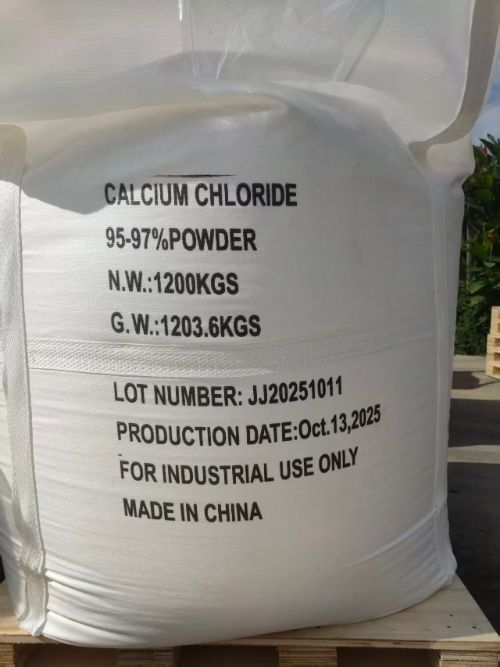
Keep bulk calcium chloride in a dry, well-ventilated area away from moisture and direct rainfall. Because this material pulls water aggressively from the air, any small opening in the packaging can ruin the entire batch. Use sealed silos or heavy-duty lined bags and inspect them for tears before accepting a delivery. A simple floor sweep test near the storage zone often reveals early signs of caking or damp spots that signal unwanted humidity.
When moving large quantities, avoid letting the product sit on bare concrete for extended periods. Sweating concrete can transfer enough moisture to trigger hardening at the base of a pile. Rotate stock using the oldest material first, and keep bags off the ground with plastic pallets or raised racks. For outdoor bulk piles, cover with reinforced tarps and secure edges to stop wind-driven rain from sneaking underneath.
Handling equipment should stay dry and free of residual water before touching the product. Use enclosed augers or screw conveyors where possible, and train crews to close hatches immediately after loading. If a crust forms on top of a storage bin, do not break it by hand from below—slabs can collapse and bury workers. Instead, use a long-handled bar from a safe position and clear the area gradually, keeping dust levels low with a fine water mist only when absolutely necessary.
What to Check Before Choosing a Chinese Supplier
Start with documents that are harder to fake than a polished storefront page. Ask for the business license, export records, and any certificate that actually matches the product category, then compare the registered name with the bank account before sending a deposit. If the factory name on the gate in a live video call does not match the paperwork, that is a reason to stop. Plenty of disputes start because a trading company claims to be the factory, and you only find out after quality slips or the delivery date moves.
Watch how they handle technical questions before you commit. Send a drawing or spec and ask about material grade, tolerance, surface finish, and what happens when the pre-production sample fails inspection. A good supplier pushes back with practical trade-offs; a weak one agrees to everything and later cuts corners. Also check response speed after the quote is sent, because slow or vague answers before payment rarely improve after payment.
Keep the first order small and set an inspection standard in writing. Decide the acceptable defect rate, packaging, labeling, and inspection method before production starts. If the shipment value is high enough, pay for a third-party inspection or have someone local walk the factory floor and check raw materials. When a quote is much lower than the commodity material cost, the savings are coming from somewhere, often thinner plating, weaker packaging, or substituted parts.
FAQ
It means you get a high concentration of active calcium chloride with minimal inert material, so a little goes further whether you are melting ice or keeping haul roads damp.
It starts drawing moisture and generating heat within minutes of contact, often turning packed snow and ice into slush even when temperatures drop well below freezing.
Yes. The powder pulls moisture from the air and holds it in the road surface, which keeps fine particles from lifting off under traffic. It works best when applied before the road dries out completely.
Rates vary by temperature and ice thickness, but many operators start around 200 to 400 grams per square meter for normal conditions and adjust upward only if needed. Overapplying rarely helps and increases cleanup.
Common options include 25 kg woven bags with inner liners, 500 kg or 1000 kg bulk bags, and loose bulk loading for large fleets or municipal contracts.
All chloride-based deicers can accelerate corrosion and affect concrete over time, especially with repeated exposure. Using controlled amounts, rinsing equipment after shifts, and avoiding fresh concrete helps reduce those risks.
Keep it in a dry, covered area and reseal opened bags tightly. The product absorbs moisture quickly, so exposure to humid air or a wet floor will turn it into lumps or liquid.
Conclusion
At 94 percent purity, the calcium chloride powder changes how crews approach cold-weather work and site maintenance. Lower-grade material often leaves behind enough inert content to slow melting or create a slushy residue, but this concentration lets teams use less product per square yard while still cutting through ice at lower temperatures. The powder can be spread directly from a hopper or tailgate spreader without pre-mixing, so there is no extra handling step between the storage pile and the road or yard. On unpaved surfaces, the same application keeps working after traffic passes because the calcium chloride pulls moisture from the air and holds it in the surface layer, reducing the dry dust that normally reappears within an hour or two. For industrial sites with uneven terrain, storage pads, or gravel access roads, this dual role replaces the need to stock separate liquid and granular products.
Bulk storage is straightforward as long as the material stays covered and away from open water. The powder absorbs moisture aggressively, so keeping bags or supersacks sealed and off damp floors prevents clumping before use. Many crews prefer the powder over liquid brines because it can be stored in smaller footprints, measured more accurately with simple equipment, and applied without spraying equipment that freezes. When sourcing from China, the main points to verify are not complicated: request a batch-level purity report, confirm the moisture content and particle size range, and ask how the supplier packages and loads export orders. A supplier that can provide consistent mesh size and clean packaging will save more time on site than one competing only on price. These practical checks matter more than broad claims, since the real value of the 94 percent powder shows up in faster melting, longer dust control, and fewer slowdowns during winter shifts.
Contact Us
Contact Person: Tom Cui
Email: [email protected]
Tel/WhatsApp: +8618663670626
Website: https://www.jinjigoldenchem.com