
Carbonated Beverage Filling Machine Exporters: How to Choose the Right Partner for Your Bottling Line
2026-10-15
Selecting the right carbonated beverage filling machine exporter can make or break your bottling line. Too many buyers get lured by flashy brochures and later face inconsistent fill levels, foaming issues, or machines that can't keep up with demand. Before you sign anything, it's worth looking beyond the sales pitch. Wanying Machinery stands out by focusing on real-world performance—tight carbonation control, modular designs, and support that doesn't disappear after installation. In the sections ahead, we'll break down the practical criteria for vetting exporters, from factory audits to technical documentation, so you can choose a partner that truly fits your production goals.
The Carbonation Question Most Exporters Dodge During Initial Calls
Many beverage exporters will happily talk flavor profiles, packaging specs, and lead times on a first call. But ask how their product holds carbonation after three weeks in a hot container or a low-pressure cargo hold, and the line goes quiet. That silence isn't accidental. Carbonation loss is one of the most common reasons a perfectly good drink tastes flat by the time it reaches a foreign shelf, yet it rarely comes up until there's a complaint.
The issue isn't just about CO2 volumes printed on a spec sheet. Altitude, temperature swings, and even the type of closure can knock a product below the sensory threshold that local buyers expect. Some markets want a sharper bite, others a softer fizz, and assuming your home-market carbonation level will travel well is a gamble. Exporters who dodge the question often end up reworking orders or paying for air freight replacements.
A better approach is to test carbonation retention under realistic shipping conditions before quoting a price. That means simulating container heat, vibration, and time, then tasting against the target market's benchmark, not your own. If a buyer brings up carbonation on the first call, they are probably not being difficult; they have been burned before. Answering honestly, even if the answer is admitting adjustments are underway, builds more trust than a polished spec sheet ever will.
Why Standard Filling Lines Rarely Fit Real Carbonated Production Needs
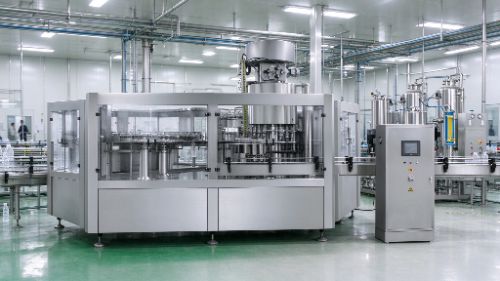
Most off-the-shelf filling lines are built around still liquids, so they handle carbonated drinks the same way they’d handle water or juice. That’s where things start to break. A carbonated product holds CO2 under pressure, and the moment it hits a standard gravity filler or an atmospheric nozzle, the gas releases unevenly. Fill levels swing, bottles foam over, and operators end up slowing the line just to keep the mess contained. You can’t fix that with a simple tweak—it’s a mismatch in how the filler controls pressure and backpressure.
Real carbonated production also rarely runs one product at one speed all day. A line might switch from a lightly sparkling fruit drink to a heavily carbonated energy drink in the same shift. Standard fillers typically have fixed bowl pressure and limited adjustment range for CO2, so each changeover becomes a compromise. Either the low-carbonation product gets over-foamed or the high-carbonation product loses its bite. Add pulp, juice, or nitrogen dosing and the standard filling valves start clogging or creating inconsistent headspace.
Then there’s the oxygen problem. Carbonated beverages are more sensitive to dissolved oxygen than still drinks, but standard filling lines often lack proper pre-evacuation or shielding. Ambient air gets trapped in bottles and cans, raising DO levels and shortening shelf life. The result is a line that technically fills, but not in a way that keeps the product stable or the line running at nameplate speed. That’s why plants end up modifying, retrofitting, or replacing equipment that should have been built for carbonation from the start.
Checking a Supplier's Track Record Without Relying on Polished Case Studies
Polished case studies often read like marketing brochures, full of selective wins and smoothed-over hiccups. To get a truer picture of a supplier's reliability, start by asking for a list of clients who didn't renew their contracts or terminated early. Those former customers are usually more candid than the ones handpicked for a glossy testimonial. A simple phone call or email to a past client can reveal how the supplier handled late shipments, quality complaints, or last-minute scope changes. Real track records live in the messy details, not the highlight reel.
Another angle is to pull public records and third-party reports that the supplier has no control over. Look at freight forwarders' logs for late deliveries, check customs data for rejected or reworked batches, and read through industry forums where buyers swap unfiltered notes. Even social media mentions from warehouse staff or delivery drivers can expose patterns a polished case study would never include. If the supplier claims zero defects, ask for the internal audit trail they're required to keep for ISO or other certifications. What's missing from that trail often says more than the summary slide.
Finally, request a small pilot order with deliberately tricky specifications before committing to a large contract. Watch how the supplier handles ambiguity, whether they ask clarifying questions early or wait until the deadline to raise issues. Track how they communicate when something goes wrong, because something always does on a first run. Their behavior during that small test will tell you more about their actual track record than any curated portfolio ever could.
The Hidden Costs Lurking in Overseas Filling Machine Quotes
When a supplier in another country sends a quote for a filling machine, the price on the first page rarely tells the whole story. Freight charges, customs duties, and port handling fees are the obvious extras, but they are just the beginning. Many buyers discover later that the machine requires a different voltage or frequency than their local grid, forcing them to purchase a transformer or rewrite the control panel. Even something as simple as the plug type can lead to unexpected rewiring costs.
Packaging and crating for ocean freight is another silent expense. A machine bolted to a flimsy wooden pallet may arrive with bent frames or cracked touchscreens, and the insurance claim process can stretch for months. Then there are the hidden costs of language and time zones: installation manuals that read like machine translations, remote support that only answers emails at 2 a.m. your time, and spare parts that take three weeks to clear customs when a single O-ring fails.
Smart buyers ask for a total landed cost breakdown before signing anything. That includes not just shipping and duties but also local electrical certification, a qualified technician for commissioning, and a realistic spare parts kit for the first year of operation. Some overseas quotes look cheap until you add a week of downtime because a $5 sensor is sitting in a warehouse on another continent.
How to Spot a Partner Who Actually Understands Your Local Compliance Maze
A partner who truly gets your local compliance landscape won’t start by reciting generic rules. They’ll ask which regulators actually show up, which deadlines carry real penalties, and which unwritten practices keep neighboring businesses out of trouble. That kind of grounding shows they’ve been in the room, not just read the statutes.
Watch how they handle ambiguity. Local compliance is rarely a clean checklist; it shifts with enforcement moods, municipal interpretations, and sudden rule changes. A capable partner will explain their fallback when guidance is missing, name the local officials or industry groups they check with, and admit when a path isn’t fully settled instead of pretending certainty.
Finally, test their memory of past cases. Ask for a recent example where a seemingly minor local filing turned into a costly delay or fine. If they can describe the specific agency, the misstep, and how they resolved it without resorting to vague jargon, that’s a strong signal they know your maze from the inside.
The Service Commitment Question That Separates Exporters After the Sale
The real test of an export deal rarely happens when the invoice is marked paid. It unfolds weeks later, when a customs hold in Rotterdam or a mislabeled pallet in São Paulo forces the buyer to reach out. Many exporters treat the post-sale moment as a nuisance to manage with a few terse emails. The ones who build durable businesses, however, answer that call with the same urgency they showed during the sales pitch. The question isn't whether you have a warranty clause or a return policy buried in your terms. It's whether your team feels personally accountable for a shipment after the container has left your dock.
That accountability shows up in small, unglamorous ways: a logistics coordinator who volunteers to call the freight forwarder directly instead of looping in another department; an account manager who remembers that the buyer's warehouse opens at 7 a.m. local time and schedules a follow-up accordingly. These gestures don't appear in any service-level agreement, yet they separate exporters who sell once from those who sell for a decade. The companies that vanish after the wire transfer do save a few hours of work. What they surrender is something far harder to measure—the quiet trust that makes a buyer skip the next vendor's booth at the trade show without even browsing.
FAQ
Carbonated fillers need isobaric filling technology that keeps product under constant CO2 pressure during the tank-to-bottle transfer. Without it, the beverage foams, loses carbonation, and causes inconsistent fill levels. A dedicated machine will also include pre-evacuation, CO2 flushing, and a snift mechanism to release headspace pressure gently after capping.
Look at the filler's counter-pressure accuracy, the number and type of filling valves, the bottle handling range, and the maximum rated speed at your target carbonation level. Also verify whether the machine uses volumetric or level filling, as volumetric valves often hold tighter tolerances on products with variable foam behavior.
Ask them to walk through the pressure-temperature relationship for your specific drink. A knowledgeable partner will discuss CO2 volumes, filler bowl pressure settings, product temperature control, and how their snifting design prevents gushing. If the answers stay vague about thermodynamics, treat that as a warning sign.
Glass, PET, and cans each demand different handling, rinsing, and sealing approaches. A PET line, for instance, requires proper bottle base support and often air conveying to avoid denting, while glass needs gentler pressure transitions to prevent breakage. The exporter should show proven experience with your exact container material and shape.
Focus on response time for valve seal replacements, availability of critical spares like filling valves and capping heads, and whether the exporter offers remote diagnostics. Carbonated lines run under pressure and small leaks quickly become production losses, so local or well-stocked regional support often outweighs a lower upfront price.
Request a detailed CIP/SIP sequence that covers filler bowl, vent tubes, and product piping without excessive manual disassembly. Rapid changeover should be measured from last bottle of one SKU to first good bottle of the next, including filler height adjustments, valve swaps if needed, and capper size changes. A machine that looks fast in a brochure can lose hours every week in practice.
Define the exact product recipe, CO2 volumes, fill temperature, and container size for the FAT. Agree on measurable outcomes: fill level standard deviation, dissolved oxygen pickup, carbonation retention after capping, and defect rate at the rated speed. Require the exporter to run the line for at least a few continuous hours, not just a short demonstration.
Generalists often underestimate the interaction between CO2 pressure, product temperature, and filler bowl design. They may use components sized for still liquids, leading to chronic foaming, inaccurate fills, or premature valve wear. A specialist brings reusable reference projects that closely match your product's carbonation and packaging, reducing the trial-and-error phase after installation.
Conclusion
Most carbonated beverage exporters will happily talk about bottles per hour, but the moment you ask how they handle CO2 retention during filling, the conversation gets vague. That silence matters more than any glossy brochure. A real carbonated line isn't just a standard filler with a few tweaks—it needs precise pressure control, temperature management, and filling valves built to keep the fizz where it belongs. If a supplier can't walk you through their carbonation strategy in the first call, you're already looking at a machine that will underperform on day one. Standard lines rarely fit actual production: different bottle shapes, varying syrup viscosities, and your own water chemistry all change how the filler must behave. So instead of trusting polished case studies, ask for raw references—ideally the plant manager, not the sales director. Find out how many of their past carbonated lines are still running at rated speed after two years.
The real cost of an overseas filling machine shows up long after the invoice is paid. Quotes often omit things like installation supervision, spare parts that actually wear out on carbonated lines, or the extra stainless steel needed to handle acidic beverages. Worse, many exporters have no idea how to navigate your local compliance maze—whether it's food safety certifications, pressure vessel rules, or utility requirements. A partner who doesn't ask detailed questions about your local codes will leave you stuck with a machine you can't legally run. After the sale, the difference between a genuine partner and a one-time exporter is simple: does the same engineer who helped with commissioning answer your calls six months later? If the service commitment only covers the warranty period in fine print, walk away. Choose a supplier who can prove they understand carbonated filling, not one who just sells machinery.
Contact Us
Contact Person: Tyson
Email: [email protected]
Tel/WhatsApp: +8613396971296
Website: https://www.wanyingmachinery.com