

Best Strong Magnet Options for Heavy Duty Applications
2026-09-16
When heavy-duty jobs demand serious holding power, not every magnet makes the cut. The right choice can mean the difference between a secure, reliable setup and a costly failure. In this guide, we’ll break down the strongest magnet options that stand up to tough industrial, construction, and workshop environments—and show you why DAWA is a name worth knowing before you commit.
Why Neodymium Remains the Heavy-Duty Workhorse
Neodymium magnets don't win on temperature tolerance or corrosion resistance—samarium cobalt beats them there. Yet they still dominate when a design demands brute force in a small package. The reason is simple: a sintered NdFeB magnet can deliver 35–52 MGOe, roughly three times the energy density of the best ceramic alternatives. That means a brake, coupling, or rotor can shrink by half and still hit the same torque, which cascades into lighter housings, shorter shafts, and less bearing load.
What often gets overlooked is how the alloy has evolved. Early grades crumbled above 80°C or in humid air. Modern H and SH series hold coercivity past 150°C, and proper nickel-copper-nickel plating shrugs off salt spray for years. This practical reliability—not just lab numbers—keeps it on factory floors and under car hoods. Samarium cobalt remains a niche choice for deep-well drilling or aerospace, but for the vast middle of heavy industry, the price-to-pull ratio still favors neodymium by a wide margin.
Its staying power also comes from supply-chain maturity. Sintering lines are highly automated, magnet shapes can be molded to near-net geometries, and magnetizing fixtures are cheap enough to build for one-off prototypes. Designers know exactly how the material behaves after thermal cycling or mechanical shock. That predictability, combined with a steady drop in cost per kilogram over the last decade, means any challenger has to overcome a deeply entrenched manufacturing ecosystem—not just a better spec sheet.
Samarium Cobalt Shines in Extreme Heat and Corrosion
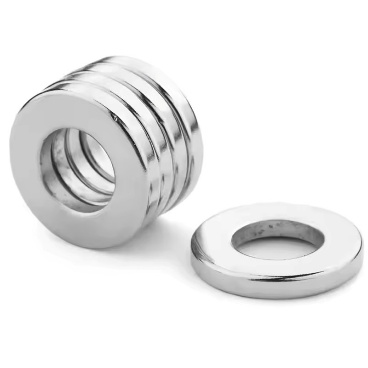
Samarium cobalt magnets maintain their magnetic field strength at temperatures where many other rare earth magnets already lose a noticeable share of performance. Maximum operating temperatures can exceed 300°C, and the temperature coefficient of coercivity stays low enough that reversible losses remain small even through repeated thermal cycling. This behavior comes from a Curie temperature between 700°C and 800°C depending on grade, which gives engineers more headroom in motors, generators, and sensors installed near engine compartments or industrial furnaces.
The material also resists corrosion without relying on protective coatings. Unlike neodymium-iron-boron magnets, which usually need nickel or epoxy layers to survive humid or mildly acidic conditions, samarium cobalt develops a stable oxide surface that slows further degradation. In marine hardware, chemical processing equipment, and medical tools that go through repeated autoclave sterilization, this built-in corrosion resistance removes a failure point and lowers long-term maintenance costs.
Perhaps the most practical benefit appears when heat and corrosion act together. Hot, wet, or chemically aggressive atmospheres quickly degrade many magnetic materials through oxidation and demagnetization. Samarium cobalt's ability to withstand that combination explains why it remains the default choice for high-temperature couplings, downhole oil and gas sensors, and aerospace actuators where replacement is difficult and field failure is unacceptable.
Ceramic Magnets for Tight Budgets and Static Loads
Ceramic magnets hit a sweet spot for projects where the budget is lean and the load doesn't move. Their raw material costs stay low, so you can get decent pull force without emptying your wallet. Just keep in mind they're not built for high heat or sudden shocks — treat them as a steady, quiet workhorse for holding fixtures, latches, or speaker assemblies in place.
If your application involves a constant, static load like a door catch or a display mount, ceramic magnets offer predictable performance at a fraction of the cost of neodymium. They don't need fancy coatings or complicated handling, which trims both upfront and long-term expenses. The trade-off is lower magnetic strength per volume, so plan for a larger magnet or multiple pieces to meet the same holding force.
One thing many buyers overlook: ceramic magnets resist corrosion naturally, so there's no need for nickel plating or epoxy layers that add cost. This makes them especially attractive for indoor fixtures or lightly damp environments where budget is the main decision driver. Pair them with a simple steel backing plate, and you'll get a reliable, no-fuss static hold that won't break the bank.
Electromagnets Bring Switchable Force to Variable Tasks
The core advantage of an electromagnet lies in its ability to flip between energized and de-energized states almost instantly, giving operators a level of control that permanent magnets simply cannot match. This switchable force is not merely a binary on-off function; by varying the current through the coil, the magnetic pull can be scaled continuously from a gentle hold to a vice-like grip. In assembly lines where parts arrive in different sizes and weights, this tunability means a single end effector can handle everything from thin sheet metal to heavy castings without a tool change. The absence of residual magnetism when the power is cut is equally critical, allowing clean release of parts that would otherwise cling stubbornly to a permanent magnet.
Practical deployments often pair electromagnets with spring-loaded or mechanical backups to address the inherent risk of power loss. A variable task might involve lifting a curved steel panel, then repositioning it on a moving conveyor; the electromagnet can be pulsed to release one edge while still holding the other, something impossible with passive magnets. Advanced controllers monitor the coil current and the gap between the magnet face and the workpiece, automatically adjusting the force to compensate for air gaps caused by rust, paint, or surface irregularities. This closed-loop approach turns a simple solenoid into a smart gripping system that adapts in real time to the changing conditions of a production environment.
Beyond manufacturing, switchable electromagnets are finding use in robotic climbing systems, where a robot can alternate its grip between two magnetic feet to scale a steel structure. In such variable tasks, the magnet must not only hold the robot's weight but also release cleanly and re-engage within milliseconds to maintain locomotion. The same principle applies to automated warehouse cranes that pick up bundles of steel bars of unknown quantity; the magnet's holding force is ramped up gradually until the bundle begins to lift, preventing sudden jerks that could destabilize the load. These examples highlight a shift away from fixed-strength magnets toward force-on-demand systems that treat magnetic attraction as a controllable variable rather than a constant.
Calculating Pull Force and Shear for Your Actual Rig
Start by ignoring the rated numbers stamped on your winch or hoist—they're for a straight vertical lift under controlled factory conditions. For your actual rig, pull force depends on line angle and friction. Measure the angle of the rope as it leaves the drum or last fairlead. Multiply the suspended weight by the cosine of that angle to get the direct pull component. Then add an extra 10 to 15 percent for sheave friction, drum wrap losses, and any slight misalignment you can't see from the ground.
Shear gets tricky because it acts perpendicular to the mounting bolts or anchor pins. Instead of trying to estimate it, break the pull force into two components: one along the line of action, and one at 90 degrees. The shear load at a given connection equals the total rope tension times the sine of the angle between the rope and the bolt hole axis. If your rig has a redirect or snatch block, do this calculation at every change of direction—the block itself can see double the line pull as a resultant shear.
Once you have numbers, apply a safety factor based on how dynamic the load is. A slow, steady pull can get away with 3:1 on breaking strength, but a jerky recovery or high-speed winch needs 5:1 or more. Write these figures down for each recovery point, not just the main line. That way you know if a side anchor will hold before it fails, rather than after.
Coatings and Mounting Details That Prevent Field Failures
Field failures rarely trace back to a single dramatic flaw. More often, they start quietly at the interface between a coating and its substrate, or in the way a component is mounted under real-world vibration and thermal cycling. A well-chosen coating does more than resist corrosion; it needs to flex with the base material, tolerate edge build-up, and survive the micro-abrasion that happens during installation and routine service. Skipping adhesion tests or ignoring cure schedules can turn a promising finish into a peeling, cracking liability within months.
Mounting details are where good designs earn their reputation. Using oversized washers or adding a soft isolation layer under a clamp may seem trivial, but these choices distribute stress and prevent galvanic cells from forming at fastener holes. Pay attention to drainage paths—trapped moisture behind a mounting bracket will compromise even the best coating. Small design tweaks, like chamfered edges on brackets or standoffs that allow airflow, often make the difference between a part that lasts a decade and one that fails after the first rainy season.
The most reliable assemblies treat coating and mounting as a single system. Before releasing a design, run a simple cyclic test: heat the part, cool it quickly, then lightly torque and untorque the fasteners while inspecting for coating flaking or substrate exposure. If you find wear, adjust the coating thickness, change the mounting clamp material, or re-position the fastener away from high-stress corners. These practical steps, repeated on a few prototypes, uncover failure modes early and save entire production batches from costly field returns.
FAQ
Neodymium magnets offer the highest pull force per volume, so they are the usual pick when space is tight but holding strength matters. Samarium cobalt can match many needs in very hot or corrosive settings, though it costs more and is not as strong at room temperature.
A significant difference. Pull force ratings assume direct contact with a thick, clean, flat steel plate. If the surface is painted, rusty, uneven, or thinner than the magnet's field can saturate, actual holding power drops sharply. Bolting through the magnet or using a steel cup can recover some of that loss.
Nickel-copper-nickel is common but can chip. For outdoor or salty conditions, epoxy, rubber, or PTFE coatings provide better corrosion resistance. If the magnet will take impacts, a stainless steel or rubber housing usually outlasts a bare plated magnet.
Standard neodymium grades start losing strength permanently above about 80°C (176°F). High-temperature grades can work up to 150–200°C depending on the specific alloy. If the application runs hotter than that, samarium cobalt is the safer route, with limits often above 300°C.
Slide it sideways to the edge of the steel rather than pulling straight up. Use a wooden or plastic wedge to break the contact, and keep your hands clear. For very large magnets, a purpose-built separator tool is worth the cost, and no one should stand in the path of a sudden release.
Only if the load is spread evenly and the surface is flat. Two magnets can bridge uneven areas better than one rigid block, but their combined pull force is not simply double. Gaps, misalignment, and uneven steel reduce the total. One properly sized magnet in a steel cup often performs better than two bare magnets.
The rubber adds a little distance between the magnet and the steel, so pull force drops somewhat, usually 10–20 percent depending on thickness. However, the coating prevents scratches and corrosion, and the added friction can reduce sliding on smooth surfaces. For many heavy-duty tasks, that trade-off is worth it.
Conclusion
Neodymium magnets still earn their place on heavy-duty rigs because a compact block can hold hundreds of pounds without taking up much space. The trade-off is heat: once temperatures climb past 80°C, standard grades lose strength, so builders either oversize the magnet or switch to samarium cobalt. Samarium cobalt costs more and is brittle, yet it remains stable near 300°C and shrugs off salt spray, which makes it the quiet choice for marine winches, hot exhaust mounts, and chemical-plant fixtures. Ceramic magnets rarely win on raw pull, but for fixed jigs, holding a steel door open, or a low-budget clamp that never moves, they are hard to beat because they cost almost nothing and won't corrode.
Electromagnets change the calculation entirely when you need to release a load on command or vary grip force between passes. The catch is that pull ratings on paper assume clean, flat, thick steel and a direct perpendicular load; any air gap, paint, rust, or side shear drops the real-world number fast. That is why experienced shops test with the actual workpiece and use a safety factor of at least three. Coatings matter as much as the magnet itself: nickel-copper-nickel is fine indoors, but epoxy or rubberized shells survive impacts and moisture. Mounting details often decide field failures—countersunk holes weaken thin magnets, threaded inserts strip under vibration, and a bolt torqued against a brittle magnet face can crack it before the first shift.
Contact Us
Contact Person: Kelvin Lo
Email: [email protected]
Tel/WhatsApp: 0769-88561131
Website: https://dawamagnetic.com/