

Autonomous Forklift Manufacturers Driving the Future of Smart Warehousing
2026-06-24
The rapid evolution of smart warehousing is reshaping logistics, and at its heart are autonomous forklifts that promise unprecedented efficiency. Among the manufacturers driving this transformation, HANGCHA stands out with its innovative approach to automation, blending robust engineering with intelligent navigation. As warehouses grow smarter, understanding the players behind these autonomous solutions becomes crucial—and this post dives into what sets them apart.
How Autonomous Forklifts Are Redefining Warehouse Floor Operations
Autonomous forklifts are quietly reshaping the daily rhythm of warehouse floors, turning chaotic loading docks into orchestrated flows of movement. Unlike traditional forklifts that rely on human operators to navigate aisles and judge distances, these machines use advanced sensors and real-time data to move with a kind of deliberate precision that was once unimaginable. They don't tire after double shifts or lose focus during repetitive tasks, which means inventory gets slotted exactly where it belongs and pallets stack without the slight wobbles that lead to later collapses. The result is a floor that feels less like a high-stakes obstacle course and more like a carefully choreographed dance, where each vehicle anticipates the next move and adjusts its path without honking horns or abrupt stops.
What's often overlooked is how these autonomous vehicles change the relationship between workers and their environment. Instead of spending hours behind the wheel, staff are repositioned as overseers and problem-solvers, stepping in when exceptions arise rather than carrying out every single transport. This shift doesn't just reduce the physical toll on the body—it also opens up space for a different kind of floor layout. With predictable, algorithm-driven traffic patterns, warehouse designers can shrink aisle widths, eliminate the need for wide turning radii, and reclaim square footage that was previously dedicated to safety buffers. The floor becomes more compact and efficient, not because of some abstract optimization algorithm, but because the machines simply require less wiggle room to do the same job.
Adaptability is where these forklifts truly break the mold. Older automation systems demanded rigid, unchanging environments, but today's autonomous models can handle a floor that evolves over time. If a new racking configuration is installed or a temporary picking station pops up during peak season, the forklift's onboard mapping software updates in near real-time, learning the new layout within a few passes. This fluidity means operations can scale up or shift focus without a massive infrastructure overhaul. Managers can reconfigure zones for different product lines without worrying about retraining drivers or reprogramming fixed paths. The floor becomes a living, adaptive space—one that flexes with business needs rather than forcing the business to conform to the limitations of its equipment.
Key Players Building the Next Generation of Smart Lift Trucks
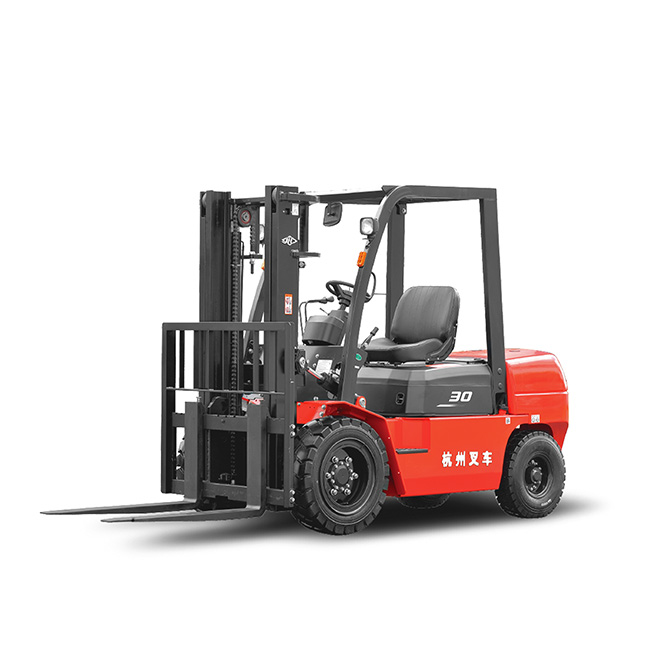
The shift toward intelligent material handling has drawn a mix of established forklift manufacturers and agile robotics startups into a race to redefine what a lift truck can do. Companies like Toyota Material Handling and KION Group are embedding advanced sensors, machine learning, and connectivity into their fleets, moving beyond incremental improvements toward truly autonomous operation. These legacy players leverage decades of domain expertise while partnering with or acquiring AI specialists to stay ahead.
New entrants such as Vecna Robotics and Seegrid are challenging the status quo by designing self-driving lift trucks from the ground up, focusing on dynamic environment navigation and fleet orchestration rather than retrofitting existing designs. Their platforms emphasize adaptability, enabling warehouses to reconfigure workflows without extensive infrastructure changes. This approach often translates to faster deployment and lower total cost of ownership for operators.
Behind the scenes, component suppliers and software developers like Bosch Rexroth and Phantom Auto play a critical role in delivering the perception systems and remote operation capabilities that make smart lift trucks viable. Their contributions in areas like lidar integration, real-time path planning, and predictive maintenance are turning prototypes into production-ready machines, quietly shaping the next generation of industrial vehicles.
Real-Time Data Integration and Precision Handling in Automated Logistics
Real-time data integration in automated logistics demands systems that can ingest, clean, and merge streams from conveyors, sorters, and robotic pickers within milliseconds. Rather than relying on batch updates, modern warehouses use event-driven architectures where each sensor reading immediately triggers inventory recalculations. This approach slashes latency but introduces tricky edge cases—like duplicate scans when packages pass multiple checkpoints—which require exact deduplication logic to keep stock counts accurate.
Precision handling goes beyond simply moving items from A to B. It involves coordinating multi-axis arms and shuttles that adjust grip pressure based on real-time weight distribution data, preventing damage to fragile goods. For instance, a vision system detecting a slightly offset label can prompt a micro-correction in a robotic gripper’s trajectory mid-motion, all while the main control loop maintains a tight 50-millisecond cycle. This level of responsiveness relies on fusing data from lidar, torque sensors, and high-speed cameras without introducing interpolation errors.
One often overlooked aspect is how these integrated data flows enable predictive adjustments. By continuously comparing actual motor currents against digital twin simulations, a fleet of AGVs can preemptively reroute to avoid minor delays that would cascade into missed sortation windows. It’s less about chasing perfect one-shot execution and more about weaving a fabric of small, informed corrections that collectively keep throughput humming at 99.8% even when individual units face transient hiccups.
Safety and Efficiency Gains That Go Beyond Standard Automation
Automation alone can reduce repetitive strain and limit direct exposure to hazardous tasks, but true breakthroughs happen when systems actively learn and adapt in real time. Instead of rigid, pre-programmed routines, next-generation solutions continuously analyze environmental data, worker proximity, and equipment status to make split-second decisions that prevent incidents before they unfold. This dynamic approach transforms safety from a static checklist into a living, responsive shield that evolves with each shift.
On the efficiency side, the difference is just as stark. Standard automation often focuses on speeding up individual steps, yet neglects the complex interdependencies across a whole operation. Advanced platforms map these connections and dynamically rebalance workloads, reroute material flows, and even adjust energy consumption on the fly. The result isn't just faster cycles—it's an operation that wastes fewer resources, avoids cascading delays, and maintains peak output without pushing equipment or people beyond sustainable limits.
What ultimately sets these gains apart is their self-reinforcing nature. As the system gathers more operational data, its predictive models sharpen, leading to even fewer safety interventions and less downtime. Workers notice the difference too: instead of babysitting rigid machines, they collaborate with tools that communicate clearly, flag anomalies early, and suggest optimizations. That shift builds trust, reduces mental fatigue, and unlocks a level of human-machine partnership that standard automation simply cannot replicate.
Scalable Solutions for Small to Mega Distribution Centers
Distribution centers today span a vast spectrum, from compact local hubs to sprawling mega facilities that move millions of units daily. Designing solutions that scale effectively across this range isn’t just about adding more conveyor belts or hiring extra staff—it requires a fundamentally flexible infrastructure that can expand and contract without costly overhauls. Whether a business is handling a few hundred orders a day or managing complex omni-channel fulfillment, the backbone of their operation must support growth without sacrificing speed or accuracy.
The real key lies in modular automation and intelligent software that can be tuned to current volumes while keeping an eye on future demand. For smaller centers, this might look like coordinated mobile robots that work alongside people, paired with warehouse management systems that optimize pick paths on the fly. As throughput climbs, those systems can seamlessly integrate with high-speed sorters, automated storage, and real-time analytics that pinpoint bottlenecks before they happen. It’s a layered approach where each component—from handheld scanners to advanced robotics—talks to the others, letting the whole operation flex like a living organism.
Beyond the technology itself, scalable solutions also revolve around process design that resists obsolescence. Think of layouts that can absorb new automation without halting daily work, or labor models that shift dynamically during peak seasons. The goal is to turn what used to be a rigid, capital-intensive build into an ongoing evolution—one where a distribution center can start small, prove its concept, and gradually step up to megawatt throughput without ever hitting a wall. That kind of agility means not just surviving market swings, but turning them into a competitive edge.
The Shift Toward Energy-Efficient and Sustainable Forklift Design
Warehouse operations are quietly undergoing a profound change as forklift manufacturers move away from traditional internal combustion engines. The push is not just about swapping diesel for electric; it’s a complete rethinking of how energy is stored and used. Lithium-ion batteries have become the backbone of this shift, offering faster charging, longer runtimes, and zero tailpipe emissions. Companies are now retrofitting older fleets with these power sources, dramatically cutting downtime and slashing the carbon footprint of day-to-day logistics.
Sustainability now reaches far beyond the battery pack. Designers are selecting lighter, high-strength materials that reduce overall vehicle weight without sacrificing durability. Recycled metals and bio-based composites are finding their way into frames and body panels, while end-of-life disassembly guides ensure that components can be reclaimed rather than landfilled. This circular mindset is reshaping supply chains, with some manufacturers already offering buyback programs for used parts, turning waste into a resource loop that wasn’t on the radar a decade ago.
Efficiency gains are also being squeezed from the way forklifts interact with their environment. Regenerative braking systems capture energy when lowering loads, feeding it back into the battery. Smart fleet management software analyzes driving patterns to optimize routes and schedule charging during off-peak hours, further reducing strain on the grid. These tools transform the forklift from a simple workhorse into an active participant in facility-wide energy management, often trimming electricity usage by double-digit percentages without any loss in productivity.
FAQ
They tackle labor shortages and safety concerns head-on. Unlike manual trucks, these machines navigate tight aisles, avoid obstacles, and operate 24/7 without fatigue, directly boosting throughput. Their real value is in seamlessly meshing with warehouse management systems to orchestrate just-in-time inventory moves, which slashes downtime and human error.
Names like Toyota Material Handling, KION Group, and Jungheinrich often dominate conversations, offering robust counterbalance and narrow-aisle models with advanced sensor fusion. But keep an eye on agile players like Seegrid and Vecna Robotics; they're pushing pure-vision guidance and fleet orchestration software that challenges the old guard. Hyster-Yale and Mitsubishi Logisnext also deserve mention for their rugged, scalable designs aimed at heavy-load industries.
They rely on a mix of LiDAR, stereo cameras, and sometimes inertial sensors to build live maps of their surroundings. That data feeds into onboard AI that distinguishes racking from pedestrians and makes split-second pathing decisions. Some newer models skip pre-mapped routes entirely, using simultaneous localization and mapping to adapt as layouts change. It's less about following tape and more about understanding the space.
Beyond the obvious reduction in collision-related costs, operators report up to 30% faster pallet-moving cycles and a sharp drop in product damage. The hidden win is data—every lift and travel segment feeds analytics that reveal inefficiencies in slotting or dock scheduling. Plus, you can reallocate the workforce to value-added tasks like quality checks and exception handling instead of driving in circles.
Absolutely. A frequent misstep is underestimating infrastructure prep—floor condition, adequate Wi-Fi, and standardized pallet quality matter enormously. Another is treating them like a plug-and-play gadget; you need dedicated change management to get floor staff and supervisors on board. Interoperability with legacy WMS software can also turn into a multi-month headache if APIs aren't robust.
We're seeing a shift toward smarter manipulation. The latest prototypes handle mixed pallet picking, layer depalletizing, and even trailer loading/unloading with robotic arms integrated into the mast. On the software side, multi-brand fleets are being unified under a single orchestration layer that dynamically assigns tasks based on battery levels, proximity, and order prioritization. Edge computing is also pushing latency down so they react to dynamic obstacles almost instantaneously.
Expect swarms of smaller, cheaper vehicles taking over low-weight tasks while high-capacity units sync with automated trucks at bay doors. Tight integration with drone inventory scanning and digital twins will let them reposition stock preemptively. And as 5G spreads, offloading heavy computation to the cloud will become viable, enabling fleet-wide learning where one truck's mistake teaches all the others to avoid it.
Conclusion
The warehouse floor is undergoing a quiet revolution as autonomous forklifts take over tasks once reliant on manual labor. These machines are not merely automating repetitive motions; they are redefining operational flow by combining advanced sensors, machine vision, and real-time data processing. Manufacturers specializing in smart lift trucks are embedding intelligence directly into their vehicles, enabling them to navigate dynamic environments, adapt to changing layouts, and make split-second decisions that boost throughput while minimizing downtime. The integration of warehouse management systems allows for seamless data exchange, so inventory movements are tracked with pinpoint accuracy, and tasks are prioritized on the fly. This level of precision handling was unimaginable a decade ago, and it is setting new benchmarks for efficiency.
Beyond mere automation, the newest breed of autonomous forklifts brings substantial safety improvements, such as collision avoidance and zone-based speed control, which drastically reduce workplace accidents. Leading manufacturers are also focusing on scalability, offering modular solutions that cater to small businesses and mega distribution centers alike, with software that can be quickly configured to different operational scales. Perhaps most significantly, the industry is steering toward sustainability, with electric and energy-efficient designs that lower carbon footprints and operating costs. As these innovations converge, they are not just upgrading material handling—they are shaping the blueprint for the smart warehouses of tomorrow, where flexibility, data-driven optimization, and environmental responsibility go hand in hand.
Contact Us
Contact Person: Liuxue
Email: [email protected]
Tel/WhatsApp: +86-19084200370
Website: https://www.hf-ec.com/