

Air Cooled Hydraulic Ceramic Filter Press Piston Pump Fabrication Process and Key Considerations
2026-08-20
In industrial filtration, the air cooled hydraulic ceramic filter press piston pump often operates in the shadows, yet it determines the efficiency and longevity of the entire system. While most discussions stop at basic specifications, the fabrication process and the subtle design choices behind each piston reveal far more than a datasheet ever could. From material selection to cooling dynamics, every step shapes performance under pressure. At Sinou, we believe understanding these details is what separates a reliable workhorse from a costly compromise. This article takes you beyond the surface, exploring the critical considerations that engineers often overlook—until it's too late.
Piston Metallurgy Choices That Handle Ceramic Slurry's Abrasive Kickback
In ceramic slurry transfer, the piston sees both abrasive wear and a punishing rebound force as the thickened slurry snaps back at the end of each stroke. Plain induction-hardened steel loses its edge within a few hundred cycles, so most shops move to hardened martensitic grades like 17-4 PH tempered to H900 or C45. Those hold up longer but still demand frequent rebuilds. Solid tungsten carbide pistons shrug off the worst of the cutting action, yet they crack when the pump cavitates or the rod flexes. A ductile iron core with a flame-sprayed chrome oxide or tungsten carbide coating often works better—the coating sheds abrasive particles while the core absorbs the shock without fracturing.
Nickel-based overlays such as Stellite 6 and Tribaloy T-800 handle both abrasion and mild corrosion from ceramic slip additives. They don't match the absolute hardness of solid carbide, but they also don't chip out when a stray zirconia bead gets wedged against the cylinder wall. For highly loaded alumina slurries, a duplex stainless piston body with a shrink-fit alumina or silicon carbide sleeve is a reliable choice. The ceramic sleeve takes the abrasive kickback directly, and the metal backing prevents tensile failure along the sleeve's outer surface. Keep clearances under 0.002 inch; anything looser lets slurry pack behind the sleeve and split it within days.
Some operators run solid zirconia-toughened alumina pistons in short-stroke diaphragm pumps, but the thermal expansion mismatch between the ceramic piston and the steel rod remains a common failure point. A flexible polyurethane or PTFE bellows coupling at the rod interface handles the kickback shock and thermal growth better than a rigid thread. Avoid chromium plating on any piston in ceramic service—it micro-cracks under repeated impact, and the abrasive quickly undercuts the plating. Instead, stick with cast or sprayed tungsten carbide, or nitrided 15-5 PH stainless if you need a repairable surface.
Honing Sequences That Keep Hydraulic Oil From Turning to Varnish
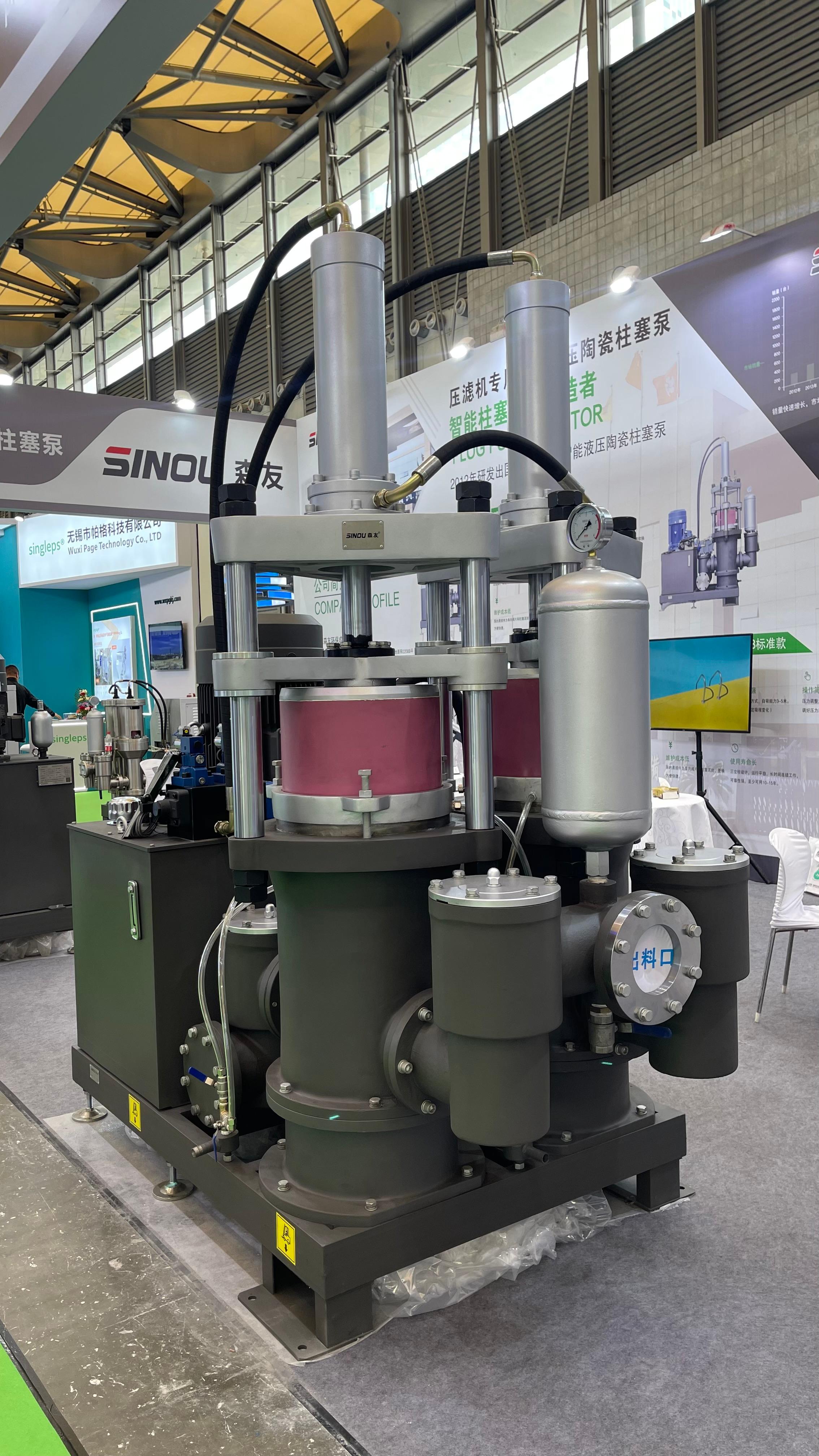
Operators often treat honing as a one-size-fits-all finishing step, but the sequence matters more than the stone. A coarse-to-fine progression that jumps too quickly leaves torn metal peaks that shear off under load, seeding the oil with iron fines. These sub-micron particles are exactly what later agglomerate into the sticky films that bake onto valve spools and reservoir walls. The fix starts with matching the crosshatch angle to the piston speed — slower cylinders need a steeper angle to hold oil, while fast reciprocating rods prefer a shallower one to avoid wiping the bore dry. Skipping the intermediate grit, say going straight from 180 to 400, forces the fine stone to tear rather than cut, leaving a burnished glaze that actually accelerates varnish precursors.
Pressure and dwell time are the silent variables. Honing with too much stone pressure at the final stage smears metal instead of removing it, creating a work-hardened layer that sheds brittle flakes. Those flakes circulate, get caught in servo valves, and break down into oxidation catalysts. A better rule is to drop pressure by half for the last two strokes and let the stone float — the abrasive should sound like it's whispering, not grinding. Also, reverse the rotation direction every few passes. A single-direction finish leaves a microscopic "fur" of folded-over metal that traps oil and overheats it locally, forming the first amber tint of varnish long before any lab test flags oxidation.
The overlooked part is what happens after the hone. Blowing out the bore with shop air only drives abrasive dust deeper into the blind holes and cross-drilled passages. A proper sequence is flush with low-viscosity oil, then wipe with a white lint-free cloth until it stays clean — not just one pass. Residual honing slurry acts like a grinding compound in the running system, continuously generating fresh iron particles that feed the varnish cycle. Pair that with a filter that actually catches sub-5-micron debris, and the oil stays transparent for thousands of hours past the typical service interval where varnish usually appears.
Why Air-Cooled Pumps Need Tighter Piston-to-Bore Clearances
Air-cooled pump cylinders shed heat unevenly compared to their liquid-cooled counterparts. The top of the bore near the discharge valve runs hottest, while the lower intake side stays considerably cooler. This thermal gradient makes the cylinder bore expand inward unevenly, and a piston sized with a generous cold clearance will rock and rattle once the pump reaches operating temperature. Tighter piston-to-bore clearances keep the piston centered in the bore as the casting distorts, reducing uneven wear on the skirt and rings.
Another reason comes down to ring sealing. In an air-cooled pump, the piston typically runs hotter than the cylinder wall because it has less direct exposure to cooling airflow. With a wider cold clearance, the ring end gaps open up too far at temperature, allowing compressed air to blow past the rings and drop volumetric efficiency. A tighter initial fit limits that expansion-driven gap growth, so the rings maintain a more consistent seal from cold start to full load.
The trade-off is warm-up discipline. A tight clearance that works beautifully at operating temperature can scuff or seize if the pump is loaded hard while still cold. That is why manufacturers specify tighter cold clearances but also insist on a short no-load warm-up period. It lets the piston and bore expand together at a controlled rate, rather than suddenly shocking the tight interface with full discharge pressure before the cylinder has grown to its designed shape.
The Forgotten Step: Stress Relieving Before Final Machining
Most of the attention in a machining sequence goes to cutting parameters, toolpaths, and inspection routines. What quietly gets skipped is stress relieving. A casting fresh from the foundry or a weldment that has just cooled carries uneven internal tension. If you go straight into final machining, the first light cut can release that tension and shift features by a few thousandths. The part may measure perfectly on the machine, only to move again overnight.
A proper stress relieving cycle before finishing doesn't have to be exotic. For many steel parts, a slow heat to around 600–650°C, a controlled soak, and a gradual cool in the furnace is enough. Aluminum components respond to a lower-temperature treatment or, in some cases, a controlled stretch or vibration. The key is not just doing it, but doing it after all heavy stock removal and before the cuts that set final dimensions. Swapping the order changes the result.
Shops that make this step a standard gate in the traveler see fewer reworks, less hand scraping to correct warp, and better fit at assembly. The parts still get machined, but they stay where the dial says they are. It is not a heroic process; it is just a forgotten one that quietly pays for itself.
Matching Pump Displacement to Filter Press Opening Force—Without Overheating
Getting the pump displacement right for a filter press isn't just about hitting the opening force—it's about doing it without cooking the hydraulic fluid. Too small a displacement, and the pump has to work at maximum pressure for longer, bleeding heat into the oil. Too large, and you're moving excess volume through the relief valve, which turns energy straight into temperature rise. The trick is to size the pump so its flow curve intersects the load requirement just past the point where the press plates begin to separate, not at the peak force. That way the pump spends most of its stroke in the high-efficiency zone, not churning against a deadhead.
Most systems overlook the fact that opening force drops sharply once the cake breaks loose. The initial breakaway can require 80% of system pressure, but within a few millimeters of travel, the resistance often falls by half or more. If the pump is fixed-displacement and sized for that worst-case breakaway, the flow surplus during the rest of the opening cycle gets dumped over the relief—generating heat. A better approach is to select a displacement that can deliver breakaway torque at lower speed, then allow the pump to speed up as load drops. With a variable-displacement or load-sensing setup, you don't match displacement to a single force number; you match the pump's pressure-flow envelope to the whole opening profile. That keeps the oil temperature down without adding a bigger cooler.
Overheating often shows up first as sluggish plate movement near the end of the cycle, not as a warning light. The pump may still meet the opening force spec on paper, but if the displacement was chosen by simply multiplying pressure times area and ignoring duty cycle, the fluid viscosity will break down after a few hours. Consider measuring the actual pressure decay during opening—many presses drop from 3,000 psi to under 1,000 psi within two seconds. If your pump is still forcing full flow at that lower pressure, you're wasting input horsepower as heat. A correctly matched displacement, whether through a two-stage gear pump or an axial piston unit with pressure compensation, keeps the force where it's needed and lets the flow fall away when the press is already moving. That's the real definition of matching: not peak force, but force over time without thermal penalty.
Post-Assembly Run-In Procedures That Catch Defects Datasheets Miss
A datasheet tells you what a part should do under clean bench conditions. It rarely shows how solder voids, marginal wetting, or a slightly skewed connector behave after the first thermal cycle. A run-in procedure fills that gap by cycling the board through realistic voltage ramps, load steps, and temperature swings while watching for intermittent faults that static inspection misses. In practice, this means holding the assembly at 60–70°C for a few hours, then pulsing the power rails in a sequence that mimics the end product's worst-case startup. Weak joints and hairline cracks tend to show up as resistance shifts or brief dropouts long before they become hard failures.
The trick is designing the stimulus to catch marginal defects without overstressing good boards. Instead of a simple soak, use a stepped profile: first a low-voltage idle period to let ionic contamination cause measurable leakage if it is going to, then rapid load modulation to expose decoupling gaps, followed by a short vibration burst while monitoring key nodes. Every anomaly gets timestamped against the profile step, so a board that passes bench testing but fails in the field can be traced to a specific phase. This method routinely flags cracked MLCCs, partially lifted pads, and tin whisker bridges that datasheet characterization never covers.
FAQ
Air cooling eliminates the need for a dedicated water supply and reduces the risk of coolant leaks contaminating the ceramic slurry. It also simplifies installation on mobile or semi-permanent filter press setups, though the heat exchanger and fan must be sized for continuous duty.
Common options include plasma-sprayed ceramic coatings, diamond-like carbon, or nitrocarburizing. For ceramic filter press duties, a hard chrome or tungsten carbide coating on the piston running surface is often used to resist micro-abrasion from fine particles that find their way into the hydraulic fluid.
After boring and honing, the bore is often plateau honed to create a crosshatch pattern with a controlled roughness of Ra 0.2-0.4 µm. This retains a thin oil film while minimizing leakage. Some shops follow with a soft lapping step to remove folded metal peaks.
The control of swash plate or valve plate flatness and the balancing of the rotating group. If the valve plate is not lapped to within 2-3 light bands, pressure spikes and high-frequency chatter occur. Dynamic balancing of the cylinder block to G2.5 or better is also critical.
The exchanger must handle peak oil temperature during the filtration and pressing phases, not just average thermal load. Designers often add 20-30% extra cooling capacity for hot ambient conditions and incorporate a thermostatic bypass valve so the oil reaches operating temperature quickly on cold starts.
A typical acceptance test includes a run-in period at low pressure, then step-load testing from 50 to 350 bar while monitoring case drain flow, outlet pressure ripple, and bearing temperatures. Some also perform a particle count on the hydraulic fluid after a 2-hour endurance test to confirm wear is within limits.
The clearance between the piston and its bore in the cylinder block, especially under heat expansion. If the cold clearance is set too tight for the actual operating temperature with an air-cooled system, the piston can seize. A common practice is to specify a clearance of 0.015-0.025 mm for a 20 mm piston, then increase it by 0.005 mm for every 10°C rise above 60°C oil temperature.
A typical sequence starts with a ductile iron or aluminum casting that is stress-relieved, then rough machined, pressure tested, and finish bored. Mounting faces are milled flat within 0.02 mm. After cleaning and deburring, the housing is coated internally with a thin corrosion-resistant layer if needed, then assembled with the rotating group, shaft seals, and air-cooled fan shroud.
Conclusion
Fabricating the pump at the heart of an air-cooled hydraulic system for ceramic filter presses demands choices that look almost contradictory on paper. The piston, for instance, is cast from a high-chromium white iron or a nitrided stainless, selected not for raw hardness alone but for how its surface work-hardens under the slurry's abrasive kickback. Ceramic fines embed in the fluid film and act like a lapping compound, so the piston's microstructure needs to shed micro-spalls rather than gall. Meanwhile, honing isn't a single pass with a fine stone—it's a sequence that starts with a coarse diamond plateau to open graphite pores, then shifts to a soft cork lap charged with colloidal silica. That final stage leaves a crosshatch deep enough to hold oil but shallow enough that hot spots can't cook the fluid into varnish. Air-cooled pumps run hotter at the case than water-jacketed units, so we hold piston-to-bore clearance toward the upper end of the tolerance band—tight enough to limit leakage, loose enough that thermal expansion doesn't seize the pair when the press closes against a full chamber of cake.
Before any final boring or honing, the pump body and barrel get a proper stress relief: heat to just below the tempering temperature, hold for hours, then cool in still air. Skipping this leaves locked-in stresses from rough machining that will warp the bores after the first hundred hot cycles, and then no amount of honing can save the clearance map. Displacement matching also matters more than most catalogs admit. You're sizing the pump to deliver not just the clamp force to hold the filter plates shut, but to do it without stalling the air-cooled fan's thermal margin. A pump that's oversized will churn oil through the relief valve and boil it; undersized, the press creeps open and slurry sprays. That's why we run a post-assembly break-in on a bench that cycles the pump against a simulated load while logging case temperature, pressure ripple, and acoustic signatures. A pump that passes the datasheet but groans or spikes during run-in gets torn down—better to catch a burr or a misaligned piston shoe before it eats a set of plates in the field.
Contact Us
Contact Person: HaiYan
Email: [email protected]
Tel/WhatsApp: +86 18957325588
Website: https://www.senyoubeton.com/