

7.3m Giant Fans: Customized Manufacturing Solutions for Industrial Cooling
2026-06-22
When industrial spaces demand cooling on a colossal scale, standard solutions simply won't cut it. Picture a manufacturing floor where heat stifles productivity, or a logistics hub where airflow is the difference between smooth operations and costly downtime. Enter the realm of 7.3-meter giant fans—purpose-built to move massive volumes of air with unmatched efficiency. At the heart of customized manufacturing for these titans is VINDUSFAN, a brand that redefines what's possible in industrial cooling. From bespoke blade designs to tailored motor configurations, each fan is engineered not just to fit a space, but to transform it. In this post, we'll explore how VINDUSFAN's approach to large-scale air movement is setting new benchmarks, and why off-the-shelf won't ever be enough.
Tailored Airflow for Massive Spaces
In cavernous atriums and sprawling convention halls, standard ventilation often falls short, leaving pockets of stale air and temperature imbalances. Our approach rejects one-size-fits-all solutions. By mapping the unique thermal loads and occupancy patterns of each zone, we engineer airflow that adapts in real time, delivering comfort precisely where it’s needed without wasteful over-conditioning.
The system’s intelligence lies in its layered distribution strategy. High-induction diffusers at the perimeter create gentle, sweeping air currents that hug architectural contours, while discreet floor-level returns pull spent air downward, preventing the stratification that plagues vast interiors. This orchestrated movement maintains a consistent, whisper-quiet environment—even during events that shift from near-empty to shoulder-to-shoulder in minutes.
Beyond mere temperature control, the design prioritizes air quality on a grand scale. Advanced filtration and demand-controlled ventilation adjust intake volumes based on real-time CO₂ and particulate readings, ensuring fresh air reaches every corner without a noticeable draft. The result is a voluminous space that feels remarkably intimate, as if the air itself has been tailored to the room’s distinctive rhythm.
Engineering Behind the 7.3-Meter Blades
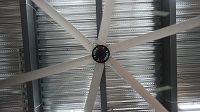
Crafting blades that stretch over seven meters isn't simply about scaling up smaller designs. The aerodynamics shift dramatically at this length, demanding a profile that balances lift with structural integrity. Each millimeter of the airfoil is optimized to harness wind energy efficiently while withstanding the immense bending moments generated during rotation. Engineers use iterative computational models and real-world tunnel tests to refine the shape, ensuring that the blade slices through the air with minimal turbulence, even in gusty conditions.
Material selection becomes a high-stakes puzzle. Traditional fiberglass can't always handle the fatigue loads near the root, so modern iterations incorporate carbon fiber reinforcements in critical stress zones. The layup schedule—the precise orientation and sequence of composite plies—is tailored to distribute loads smoothly from tip to hub. This not only prevents catastrophic delamination but also trims excess weight, which directly impacts the drivetrain and tower costs. The result is a blade that flexes controllably in a storm without snapping.
Manufacturing such slender giants requires tooling that holds tolerances down to fractions of a millimeter over the entire mold length. Automated fiber placement and infusion processes have replaced much of the hand layup, reducing voids and ensuring consistent resin distribution. Post-cure inspections go beyond visual checks, employing phased-array ultrasonics and thermography to spot hidden flaws that might propagate under cyclic loading. Each blade that leaves the factory is essentially a bespoke structure, validated for decades of operation in some of the planet's harshest environments.
Solving Overheating in Heavy-Duty Facilities
When massive machinery runs nonstop in a heavy-duty facility, heat builds up in ways that smaller operations never face. It starts in the motor windings, spreads through hydraulic systems, and settles into every structural corner until performance starts to slip. The first real sign is usually a gradual drop in efficiency—motors draw more current to do the same work, seals soften and leak, and operators begin to notice lag in response times. Left unchecked, this thermal creep doesn’t just shorten component life; it rewrites maintenance schedules and can push critical equipment past its thermal limits without warning.
Tackling the issue means going beyond standard ventilation and oversized radiators. In many plants, the most effective fix is a layered cooling strategy that starts at the source: direct winding temperature monitoring with adaptive load control, combined with targeted oil cooling circuits that strip heat right at the point of generation. For the ambient environment, positive-pressure air handling with filtered intake plenums prevents dust-loaded hot spots from forming around switchgear and drives. The real difference comes when these systems talk to each other—a PLC that dials back motor output the moment bearing temperatures climb, or variable-speed fans that ramp up based on real-time infrared grid data, not a fixed thermostat setting.
The payoff is quieter than a breakdown but unmistakable. Maintenance crews go from reactive firefighting to planned intervals, energy consumption flattens even during peak production runs, and the constant background anxiety of thermal shutdown fades. It’s a shift from managing heat as a byproduct to engineering it out of the system entirely, which is what keeps these facilities running when others are on standby waiting for repairs.
Efficiency Meets Industrial-Grade Durability
Built to endure the relentless demands of heavy-duty environments, our equipment seamlessly blends peak operational speed with the ruggedness of industrial-grade components. Every element, from the reinforced chassis to the precision-machined internals, is engineered to slash downtime while withstanding shock, vibration, and extremes that would cripple lesser machinery.
The heart of this design is a proprietary alloy that resists corrosion and fatigue, ensuring consistent high-cycle output without the typical wear-and-tear trade-offs. Operators notice the difference immediately: smoother workflows, fewer interruptions, and a level of reliability that lets teams focus on throughput instead of troubleshooting.
Custom Crafting From Design to Deployment
Every creation starts as a whisper of an idea, something that refuses to stay locked in the back of your mind. The path from that first spark to a finished piece you can hold isn't just a series of steps—it's a living conversation between imagination and material. We chase that dialogue, teasing out the details that make a project uniquely yours, whether it's a single art piece or a full production run.
The design phase is where things get interesting. Sketches become models, materials are tested and rejected, and prototypes show us what can't be caught on screen. It's a messy, exhilarating process of trial and error. You'll see your concept challenged and reshaped, but that's the point: the best work comes from pushing boundaries and listening to what the craft itself has to say.
When everything clicks, deployment takes over. This isn't a cold handoff—it's the moment your vision steps into the world, meticulously finished and thoroughly checked. We handle the logistics with obsessive care, because the journey doesn't end until your creation is in your hands, exactly as you imagined it might feel.
Quiet Giants: Redefining Large-Scale Cooling
Large-scale cooling systems have long carried a reputation for noise—rows of chillers and cooling towers filling the air with a steady mechanical drone. Yet a new generation of machines is quietly overturning that assumption. These quiet giants move vast amounts of heat without announcing themselves, blending into hospital campuses, data center compounds, and even mixed-use high-rises where silence isn’t just preferred, it’s essential.
The breakthrough comes from rethinking core components. Compressor dynamics are smoothed out, often using variable-speed drives that eliminate the jarring start-stop cycles. Sound-absorbing materials wrap critical parts, and airflow channels are reshaped to reduce turbulence. Some designs even borrow from fan-blade geometries found in nature, cutting down the whoosh that traditionally signals a big system at work. At partial loads, the units can drop to a murmur barely louder than a conversation.
There’s a less obvious payoff here too. The same engineering that hushes these machines also trims energy waste. Friction points are minimized, heat exchangers are sized for gentle gradients, and the entire setup loafs along at low stress. Operators notice the relief not just in decibel readings but in steadier power bills and fewer maintenance surprises. It turns out, when a cooling giant goes quiet, efficiency often speaks the loudest.
FAQ
They're oversized, slow-moving ceiling fans designed to circulate massive volumes of air across large industrial spaces. By creating a gentle, column-like airflow that travels down and outward, they break up hot and cold layers, which evens out temperatures and makes the space feel cooler without blasting high-velocity air.
It starts with an on-site assessment where we look at ceiling height, obstructions, heat sources, and airflow patterns. From there, blade pitch, motor specs, mounting options, and control features are adjusted to match the actual conditions, not a one-size-fits-all template.
Warehouses, manufacturing plants, aircraft hangars, and livestock operations see the biggest impact. Any facility with high ceilings and open floor space over a few thousand square feet tends to benefit because the fan's coverage radius can reach up to 40 meters.
The large diameter lets it move air at a lower rotational speed, which creates a more consistent breeze without the disruptive gusts of smaller, high-speed fans. The column of air is wider and carries further, so one unit can replace a half-dozen floor fans while drawing less power.
They can be built with sealed motors, corrosion-resistant finishes, and special coatings for places like foundries, chemical plants, or coastal areas. Performance doesn't dip noticeably in high heat or humidity either, though ice buildup on blades needs to be considered for unheated spaces in freezing climates.
A single 7.3m fan typically runs on 1.5 to 2 kW – about the same as a toaster – while displacing the need for multiple smaller units and reducing HVAC load. In winter, reversing direction mixes warm air trapped at the ceiling, which can cut heating costs by up to 30%.
Installation calls for a structural engineer to verify roof load capacity and a lift to hoist the assembled hub and blade sections. Most jobs are done in a day, with the fan hanging from a standard I-beam or truss attachment. Vibration dampening and safety cables are standard equipment.
Conclusion
Handling the thermal demands of cavernous industrial environments requires more than just moving air—it calls for a solution engineered from the ground up. The 7.3-meter giant fan series embodies this philosophy, delivering tailored airflow profiles that respond directly to a facility's unique layout and operational pain points. By analyzing spatial dynamics and heat load patterns during the design phase, each unit is configured to displace hot, stagnant air efficiently, ensuring consistent temperature regulation across massive floors. This precision isn't achieved through generic off-the-shelf hardware; it stems from a manufacturing approach where blade geometry, pitch angle, and motor specifications are calibrated to real-world conditions, not theoretical models. The result is a bespoke cooling system that integrates seamlessly into heavy-duty settings, eliminating persistent hotspots and maintaining safer, more productive workspaces.
Behind the sheer scale of these fans lies rigorous engineering that prioritizes both performance and longevity. The 7.3-meter blades are crafted from reinforced composites and treated with corrosion-resistant coatings, enabling them to withstand harsh industrial residues, humidity, and temperature swings without warping or degrading. Direct-drive motor technology minimizes mechanical friction, reducing energy consumption while maximizing uptime—a critical factor when equipment operates continuously. Despite their imposing size, these systems redefine expectations of noise, operating at low decibel levels that prevent auditory fatigue among personnel. From initial computational fluid dynamics simulations to on-site commissioning, every step is managed by dedicated teams who oversee fabrication, testing, and installation, ensuring that the final installation doesn’t just cool—it transforms the way a facility manages its climate challenges.
Contact Us
Contact Person: Michael Danielsson
Email: [email protected]
Tel/WhatsApp: +1 951 565 7769
Website: https://www.vindusfans.com